

Commercial Kitchen Equipment and Tools
Compare commercial kitchen equipment and tools by construction, capacity, workflow, and maintenance needs. Review specifications and features before visiting Amazon for current availability.
134 products in catalog
134 results
Filters





Preserve
Preserve On the Go Cutlery Set: 8 Forks, 8 Knives, 8 Spoons Kitchen Supplies, 10 CT, Pepper Red
See current price


Chicago Cutlery
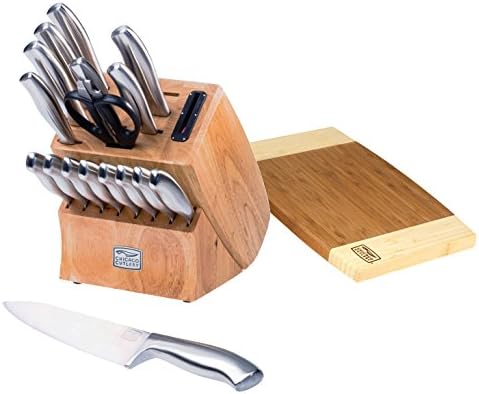
Chicago Cutlery Insignia Steel High-Carbon Stainless Steel Knife Block Set with Cutting Board (19-Piece)
See current price


FoodSaver
Special Value Combo Pack FoodSaver 8" & 11" Rolls & 36 Heat-Seal Pre-Cut Bags BPA free
See current price


Bellemain
Bellemain Extra Thick 16" x 12" x 1.5" Acacia Wood Cutting/Serving Board with Deep Juice Channel
See current price

Popular brands in Commercial Kitchen Equipment and Tools
Commercial kitchens depend on equipment that supports consistent preparation, efficient service, and straightforward cleaning. This category brings together tools and equipment for foodservice environments, from preparation essentials to durable kitchen accessories.
Use the specifications to compare how each option fits your menu, workspace, staff routines, and sanitation requirements. For broader restaurant-supply browsing, visit Restaurant Equipment and Commercial Kitchen Supply.
How to choose commercial kitchen equipment
Start with the task the product needs to perform. A tool used throughout a busy service should be comfortable to handle, easy to clean, and durable enough for frequent use. Equipment used less often may be chosen around storage, versatility, or a particular preparation method.
Consider the available workspace before selecting larger items. Check the product dimensions, required clearance, and whether the item can be stored safely when not in use. If the equipment requires electricity, gas, water, or another connection, confirm that the kitchen can support it before ordering.
A practical checklist includes:
- Function: Match the product to the ingredients, batch sizes, and preparation tasks involved.
- Construction: Look for materials suited to repeated commercial use and the conditions of a working kitchen.
- Capacity: Make sure the size supports normal production without taking more space than necessary.
- Cleaning: Check whether removable parts, smooth surfaces, or dishwasher-safe components simplify sanitation.
- Compatibility: Confirm that attachments, replacement parts, containers, or accessories fit the selected product.
Types of equipment and tools to compare
Commercial kitchen equipment and tools cover several stages of food preparation. Cutting and prep tools are useful for portioning ingredients, trimming, chopping, and completing repetitive knife work. When comparing them, pay attention to blade material, handle design, edge maintenance, and the intended food applications.
Other equipment is designed to support mixing, processing, cooking, holding, or serving. The best choice depends on whether the priority is speed, capacity, precision, portability, or flexibility between tasks. A multifunctional item can save storage space, while a task-specific tool may offer a more direct and consistent workflow.
Storage and handling tools also deserve attention. Containers, organizers, and service accessories should fit the available shelving or work surfaces and should be easy to identify during a busy shift. Consider how the item will be moved, stacked, cleaned, and stored between uses.
Key features and specifications
Read the full specification details rather than relying on the product name alone. Dimensions and weight affect installation, handling, and storage. For powered equipment, review the electrical requirements and operating controls. For hand tools, examine grip shape, balance, cutting surface, and whether the design suits extended use.
Material is another important comparison point. Stainless steel and other hard-wearing materials are commonly considered for commercial settings because they can be practical to clean and maintain, but the right choice depends on the product’s construction and intended use. Check whether surfaces resist staining, corrosion, or food buildup where relevant.
Also compare included components and care instructions. Two similar products may differ in attachments, covers, sharpening requirements, replacement-part availability, or recommended cleaning methods. These details can influence long-term convenience more than appearance alone.
Brands listed in this catalog
The catalog includes products from Wanbasion, SUPJOYES, XYJ, McCook, Forged in Fire, MIUGO, Funworld, Chef's Star, Fallkniven, Chicago Cutlery, Victorinox, and Ontario Knife Company. Treat brand as one comparison factor, then evaluate the individual product’s materials, dimensions, intended use, and care requirements.
When comparing options from different brands, focus on the specifications that matter for the task rather than assuming products are interchangeable. A knife, prep tool, or accessory should match the kitchen’s workflow, storage system, and maintenance routine.
Setup, care, and safe use
Before use, inspect equipment for damaged handles, loose parts, sharp edges, or missing components. Follow the manufacturer’s instructions for assembly, operation, cleaning, and storage. Keep cutting tools in a suitable rack, block, sheath, or other secure location instead of leaving them loose in a drawer or sink.
Clean food-contact surfaces according to the product instructions, and dry components thoroughly when moisture could lead to corrosion or residue. Avoid using chemicals, temperatures, or cleaning methods that are not approved for the material. For powered products, disconnect the unit before cleaning removable parts and keep electrical connections away from water.
Frequently asked questions
What should be compared first?
Start with the task, capacity, available space, and required connections. Then compare construction, controls, included accessories, cleaning instructions, and compatibility.
Is larger equipment always better for a commercial kitchen?
Not necessarily. Larger capacity can help with high-volume preparation, but it also requires more storage or work space. Choose a size that fits the kitchen’s normal workflow.
What materials are practical for foodservice tools?
The suitable material depends on the tool and task. Compare durability, corrosion resistance, food-contact suitability, comfort, and cleaning requirements rather than selecting by material name alone.
How can compatibility be checked?
Compare the manufacturer’s listed dimensions, fittings, attachments, power requirements, and supported accessories. Do not assume that similarly named components will fit together.
How should sharp tools be stored?
Store them in a stable, protected location that keeps edges covered or separated and reduces the risk of accidental contact. Keep them away from loose utensils and standing water.
Where can current availability be checked?
After comparing the listed specifications and features, shoppers can follow through to Amazon to check current availability and product details.