
Best Choice Products
Best Choice Products 38in Beginner All Wood Acoustic Guitar Starter Kit w/Case, Strap, Digital Tuner, Pick, Strings - SoCal Green
See current price

Compare acoustic, electric, acoustic-electric, and classical guitars by construction, strings, electronics, comfort, and intended use before choosing a model.
523 products in catalog
523 results
Best Choice Products
See current price


Best Choice Products
See current price

Master Play
See current price




Ashthorpe
See current price


Best Choice Products
See current price


Martin Smith
See current price

Best Choice Products
See current price


Master Play
See current price


Best Choice Products
See current price


Martin Smith
See current price
Whether you are learning your first chords, replacing an everyday instrument, or building a performance setup, the right guitar depends on how and where you plan to play. Body design, string type, scale feel, electronics, and included accessories can all affect comfort and sound.
K-Catalog brings together guitars from brands represented in the catalog, so you can compare specifications and features in one place before visiting Amazon for the latest product details.
Start with the type of music and playing environment that matter most. An unplugged instrument may suit home practice, songwriting, and casual playing, while an electric guitar is more flexible for amplified styles and effects. If you want both acoustic projection and the option to connect to an amplifier or mixer, an acoustic-electric model may be the most adaptable choice.
Also consider your experience level and physical comfort. Neck shape, body depth, overall size, fret access, and instrument weight can influence how easy a guitar feels to hold and play. A visually appealing finish is useful for personal preference, but playability and a suitable setup are more important for building consistent practice habits.
The catalog’s largest selections are concentrated in acoustic and electric instruments, with additional options for players who need amplification or prefer nylon strings.
Product listings can differ substantially even within the same guitar type. Pay attention to these details:
Guitar shoppers can compare offerings from Fender, Yamaha, Ibanez, Donner, Epiphone, Grote, Vangoa, and Kadence. The catalog also includes options from Best Choice Products, Pyle, Crescent, and LAGRIMA. These brands cover a range of guitar styles and feature combinations; compare each product’s specifications rather than choosing by brand name alone.
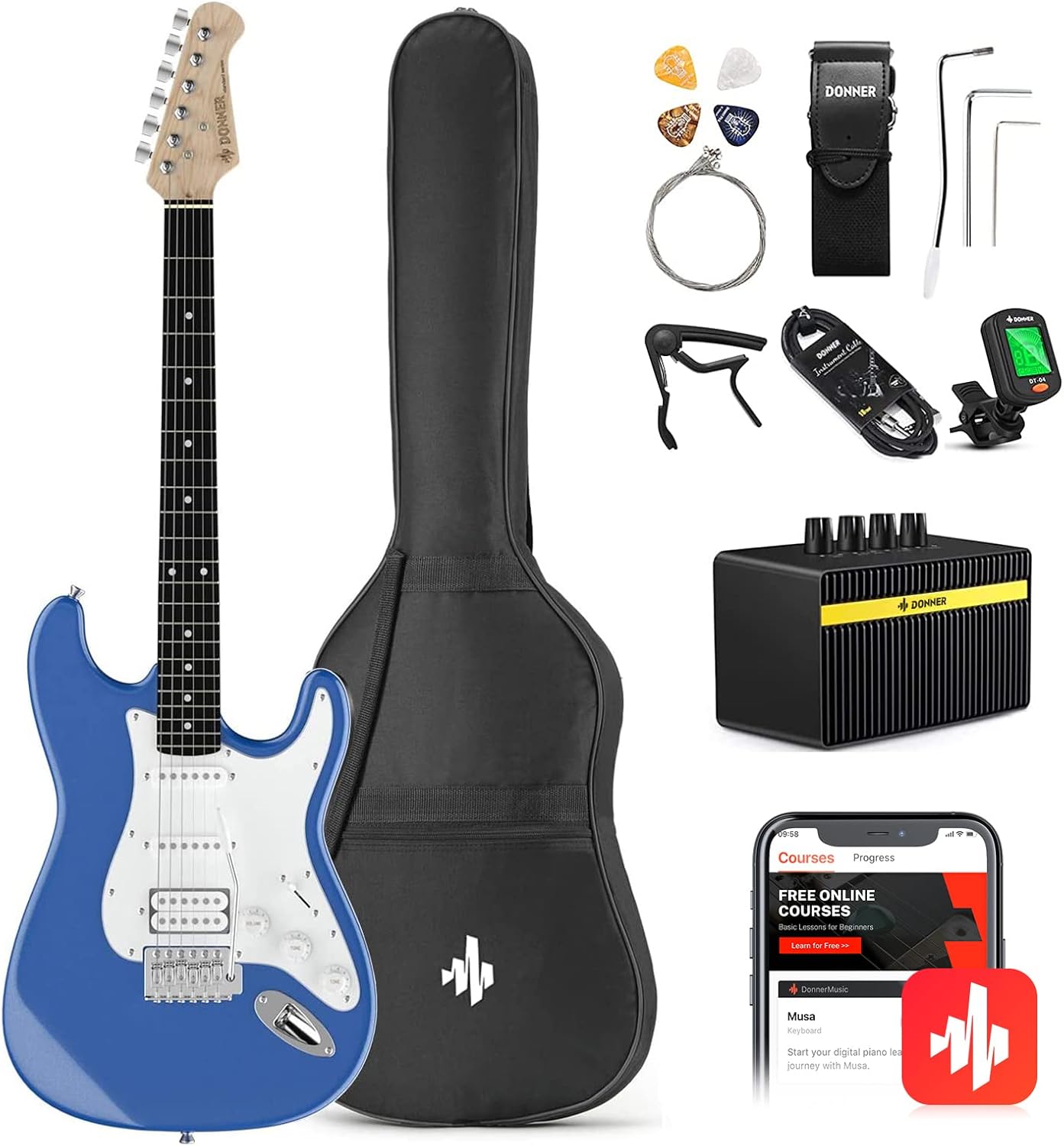
A guitar is easier to use when the supporting equipment matches it. Acoustic players may want a tuner, spare strings, picks, a strap, and a protective case or gig bag. Electric players should check amplifier compatibility and may also need a cable, tuner, strap, and effects equipment. Acoustic-electric players should verify the connection type and power requirements for the onboard electronics.
Browse Instrument Accessories for complementary equipment. For amplified playing, Live Sound & Stage and Studio Recording Equipment can help you compare equipment for performance or recording environments. A Musical Instruments category search can also be useful when building a broader setup.
There is no single best choice for everyone. Acoustic guitars are straightforward for unplugged practice, while electric guitars may feel easier to fret because of their construction. Comfort, music preferences, and access to amplification should guide the decision.
Both are designed to produce an acoustic guitar sound. An acoustic-electric guitar adds onboard electronics so it can connect to an amplifier, mixer, or compatible recording equipment.
They can be, especially for players interested in classical or fingerstyle music. Nylon strings have a different feel from steel strings, so the best choice depends on the player’s preferred style and comfort.
An amplifier or compatible audio device is normally needed to hear an electric guitar at its intended volume and tone. Check the guitar and amplifier connections before purchasing additional equipment.
Review the body dimensions, scale length, string type, materials, electronics, included accessories, and compatibility requirements. Also confirm whether the instrument’s size and construction suit the intended player.