
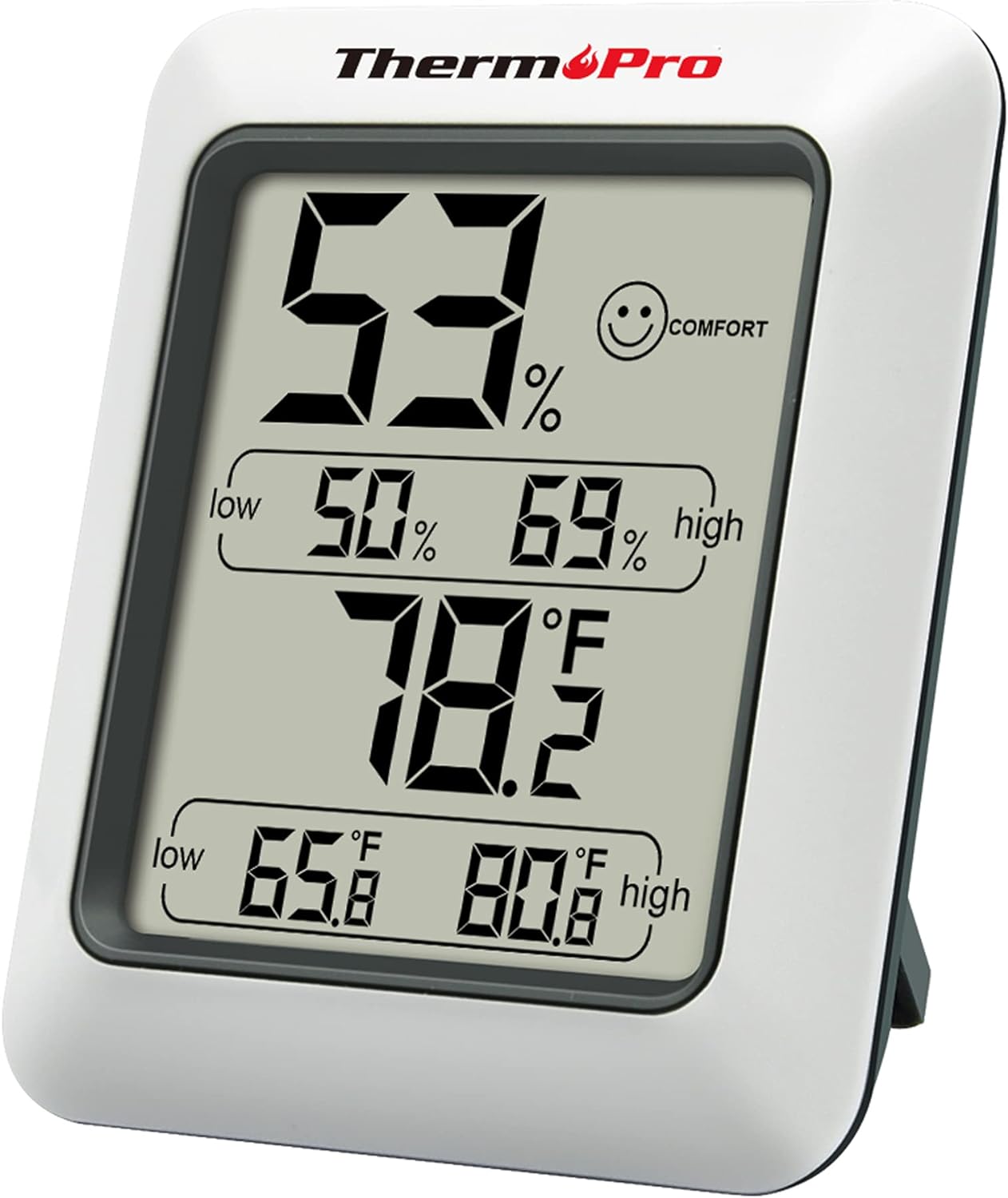
Thermometers & Weather Instruments
Compare thermometers and weather instruments for indoor spaces, patios, gardens, and other outdoor areas. Review measurements, displays, mounting options, and connectivity before choosing.
1,073 products in catalog
1,073 results
Filters

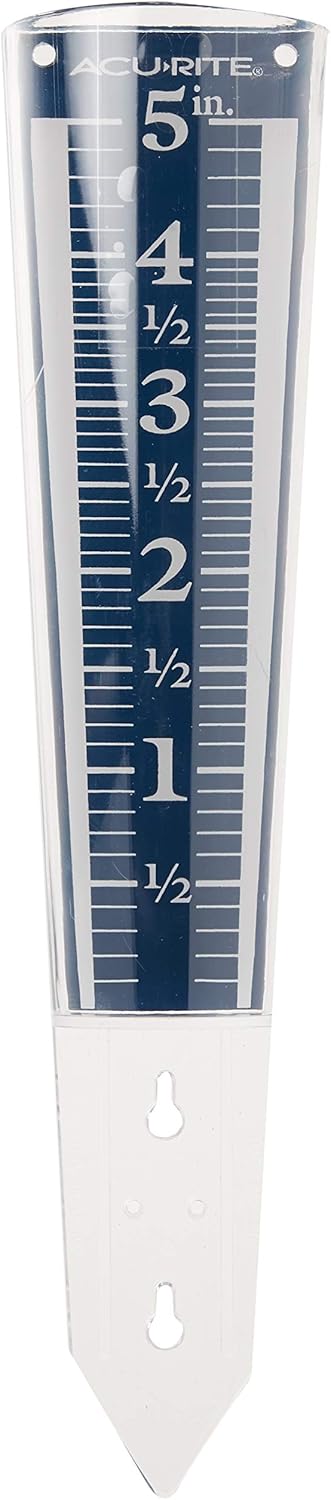
AcuRite
AcuRite 5" Capacity Easy-to-Read Magnifying Acrylic, Blue (00850A3) Rain Gauge
See current price


AcuRite
AcuRite 00325 Indoor Thermometer & Hygrometer with Humidity Gauge, Black, 0.3
See current price


Popular brands in Thermometers & Weather Instruments
Thermometers and weather instruments can add useful information to a patio, garden, greenhouse, workshop, or home while fitting naturally into an outdoor décor setup. Depending on the design, they may show temperature, humidity, barometric conditions, forecasts, or several readings together.
Use this category to compare specifications and features across traditional thermometers, digital displays, hygrometers, and complete weather-monitoring systems. The right choice depends on which conditions you want to track, where the instrument will be placed, and how easily you want to read or record the information.
How to choose a thermometer or weather instrument
Start with the measurements that matter most. A basic thermometer may be enough for checking outdoor temperature, while a combined thermometer and hygrometer can help monitor both temperature and relative humidity. More advanced weather stations may collect readings from multiple sensors and present them on a console or connected device.
Consider the environment and your viewing habits:
- Placement: Decide whether the instrument will sit on a table, hang on a wall, mount outdoors, or use a remote sensor.
- Readability: Compare dial size, screen dimensions, contrast, backlighting, and whether readings are easy to see from a distance.
- Measurement range: Check the listed temperature and humidity ranges for the conditions where the device will be used.
- Power: Review whether the product uses batteries, an adapter, solar assistance, or a combination of power sources.
- Data access: Some instruments are designed for at-a-glance readings, while others may store information or connect to an app or network.
Types to compare
Analog outdoor thermometers
Analog models use a dial and pointer rather than an electronic screen. They can work well as visible patio or garden décor, especially when a simple reading is all that is needed. Compare dial markings, case materials, mounting style, and whether the design is intended for outdoor exposure.
Digital thermometers and hygrometers
Digital instruments generally make exact readings easy to see and may combine temperature with humidity. They can be useful indoors, in a greenhouse, or under a covered patio. Look for a clear display, useful minimum and maximum readings, and a sensor arrangement suited to the intended location.
Weather stations and multi-sensor instruments
Weather stations are designed for shoppers who want a broader view of local conditions. Depending on the product, features may include indoor and outdoor temperature, humidity, wind information, rainfall, barometric pressure, or forecast indicators. Check what sensors are included, how far they can be positioned from the display, and how the system communicates readings.
Key features and specifications
The sensor is central to performance, so compare whether readings come from an integrated sensor or a separate outdoor unit. A remote sensor may make it easier to keep the display indoors while measuring conditions outside, but wireless range and installation requirements become important.
For outdoor placement, review the product’s stated weather resistance and mounting hardware. A shaded, ventilated location may provide more useful ambient readings than a spot exposed to direct sun or heat from a wall. Also check whether the display is intended for indoor use and whether the outdoor sensor needs protection from standing water.
If you want historical information, look for memory, trend indicators, data logging, or connected features. If you prefer a decorative accent, focus instead on the case design, dial visibility, mounting method, and how the instrument complements the surrounding space.
Brands in the catalog
The catalog includes thermometers and weather instruments from AcuRite, La Crosse Technology, Ambient Weather, Taylor, Oregon Scientific, ThermoPro, Davis Instruments, BALDR, Govee, Springfield, LaCrosse, and SMARTRO. Compare each product by its own specifications rather than relying on brand name alone, since designs and features can vary within a brand’s catalog.
Placement, care, and compatibility tips
Place outdoor sensors away from direct sunlight, vents, grills, heaters, and reflective surfaces when possible. Follow the manufacturer’s guidance for mounting height, spacing, pairing, and calibration. Before buying a wireless model, check the sensor-to-display range and whether obstacles between the units may affect communication.
For battery-powered products, confirm the battery type and access method. Clean displays and housings with suitable materials, avoid immersing electronic components, and inspect outdoor seals or mounting points periodically. If a device will be left outside through changing weather, verify that its stated construction matches the intended exposure.
For related ways to personalize an outdoor space, browse Flags, Backyard Birding & Wildlife, and Garden Sculptures & Statues. Seasonal decorating ideas are also available in Outdoor Holiday Decorations.
Frequently asked questions
What is the difference between a thermometer and a weather station?
A thermometer primarily measures temperature. A weather station may combine temperature with humidity, pressure, wind, rainfall, forecasts, or other readings, depending on its sensors and features.
Where should an outdoor temperature sensor be placed?
Use the manufacturer’s placement guidance, generally choosing a shaded, ventilated location away from direct heat sources, vents, grills, and surfaces that can distort ambient readings.
Are analog thermometers suitable for outdoor décor?
They can be. Analog models provide a visible dial and may suit patios, gardens, and walls where a straightforward temperature reading and decorative appearance are priorities.
Do weather instruments need Wi-Fi?
Not always. Some provide readings directly on a dial or console, while connected models may use Wi-Fi or another wireless method for expanded access and data features.
What should be compared when selecting a digital thermometer?
Compare the measurement range, display readability, sensor placement, power source, memory or trend functions, mounting options, and any stated indoor or outdoor-use requirements.