

Trailer Accessories for Safer, Easier Towing
Compare trailer accessories by vehicle and trailer compatibility, electrical fit, construction, installation, and intended use. This guide highlights the details that matter before choosing.
580 products in catalog
580 results
Filters


MICTUNING
MICTUNING Heavy Duty 7 Way Plug Inline Trailer Cord with 7 Gang Junction Box - 8 Feet, Weatherproof
See current price


Reese Towpower
REESE Towpower 8507111 Brakeman IV Digital Brake Control, Small Compact Design
See current price


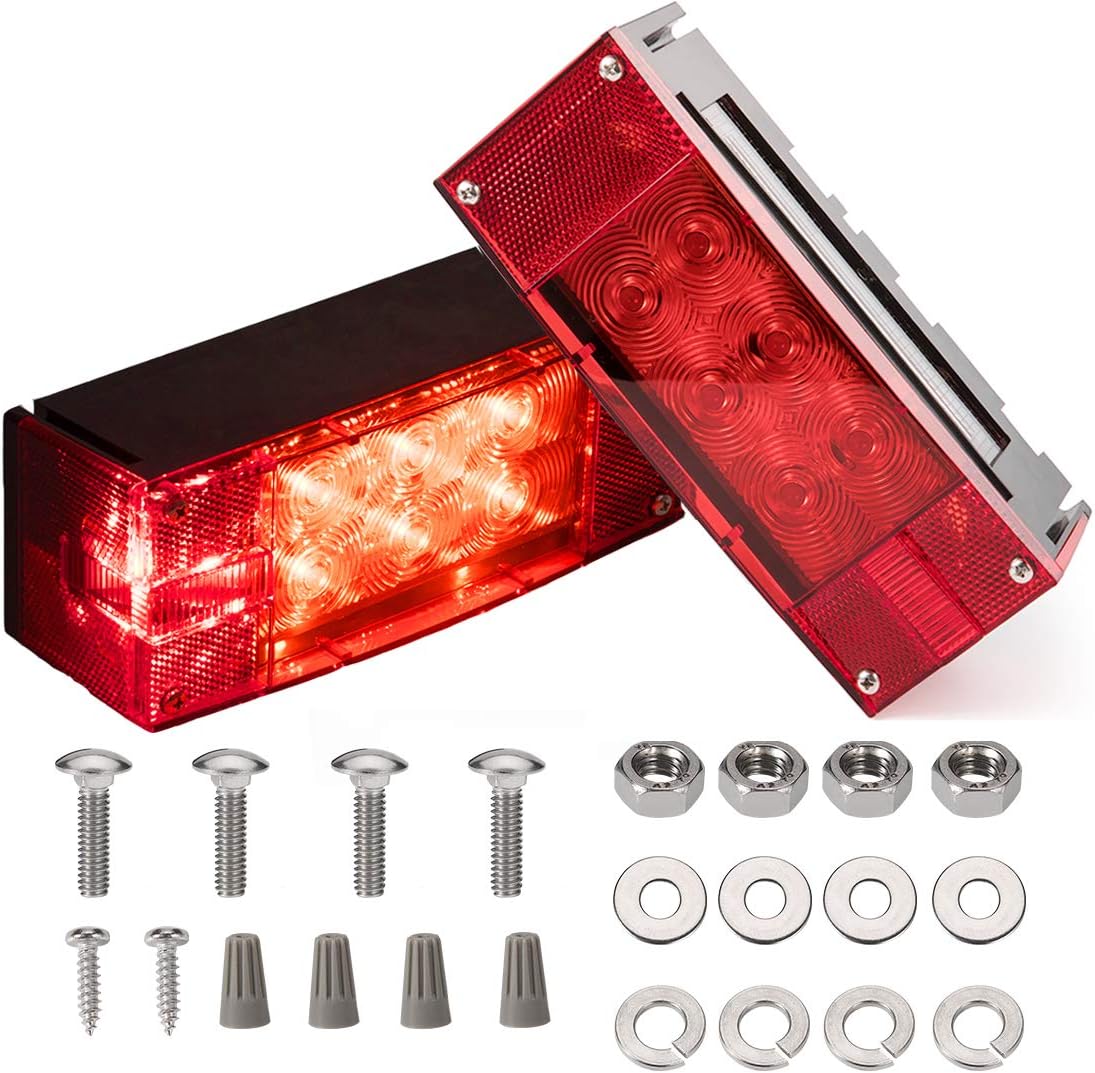


Lumitronics
Lumitronics RV Surface Mount Light - Stop/Turn/Tail for RV, Trailer, Camper, 5th Wheel, Motorhome (Black)
See current price
![6" Amber Oval LED Trailer Tail Light [DOT FMVSS 108] [SAE I6] [Grommet & Plug Included] [IP67 Waterproof] [Park & Turn Signal] Marine Trailer Lights for Boat Trailer RV Trucks](https://m.media-amazon.com/images/I/71Zeyq9ICdL._AC_SL1500_.jpg)

![15" 9 LED 3 Red Trailer Light Bar [DOT FMVSS 108] [SAE P2] [IP67 Submersible] Identification Running Marker ID Rear Trailer Tail Light Bar for 80" Enclosed Motorcycle Utility Marine Boat Trailers](https://m.media-amazon.com/images/I/614iZrMWKaL._AC_SL1500_.jpg)

MAXXHAUL
MAXXHAUL 50015 12V Magnetic LED Towing Lights With Magnetic Base - DOT Compliant, 1 Pack
See current price


Hopkins Towing Solutions
Hopkins Towing Solutions 40974 Multi-Tow 7 Blade and 4 Flat Connector (Packaging may vary),3.25 x 3.88 x 6.88,grey
See current price


Popular brands in Trailer Accessories
Trailer accessories can improve trailer visibility, simplify connections, protect equipment, and make loading or hauling more manageable. The right choice depends on the trailer design, tow vehicle, wiring setup, cargo, and the conditions in which the equipment will be used.
K-Catalog brings together trailer-related products from brands including CURT, Tekonsha, Partsam, ONLINE LED, REESE, LINKITOM, CZC AUTO, Nilight, Hopkins Towing Solutions, MICTUNING, LIMICAR, and LIBRA. Use the product listings to compare specifications and features, then verify compatibility before purchase.
How to choose trailer accessories
Start by identifying the job the accessory needs to perform. Electrical accessories, lighting, mounting hardware, cargo restraints, and protective equipment all have different compatibility requirements. Check the trailer type, tow vehicle connection, mounting location, and available space before comparing individual products.
Important questions include:
- Is the accessory intended for the trailer, tow vehicle, or both?
- Does it match the existing connector, wiring, or mounting system?
- Will it be exposed to rain, road spray, dust, vibration, or frequent handling?
- Can it be installed without interfering with lights, doors, ramps, or moving parts?
- Are the included brackets, wiring, fasteners, or adapters suitable for the installation?
If a product is part of a broader towing setup, compare it with options in Towing Products & Winches. For vehicle-side additions, Truck Bed & Tailgate Accessories may also be relevant.
Common types of trailer accessories
Trailer accessories vary widely, even when they appear similar in product listings. Understanding the main groups makes it easier to narrow the selection.
Electrical connectors and wiring
Wiring adapters, plugs, sockets, and related components help connect trailer lighting and other electrical functions to the tow vehicle. Match the connector style and wiring configuration rather than choosing based on appearance alone. Check whether the item is designed for an existing harness or requires additional installation work.
Trailer lights and visibility equipment
Replacement lights, marker lights, signal components, and LED accessories can support visibility and routine maintenance. Compare the lamp function, mounting method, lens or housing design, wiring connections, and weather resistance. Confirm that the dimensions and mounting points match the existing trailer.
Mounting and securing accessories
Hitch-related hardware, brackets, straps, locks, and tie-down equipment can help keep components or cargo in place. Pay attention to the intended load, attachment points, adjustment range, and material. A secure-looking accessory is not automatically suitable for every trailer or cargo type.
Protective and convenience accessories
Protective covers, guards, organizers, and similar additions may help reduce exposure to the elements or make trailer use more convenient. Consider how often the trailer is used, whether it is stored outdoors, and how easily the accessory can be removed for inspection or cleaning.
For appearance-focused vehicle additions, browse Bumper Stickers, Decals & Magnets or License Plate Covers & Frames. Those categories are separate from functional trailer equipment but may be useful when completing an exterior setup.
Key specifications to compare
Product titles can be brief, so inspect the full specification details before deciding. The most useful comparisons often include:
- Compatibility: Vehicle type, trailer application, connector style, and supported wiring arrangement.
- Dimensions: Overall size, mounting-hole spacing, cable length, clearance, and adjustment range where provided.
- Construction: Materials used for housings, brackets, connectors, straps, or protective components.
- Weather resistance: Sealing, corrosion resistance, and suitability for outdoor exposure.
- Installation: Plug-in design versus hardwiring, included hardware, required tools, and mounting instructions.
- Electrical details: Voltage compatibility, light function, connector orientation, and wire colors or labels.
- Capacity and fit: Any stated load limit, weight rating, trailer size, or supported accessory configuration.
When comparing lighting or wiring products, do not rely only on a familiar connector shape. The electrical function and vehicle-trailer wiring arrangement also need to match.
Brands represented in the catalog
The Trailer Accessories catalog includes products from CURT, Tekonsha, Partsam, ONLINE LED, REESE, LINKITOM, CZC AUTO, Nilight, Hopkins Towing Solutions, MICTUNING, LIMICAR, and LIBRA. Brand selection can help organize a search, but compatibility, specifications, included components, and installation requirements should remain the deciding factors.
Installation and maintenance tips
Read the product instructions before removing existing wiring or hardware. Disconnect the relevant vehicle power source when working on electrical components, route wires away from heat and moving parts, and protect connections from moisture where the design requires it.
After installation, check that lights operate correctly, fasteners are secure, cables have enough slack without dragging, and no accessory blocks reflectors, signals, plates, or safety equipment. Inspect trailer accessories periodically for cracked housings, corrosion, frayed straps, loose mounts, and damaged connectors.
For cargo-focused setups, Cargo Management may provide complementary organization and securing options. If the main concern is protecting the tow vehicle from road debris, see Deflectors & Shields.
Frequently asked questions
How do I know whether a trailer accessory will fit?
Compare the product’s stated vehicle and trailer compatibility, dimensions, connector type, mounting points, and installation requirements with the equipment already in use.
Should trailer wiring be plug-in or hardwired?
A plug-in option may be simpler when a compatible factory connection is available. Hardwired products may suit setups without the right connector but can require more installation work.
What matters most when choosing trailer lights?
Check the light function, dimensions, mounting method, wiring arrangement, housing construction, and suitability for outdoor exposure. Confirm that the replacement matches the trailer’s existing layout.
Are trailer accessories weatherproof?
Weather resistance varies by product. Look for stated sealing, corrosion-resistant materials, and outdoor-use guidance, and protect or inspect connections according to the installation instructions.
What should I check after installing an accessory?
Test electrical functions, inspect clearances, tighten mounting hardware, confirm that cables are protected, and make sure the accessory does not obstruct required lights or other safety equipment.