


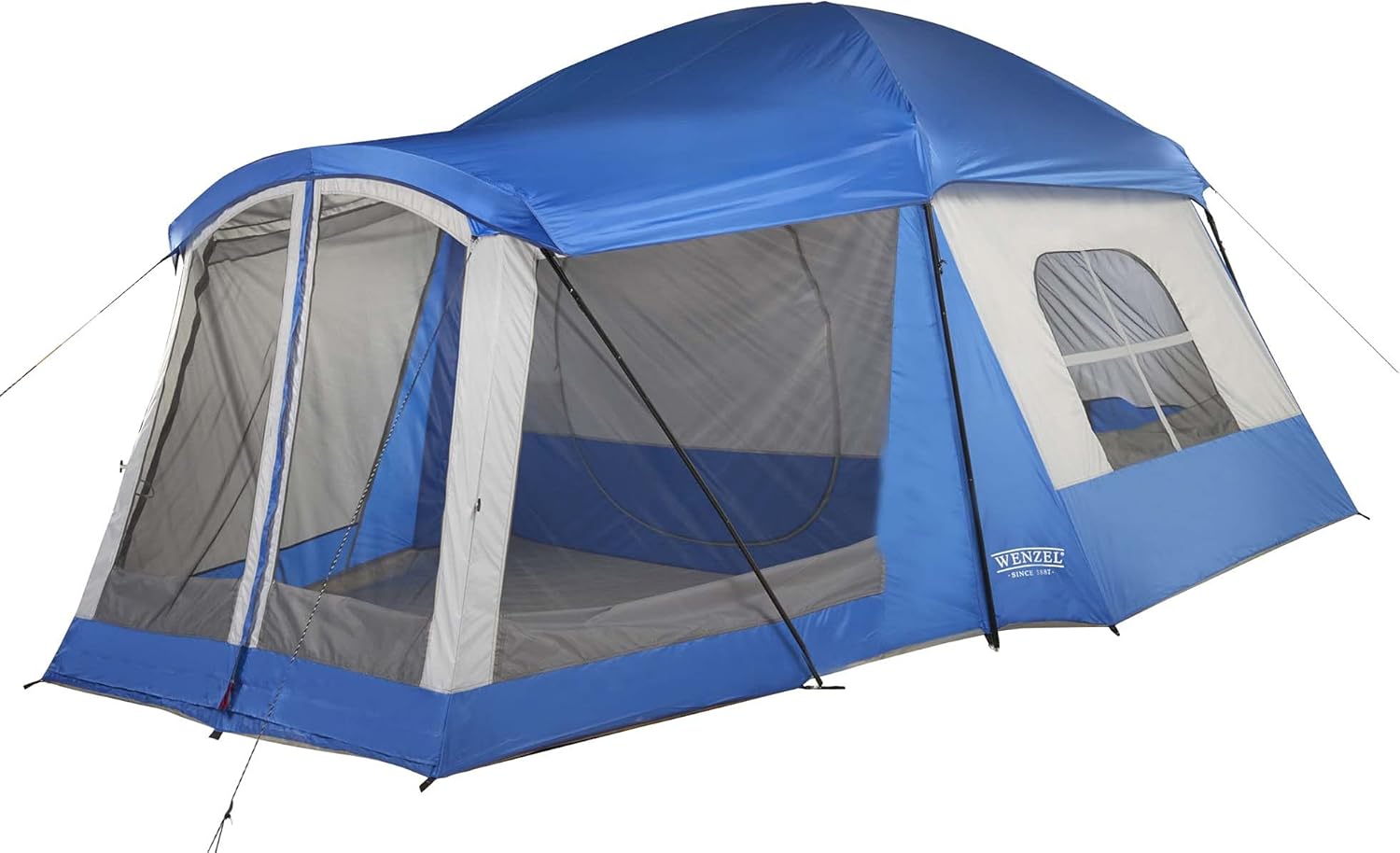
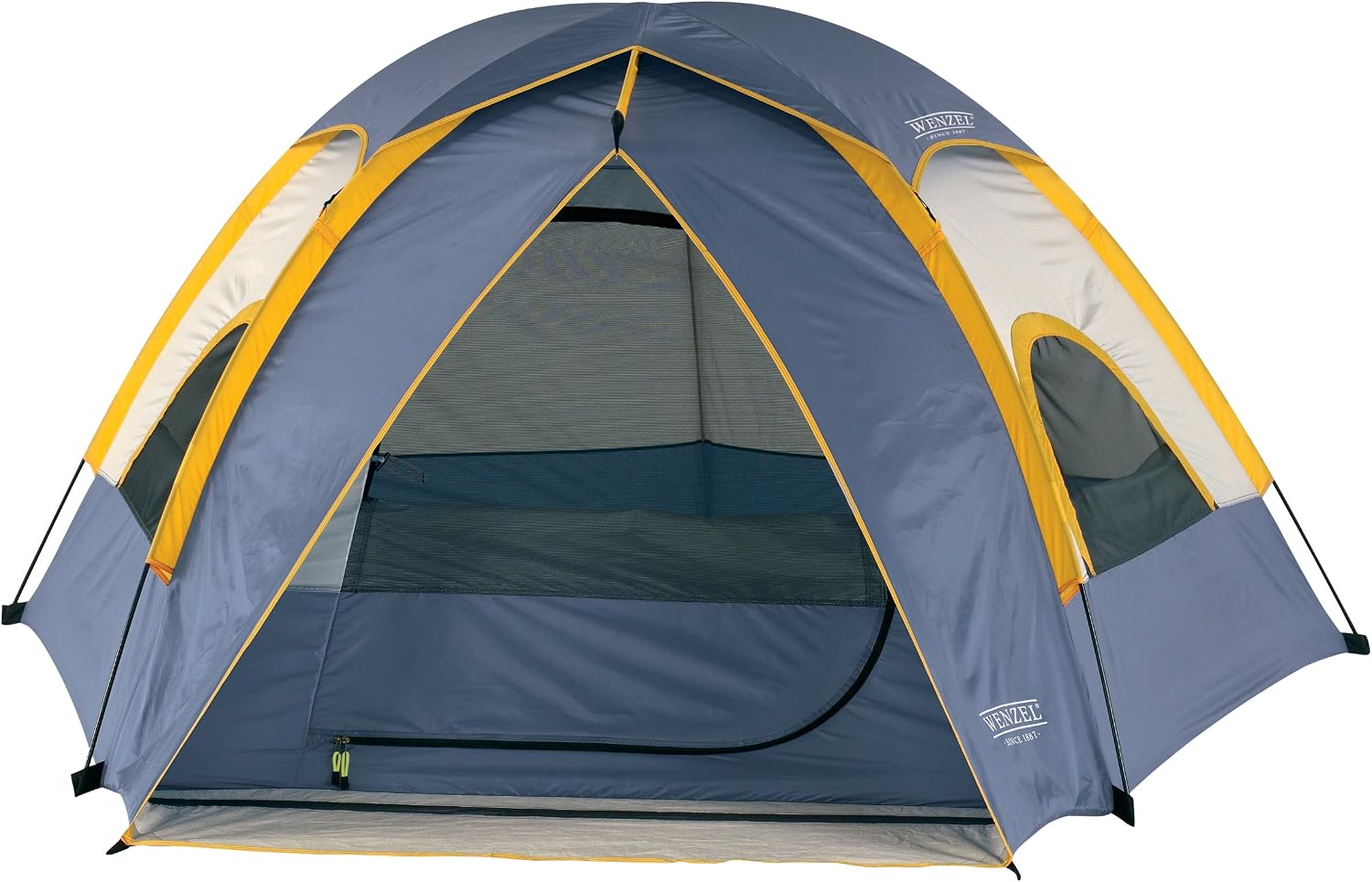
Wenzel Alpine 3 Person Tent
See current price
Check the current price and availability on Amazon.com.
View on AmazonAffiliate link — we may earn a commission at no extra cost to you. Learn more
- Brand
- Wenzel
- Occupant Capacity
- 3
- Design
- Camping Tent
- Material
- Fiberglass
Key features
- Fiberglass,Mesh
- 3-person, 3-pole pentadome tent with removable fly
- Shock-corded fiberglass frame for quick and easy setup
- Integrated mud mat with drainage strip to keep tent clean
- 2 mesh windows and D-style front door for ventilation
- Measures 8.5 x 4 x 8 feet (W x H x D); weighs 8 pounds
Specifications
| Special Feature | Lightweight |
|---|---|
| Brand | Wenzel |
| Occupant Capacity | 3 |
| Design | Camping Tent |
| Material | Fiberglass |
| Recommended Uses For Product | backpacking;expedition |
| Product Dimensions | 25.25"L x 6.75"W x 6.25"H |
| Seasons | 4 Season |
| Color | Dark Blue |
| Sport | Camping & Hiking |
| Age Range (Description) | Adult |
| Shape | Alpine |
| Installation Type | Easy Setup, Hanging |
| Product Care Instructions | Hand Wash |
| Included Components | Mud Mat, Stakes, Gear Loft |
| Pole Material Type | Fiberglass |
| Size | 3 Person |
| Closure Type | Zipper |
| Number of Doors | 1 |
| Fabric Type | Fiberglass,Mesh |
| Floor Length | 25.25 Inches |
| Maximum Height | 48 Inches |
| Floor Area | 49 |
| Item Package Dimensions L x W x H | 24.9 x 6.6 x 6 inches |
| Package Weight | 3.45 Kilograms |
| Item Dimensions LxWxH | 25.25 x 6.75 x 6.25 inches |
| Brand Name | Wenzel |
| Model Name | Wenzel Alpine Tent |
| Number of Items | 1 |
| Manufacturer | Wenzel |
| Part Number | 36419 |
| Model Year | 2017 |
| ASIN | B002PAT60S |
About this product
Product Description Lightweight, easy to set up and take down, the Wenzel Alpine 3-pole pentadome tent is a great choice for a camping adventure. It features a single room that measures 8 by 8.5 feet with the third pole creating a vestibule, giving an area for storing gear and weather protection. It will sleep up to 3 people. This tent has a D-style door with mesh window, and closeable mesh windows for great cross ventilation. A gear loft and hanging gear pocket are included as well as an integrated mud mat with a drainage strip. The shockcorded fiberglass frame and pole pockets make set up quick. The Weather Armor polyester with a polyurethane coating protects from top to bottom while the sonic sealed polyethylene tub-style floor combats water seepage. Seams are Double-stitched, lap-felled to provide a shingle effect against water and all threads, zippers and webbing are treated with superior water repellency applications. Duffle bag is included for storage. Specifications: • Base: 8.5 ft. x 8 ft. • Center Height: 48 in. • Area: 49 sq. ft. (vestibule 7 sq. ft.) • Door: Dutch "D" style • Floor: welded polyethylene • Frame: fiberglass • Stakes: steel • Carry Weight: 8 lbs • Sleeps: 3 Amazon.com Lightweight, easy to set up, and versatile, the Wenzel Alpine three-person dome tent is a great choice for all types of camping and conditions. The Alpine includes such features as a three-pole pentadome design that creates a vestibule for gear storage and weather protection, a shock-corded fiberglass frame (with pole pockets) that sets up and disassembles quickly, and an integrated mud mat with a drainage strip to keep the tent clean. Campers will also appreciate the Weather Armor polyester fabric and sonic-sealed polyethylene tub-style floor, which are reliably rugged and resist leaks of all kinds. The closeable mesh windows and D-style front door, meanwhile, do a nice job of ventilating the tent and controlling morning moisture. Additional details include double-stitched seams, a gear loft for smaller items, a hanging pocket, and a duffel bag for storage. Specifications Base: 8.5 by 8 feet Base: 8.5 by 8 feet Center height: 48 inches Center height: 48 inches Interior space: 49 square feet Interior space: 49 square feet Sleeps: 3 Sleeps: 3 Windows 2 Windows 2 Door: Dutch D-style Door: Dutch D-style Floor: Welded polyethylene Floor: Welded polyethylene Frame: Fiberglass Frame: Fiberglass Carrying weight: 8 pounds Amazon.com Tent Guide Selecting a Tent Fortunately, there are all kinds of tents for weekend car campers, Everest expeditions, and everything in-between. Here are a few things to keep in mind: Expect the Worst In general, it's wise to choose a tent that's designed to withstand the worst possible conditions you think you'll face. For instance, if you're a summer car camper in a region where weather is predictable, an inexpensive family or all-purpose tent will likely do the trick--especially if a vehicle is nearby and you can make a mad dash for safety when bad weather swoops in. If you're a backpacker, alpine climber, or bike explorer, or if you like to car camp in all seasons, you'll want to buy something designed to handle more adversity. Three- and Four-Season Tents For summer, early fall, and late spring outings, choose a three-season tent. At minimum, a quality three-season tent will have lightweight aluminum poles, a reinforced floor, durable stitching, and a quality rain fly. Some three-season tents offer more open-air netting and are specifically designed for summer backpacking or other activities. Many premium tents will also feature pre-sealed, taped seams and a silicone-impregnated rain fly for enhanced waterproofing. For winter camping or alpine travel, go with a four-season model. Because they typically feature more durable fabric coatings, as well as more poles, four-season tents are designed to handle heavy snowfall and high winds without collapsing. Of course, four-season tents exact a weight penalty of about 10 to 20 percent in trade for their strength and durability. They also tend to be more expensive. Domes and Tunnels Tents are broadly categorized into two types: freestanding, which can stand up on their own, and tents that must be staked down in order to stand upright. Freestanding tents often incorporate a dome-shaped design, and most four-season tents are constructed this way because a dome leaves no flat spots on the outer surface where snow can collect. Domes are also inherently stronger than any other design. Meanwhile, many three-season models employ a modified dome configuration called a tunnel. These are still freestanding, but they require fewer poles than a dome, use less fabric, and typically have a rectangular floorplan that offers less storage space than a dome configuration. Many one and two-person tents are not freestanding, but they make up for it by being lighter. Because they use fewer poles, they can also be quicker to set up than a dome. Size Matters Ask yourself how many people you'd like to fit in your fabric hotel now and in the future. For soloists and minimalists, check out one-person tents. If you're a mega-minimalist, or if you have your eye on doing some big wall climbs, a waterproof-breathable bivy sack is the ticket. Some bivy sacks feature poles and stake points to give you a little more breathing room. Also, if you don't need bug protection and you want to save weight, check out open-air shelters. Families who plan on car camping in good weather can choose from a wide range of jumbo-sized tents that will accommodate all your little ones with room to spare. A wide range of capacities is available for three- and four-season backpacking and expedition tents. Remember, though, the bigger the tent you buy, the heavier it will be, although it's easy to break up the tent components among several people in your group. It's also helpful to compare the volume and floor-space measurements of models you're considering. Carrying weight: 8 pounds Amazon.com Tent Guide Selecting a Tent Fortunately, there are all kinds of tents for weekend car campers, Everest expeditions, and everything in-between. Here are a few things to keep in mind: Expect the Worst In general, it's wise to choose a tent that's designed to withstand the worst possible conditions you think you'll face. For instance, if you're a summer car camper in a region where weather is predictable, an inexpensive family or all-purpose tent will likely do the trick--especially if a vehicle is nearby and you can make a mad dash for safety when bad weather swoops in. If you're a backpacker, alpine climber, or bike explorer, or if you like to car camp in all seasons, you'll want to buy something designed to handle more adversity. Three- and Four-Season Tents For summer, early fall, and late spring outings, choose a three-season tent. At minimum, a quality three-season tent will have lightweight aluminum poles, a reinforced floor, durable stitching, and a quality rain fly. Some three-season tents offer more open-air netting and are specifically designed for summer backpacking or other activities. Many premium tents will also feature pre-sealed, taped seams and a silicone-impregnated rain fly for enhanced waterproofing. For winter camping or alpine travel, go with a four-season model. Because they typically feature more durable fabric coatings, as well as more poles, four-season tents are designed to handle heavy snowfall and high winds without collapsing. Of course, four-season tents exact a weight penalty of about 10 to 20 percent in trade for their strength and durability. They also tend to be more expensive. Domes and Tunnels Tents are broadly categorized into two types: freestanding, which can stand up on their own, and tents that must be staked down in order to stand upright. Freestanding tents often incorporate a dome-shaped design, and most four-season tents are constructed this way because a dome leaves no flat spots on the outer surface where snow can collect. Domes are also inherently stronger than any other design. Meanwhile, many three-season models employ a modified dome configuration called a tunnel. These are still freestanding, but they require fewer poles than a dome, use less fabric, and typically have a rectangular floorplan that offers less storage space than a dome configuration. Many one and two-person tents are not freestanding, but they make up for it by being lighter. Because they use fewer poles, they can also be quicker to set up than a dome. Size Matters Ask yourself how many people you'd like to fit in your fabric hotel now and in the future. For soloists and minimalists, check out one-person tents. If you're a mega-minimalist, or if you have your eye on doing some big wall climbs, a waterproof-breathable bivy sack is the ticket. Some bivy sacks feature poles and stake points to give you a little more breathing room. Also, if you don't need bug protection and you want to save weight, check out open-air shelters. Families who plan on car camping in good weather can choose from a wide range of jumbo-sized tents that will accommodate all your little ones with room to spare. A wide range of capacities is available for three- and four-season backpacking and expedition tents. Remember, though, the bigger the tent you buy, the heavier it will be, although it's easy to break up the tent components among several people in your group. It's also helpful to compare the volume and floor-space measurements of models you're considering.
Similar products


See current price