

Microconsoles for Compact Retro Gaming
Compare microconsoles by their included games, controller support, display connections, storage, and setup requirements. Browse specifications to find a compact system suited to your space and play style.
129 products in catalog
129 results
Filters
Availability
Brand
Price
![The Greatest Showman [DVD] [2017]](https://m.media-amazon.com/images/I/51bdp6qPyrL.jpg)

Daniel Radcliffe (Actor), Rupert Grint (Actor), Chris Columbus (Director) & 0 more Rated: PG Format: HD DVD
Harry Potter and the Chamber of Secrets
See current price

Taraji P. Henson (Actor), Octavia Spencer` (Actor), Theodore Melfi (Director) & 0 more Rated: PG Format: Blu-ray
idden Figures [Region- X11501A
See current price
![Die Goonies (The Goonies) - Exclusive Limited Edition Steelbook (Import)[Blu-ray]](https://m.media-amazon.com/images/I/51M1Mqf6MnL.jpg)
Format: Blu-ray
Die Goonies (The Goonies) - Exclusive Limited Edition Steelbook (Import)[Blu-ray]
See current price

![The Sound of Music [VHS]](https://m.media-amazon.com/images/I/51GDBV629DL._AC_.jpg)
![Cinderella [Blu-ray]](https://m.media-amazon.com/images/I/91yS7u+GH4L._SL1500_.jpg)
Cate Blanchett (Actor), Lily James (Actor), Kenneth Branagh (Director) & 0 more Rated: PG Format: Blu-ray
Cinderella [Blu-ray]
See current price

Altieri, Ann (Actor), Doran, Chris (Actor) Format: VHS Tape
A Charlie Brown Christmas VHS
See current price
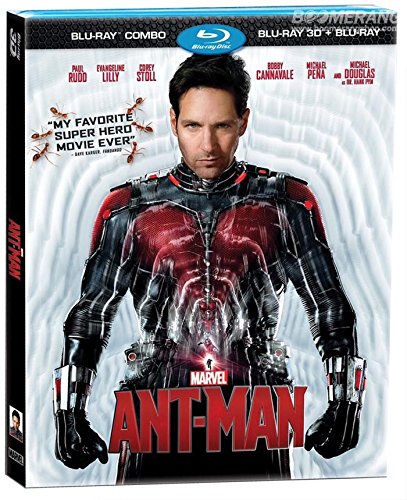
Rated: G Format: Unknown Binding
Marvel's Ant-Man (Blu-ray 3D + Blu-ray 2D, Region A, Peyton Reed) Paul Rudd, Michael Douglas, Corey Stoll
See current price

Format: DVD-ROM This title is manufactured on demand using DVD-R, when sold by Amazon.com. Learn more What's this?
Walt Disney Aladdin 2-disc Special Edition Dvd (Region 3)
See current price


Format: DVD-ROM This title is manufactured on demand using DVD-R, when sold by Amazon.com. Learn more What's this?
STAR WARS The Complete Saga (Episodes 1-6) Brand New! Sky-Shopping
See current price
Format: DVD-ROM This title is manufactured on demand using DVD-R, when sold by Amazon.com. Learn more What's this?
STAR WARS The Complete Saga (Episodes 1-6) Brand New! Sky-Shopping
See current price
![Black Panther [Blu-ray 3D + Blu-ray]](https://m.media-amazon.com/images/I/811olnCSXCL._SL1500_.jpg)
Chadwick Boseman (Actor), Michael B. Jordan (Actor), Ryan Coogler (Director) & 0 more Rated: PG-13 Format: Blu-ray
Black Panther [Blu-ray 3D + Blu-ray]
See current price


![Fiddler on the Roof [VHS]](https://m.media-amazon.com/images/I/41VHXNGF7NL._AC_.jpg)
Topol (Actor), Norma Crane (Actor), Norman Jewison (Director, Producer) & 0 more Rated: G Format: VHS Tape
Fiddler on the Roof [VHS]
See current price


Sleepless Society Publishing Co.
Dreams Are Built Overnight by David Shands (2015-08-01)
See current price
![Lady and the Tramp, Diamond Edition [Blu-ray]](https://m.media-amazon.com/images/I/91uN+H2IUmL._SL1500_.jpg)
Larry Roberts (Actor), Verna Felton (Actor) Rated: G Format: Blu-ray
Lady and the Tramp, Diamond Edition [Blu-ray]
See current price

Peter Weller (Actor), Nancy Allen (Actor), Paul Verhoeven (Director) & 0 more Rated: X Format: VHS Tape
Robocop VHS
See current price

Popular brands in Microconsoles
Microconsoles offer a compact way to enjoy classic-style gaming without the size and complexity of a full home entertainment setup. Depending on the product, a microconsole may include built-in games, support downloadable content, connect to a television, or work with wireless and wired controllers.
The right choice depends less on appearance than on the software included, how the system connects to your display, and whether its controls suit the games you want to play. Compare the specifications carefully before choosing a system for solo play, multiplayer sessions, collecting, or casual use.
How to choose a microconsole
Start with the games and platforms the system supports. Some microconsoles focus on a particular classic library, while others are designed around broader compatibility or a curated collection. Check whether games are built in, supplied separately, downloadable, or dependent on another device.
Consider where and how the system will be used:
- For occasional play: A simple system with built-in games and straightforward television connectivity may be the easiest option.
- For collecting: Look for a design, software library, or brand connection that complements the rest of your legacy gaming collection.
- For multiplayer: Verify the number and type of supported controllers, along with whether additional controllers are included or sold separately.
- For flexible setups: Wireless connectivity, USB ports, memory support, or compatibility with modern displays may be important.
Microconsoles sit within the broader Legacy Systems category, so they can be a useful starting point when comparing compact retro hardware with larger traditional consoles.
Key features and specifications to compare
Game library and software
The included game selection is often the defining feature. Check the exact titles or game families listed by the manufacturer, as similarly styled systems can offer very different libraries. Also look for information about menus, save functionality, game selection, and whether the system supports additional software.
If preservation and authenticity matter, review how the product presents the original games and whether it is intended as a dedicated plug-and-play device or a more flexible platform.
Display and audio connections
Confirm that the microconsole can connect to the television or monitor you plan to use. HDMI is common on modern displays, but the product specifications should be checked rather than assumed. Pay attention to included cables, video output details, audio handling, and whether an adapter may be needed for an older television.
Controllers and input options
The controller can have a major effect on playability. Compare the button layout, directional pad, analog controls, cable length, wireless connection method, and compatibility with replacement or additional controllers. Systems aimed at classic games may benefit from a simple, responsive layout, while broader game libraries may require more buttons or analog input.
Storage, power, and setup
Review how the system is powered and whether the power adapter is included. USB power can be convenient, but the available cable length and power requirements still matter. Storage specifications are also worth checking if the microconsole supports downloadable games, memory cards, or user-managed content.
Brands represented in the catalog
The Microconsoles catalog includes products associated with GameSir, Razer, Hackerdom, 8Bitdo, Turtle Beach, Mad Catz, Gamevice, MIUTRY, FLYDIGI, and Adrxmexna. These brands cover different approaches to gaming hardware and accessories, so compare each product’s specifications rather than selecting by brand name alone.
Some products associated with these brands may emphasize controllers, mobile or compact gaming, connectivity, or accessories as much as the console hardware itself. Check the product description to confirm exactly what is included in the listing.
Related legacy gaming categories
Shoppers comparing microconsoles may also want to browse Nintendo Systems, PlayStation Systems, Xbox Systems, Sega Systems, and Atari Systems. These categories can help when the preferred game library or original platform matters more than a compact form factor.
Setup and compatibility tips
Before buying, check the available space around the television, the location of power outlets, and whether the included cable will reach comfortably. For wireless controllers, confirm the connection type and whether pairing requires a separate adapter. If the system will be used by children or shared by several players, a simple interface and durable-feeling controls may be more useful than advanced connectivity.
When comparing listings, distinguish between a complete console package and an accessory or controller designed to work with another device. Confirm the operating requirements, included components, supported displays, and return or compatibility information shown on the product page.
Frequently asked questions
What is a microconsole?
A microconsole is a compact gaming system designed for a focused gaming experience, often with built-in or downloadable software and direct connection to a television or monitor.
Are microconsoles only for retro games?
Many are designed around classic or legacy-style games, but the software and capabilities vary. Check the product’s listed game library and platform support for details.
Do microconsoles include controllers?
Some packages include controllers, while others may require a separate purchase. Review the included-items section and controller compatibility before choosing.
Can a microconsole connect to a modern television?
Some support modern display connections, but compatibility depends on the specific output and included cables. Compare the system’s connection specifications with the ports on your television.
What matters most for multiplayer use?
Controller support, included inputs, wireless pairing, and the games’ multiplayer capabilities are the main considerations. Check all of these specifications instead of assuming that a compact system supports multiple players.
Are microconsoles difficult to set up?
Many are designed for straightforward setup, but requirements differ. Check the power source, display connection, controller pairing process, and any required software or storage before buying.