

Misting Fans for Outdoor Cooling
Compare misting fans by airflow, water delivery, power source, portability, and setup requirements. This guide highlights the features that matter for patios, yards, workshops, and outdoor gatherings.
31 products in catalog
31 results
Filters


O2COOL
O2COOL Deluxe Handheld Battery Powered Water Misting Fan (Purple) Batteries Included
See current price




O2COOL
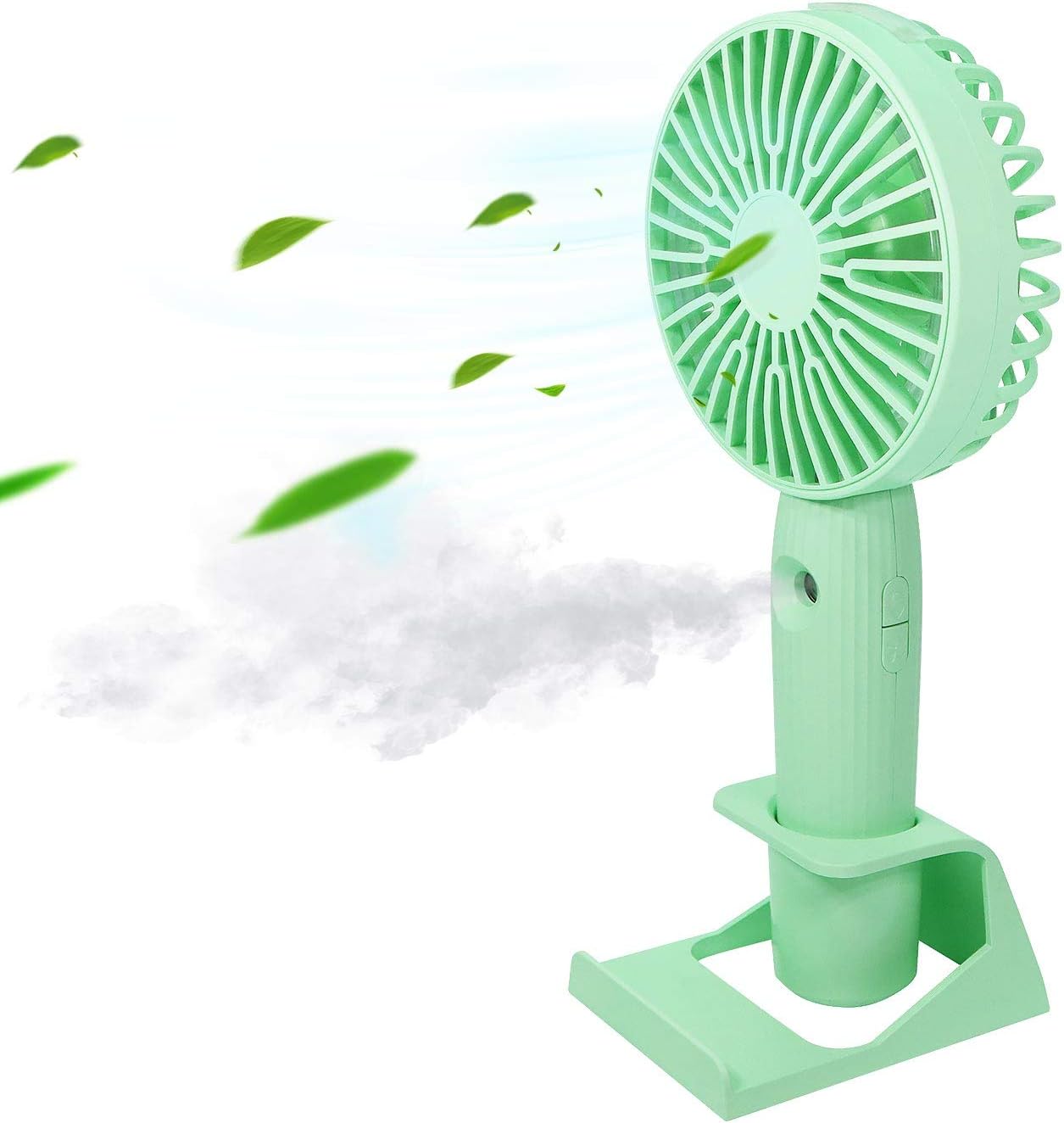
O2COOL LED Lights Deluxe Handheld Battery Powered Water Misting Fan (Dark Blue)
See current price



Popular brands in Misting Fans
Misting fans combine air movement with a fine water mist to make outdoor spaces feel more comfortable in warm, dry conditions. They can be useful on patios, decks, pool areas, job sites, and during outdoor events where a standard fan may not provide enough relief.
K-Catalog helps shoppers compare listed specifications and features before visiting Amazon to check product details and the current price. Misting fans vary considerably in their water supply, power options, size, controls, and portability, so the best choice depends on where and how you plan to use one.
How to choose a misting fan
Start with the location and the type of cooling you need. A compact, self-contained fan may suit a personal seating area or a smaller outdoor space, while a larger fan with stronger airflow may be more appropriate for a gathering area or work zone.
Consider these questions before comparing models:
- Where will it be used? Look for portability if the fan will move between rooms, patios, campsites, or work areas.
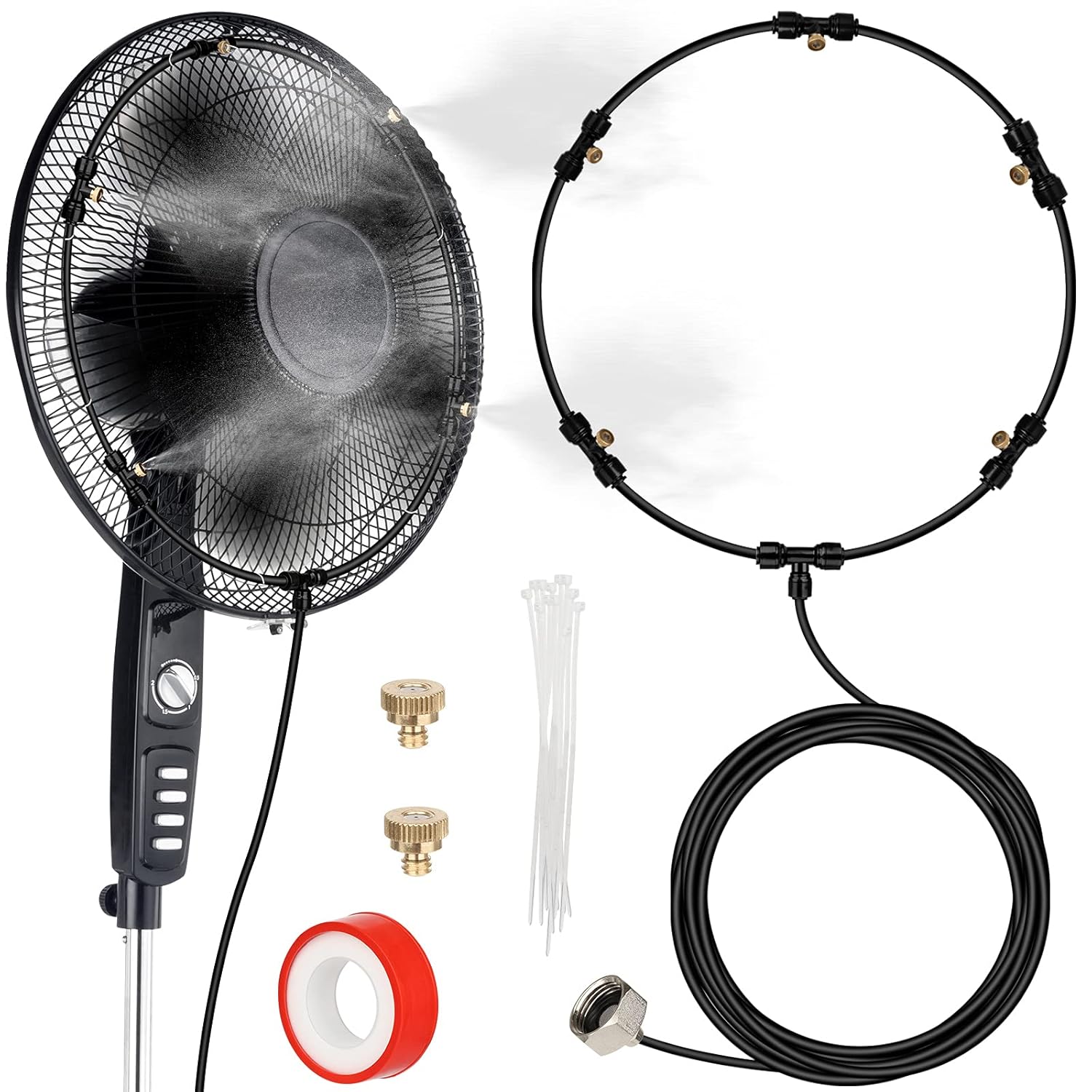
- Is water available nearby? Some designs use an onboard reservoir, while others may connect to a hose or a separate misting setup.
- How will it be powered? Corded, rechargeable, and battery-powered options each suit different outdoor arrangements.
- How much control is needed? Adjustable fan speeds, mist settings, oscillation, and tilt can make it easier to direct airflow.
- What kind of maintenance is practical? Water-contact components need regular cleaning and drying to help limit buildup and odors.
For broader outdoor climate equipment, browse the Outdoor Heating & Cooling category.
Misting fan formats and water systems
Misting fans are available in several practical formats, even when they are listed under the same category. Portable models are convenient for moving between locations and may be designed around a built-in tank or compact footprint. Larger pedestal or floor-standing designs can provide a wider airflow pattern and may be better suited to fixed placement.
The water system is one of the most important differences to compare. A reservoir-based fan can be convenient where a faucet is not close by, but its operating time depends on tank capacity and mist intensity. A hose-connected model may be useful for longer sessions near an outdoor water connection, although hose access and connection compatibility become part of the setup.
Some shoppers may need a standalone fan, while others may be planning a more extensive installation. Compare these fans with Misting Systems when evaluating fixed lines, nozzles, and broader-area outdoor misting.
Features and specifications to compare
Airflow and mist output should be considered together. Strong airflow may distribute mist across a larger area, while adjustable mist control can help prevent excessive dampness on nearby furniture, surfaces, or clothing. If the fan will be used close to people, multiple speed settings and directional adjustment can help create more comfortable airflow.
Other specifications worth checking include:
- Oscillation and tilt: These features affect how widely the fan distributes air and how easily it can target a specific seat or work area.
- Reservoir design: Check how the tank is filled, whether the water level is easy to monitor, and whether removable components simplify cleaning.
- Controls: Look for clearly marked buttons, dials, remote operation, timers, or other controls that match your preferred setup.
- Portability: Wheels, handles, overall weight, and cord storage can matter when the fan must be moved often.
- Construction: Outdoor use calls for attention to materials, stability, and the manufacturer’s instructions about moisture exposure and storage.
- Noise: If the fan will be used near conversation, dining, or relaxation areas, check the listed noise information when available.
Do not assume that every misting fan is designed for every outdoor condition. Review the product specifications and operating instructions for placement, water, power, and weather-related limitations.
Brands represented in the catalog
The catalog includes misting fans from O2COOL, DeepDream, ALAGOON, RYOBI, Lasko, Hylaea, Newair, HOMENOTE, DR.PREPARE, HealSmart, Tesmotor, and Dynamic Collections. Comparing products across these brands can help shoppers see differences in form factor, controls, power arrangements, water delivery, and intended use without relying on brand name alone.
Setup, care, and safe use
Place the fan on a stable, level surface where it will not be easily knocked over. Keep electrical connections protected from water and follow the manufacturer’s guidance for outdoor operation. Do not direct mist toward sensitive electronics, uncovered outlets, or surfaces that could become slippery.
Use clean water as directed and empty the reservoir when the fan will be stored. Regularly inspect the tank, tubing, nozzles, and other water-contact parts for residue or blockage. Before moving or cleaning the unit, switch it off and disconnect it from its power source. Store the fan in a dry, protected location when it is not intended for outdoor exposure.
If you are comparing cooling and heating options for the same space, Patio Heaters may be useful for cooler conditions. For outdoor fire features and related accessories, see Fire Pits & Outdoor Fireplaces.
Frequently asked questions
Do misting fans make outdoor air cooler?
Misting fans can make conditions feel more comfortable by combining airflow with fine water droplets. Their effectiveness depends on humidity, airflow, water delivery, and the surrounding environment.
Is a hose connection better than a water reservoir?
Neither is universally better. A reservoir offers flexibility where a faucet is unavailable, while a hose connection may suit longer operation near a compatible outdoor water source.
Can a misting fan be used indoors?
Check the manufacturer’s instructions before indoor use. Mist may add moisture to the room and could affect nearby electronics, flooring, or furniture.
What should be cleaned on a misting fan?
Follow the product instructions for cleaning the reservoir, tubing, nozzles, fan grille, and other water-contact components. Regular maintenance can help reduce mineral buildup and odors.
What power source is most convenient outdoors?
The right choice depends on access to outlets, the need for mobility, and expected operating time. Compare corded, rechargeable, and battery-powered designs against the intended location.