

Motorcycle & Powersports Vehicles
Compare motorcycles and powersports vehicles by intended use, rider fit, power source, and essential specifications. Explore the related parts, gear, accessories, and maintenance categories before choosing.
59 products in catalog
59 results
Filters



Popular brands in Vehicles
Vehicles in the motorcycle and powersports category can serve very different purposes, from recreational trail riding to low-speed neighborhood travel or supervised youth riding. The right choice depends on where the vehicle will be used, who will operate it, and which features matter most for control, transport, and upkeep.
This K-Catalog section is part of Motorcycle & Powersports, with products from brands such as X-PRO, Tusk Off-Road, FRP, Razor USA, LLC, Coleman Powersports, and Peg Perego. Compare specifications and features carefully, then check the current Amazon listing for availability and purchase details.
How to choose a powersports vehicle
Start with the vehicle’s intended environment. A trail-oriented model may need appropriate ground clearance, durable tires, and protective components, while a compact recreational vehicle may be easier to store and transport. If the vehicle will be used on public roads, confirm that it meets applicable local requirements before buying.
Consider these questions:
- Who will ride it? Match the vehicle to the rider’s age, experience, height, weight, and ability to control the controls safely.
- Where will it be used? Think about paved surfaces, trails, private property, enclosed tracks, or mixed terrain.
- How will it be transported? Check the vehicle’s overall dimensions, weight, and whether your vehicle or trailer can carry it.
- How much maintenance is practical? Fuel systems, batteries, chains, brakes, tires, and suspension components may require different levels of care.
- What safety equipment is needed? Plan for a properly fitted helmet, eye protection, gloves, suitable footwear, and other protective equipment appropriate to the vehicle and riding conditions.
Common vehicle types to compare
The Vehicles category can include several distinct formats, and specifications should be compared within the same type rather than across unrelated vehicles.
Dirt bikes and off-road motorcycles
These vehicles are designed around two-wheel handling and off-road riding. Compare engine or motor type, wheel size, seat height, suspension design, braking system, tire style, and starting method. Seat height is especially important because the rider needs confidence and control when stopping or placing a foot down.
ATVs and utility-style vehicles
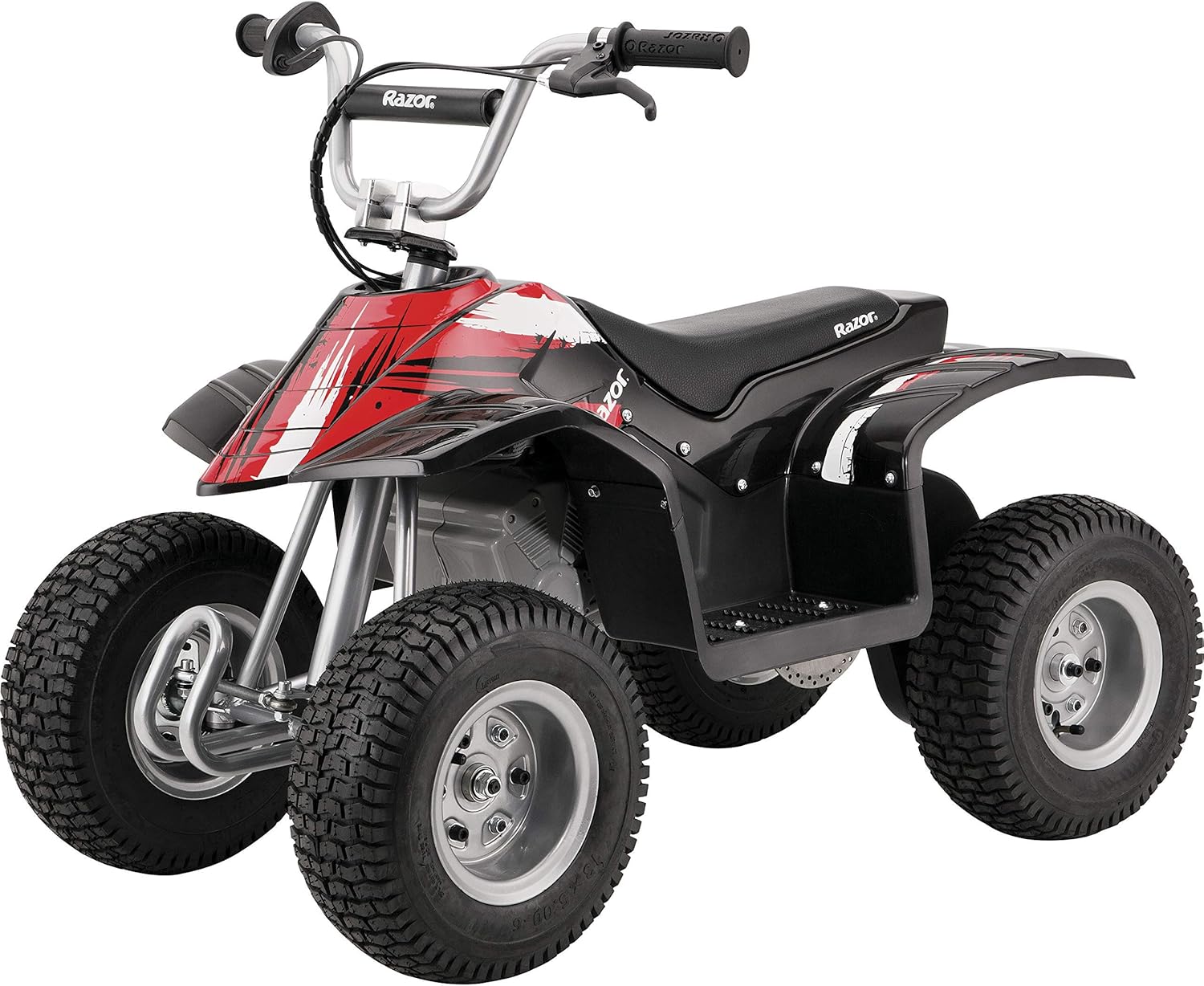
Four-wheel vehicles can offer a different balance of stability and maneuverability. Compare drivetrain details, ground clearance, steering controls, cargo capability, turning space, and the intended terrain. A vehicle designed for recreation may have different priorities from one intended for property tasks.
Go-karts and minibikes
Go-karts and minibikes are often evaluated by their seating position, control layout, frame design, tire configuration, and power source. Check the recommended rider specifications, available safety features, storage requirements, and whether the vehicle is intended for private-property use.
Electric ride-on and recreational vehicles
Electric models require attention to battery type, charging requirements, run-time claims, charge time, maximum supported load, and replacement-part availability. Confirm that the charger and electrical setup are suitable for the intended location, and store the vehicle according to the manufacturer’s guidance.
Specifications and features to compare
Product names alone do not show whether a vehicle fits a particular rider or use case. Review the full specification list for:
- Powertrain: engine displacement or motor output, fuel type, transmission, and starting system
- Size and fit: seat height, wheelbase, overall dimensions, rider capacity, and weight limit
- Handling: tire size, suspension, brakes, steering controls, and ground clearance
- Practicality: fuel-tank or battery details, charging equipment, storage, and transport weight
- Construction: frame materials, guards, fenders, chain protection, and weather-use limitations
- Included equipment: tools, assembly requirements, manuals, keys, chargers, or other supplied components
Also check whether assembly or adjustment is required. Confirm that replacement parts and service items can be identified for the specific vehicle before purchase.
Brands represented in the catalog
The catalog includes vehicles and related listings associated with X-PRO, Tusk Off-Road, FRP, Razor USA, LLC, XtremepowerUS, RAZOR, Hess, Whiteline, APO, Coleman Powersports, TUSK, and Peg Perego. Brand names can help narrow a search, but specifications, intended use, fit, included equipment, and support information should guide the final comparison.
For equipment that supports the vehicle, browse Parts, Protective Gear, Accessories, and Fluids & Maintenance.
Setup, care, and safe use
Read the manufacturer’s instructions before operating or modifying a vehicle. Complete any required assembly, inspect fasteners, check tire pressure, test the brakes, and verify that controls move freely. Electric vehicles should be charged with the supplied or specified charger, while gas-powered models require the correct fuel and maintenance fluids.
Use the vehicle only in appropriate areas and follow local rules. Riders should wear suitable protective equipment, avoid carrying passengers unless the vehicle is designed for them, and keep children supervised when applicable. Regularly inspect tires, brakes, chains, cables, batteries, and steering components for wear or damage.
Frequently asked questions
What type of powersports vehicle should I choose?
Choose based on the rider, terrain, experience, storage, and intended activity. Compare vehicles within the same format and verify the manufacturer’s fit and use guidance.
Are these vehicles suitable for public-road use?
Not necessarily. Many recreational and off-road vehicles are intended for private property or designated riding areas. Check the specific product documentation and local requirements before using one on public roads.
What specifications matter most for a younger rider?
Prioritize rider fit, manageable controls, appropriate speed or power, braking performance, stability, and required supervision. Follow the manufacturer’s age, height, and weight guidance.
Do powersports vehicles require assembly?
Some products may require assembly or setup. Review the listing for included tools, assembly instructions, adjustment needs, and any recommended professional service.
What protective equipment should be used?
A properly fitted helmet is a key starting point. Depending on the vehicle and terrain, riders may also need eye protection, gloves, boots, durable clothing, and additional impact protection.