
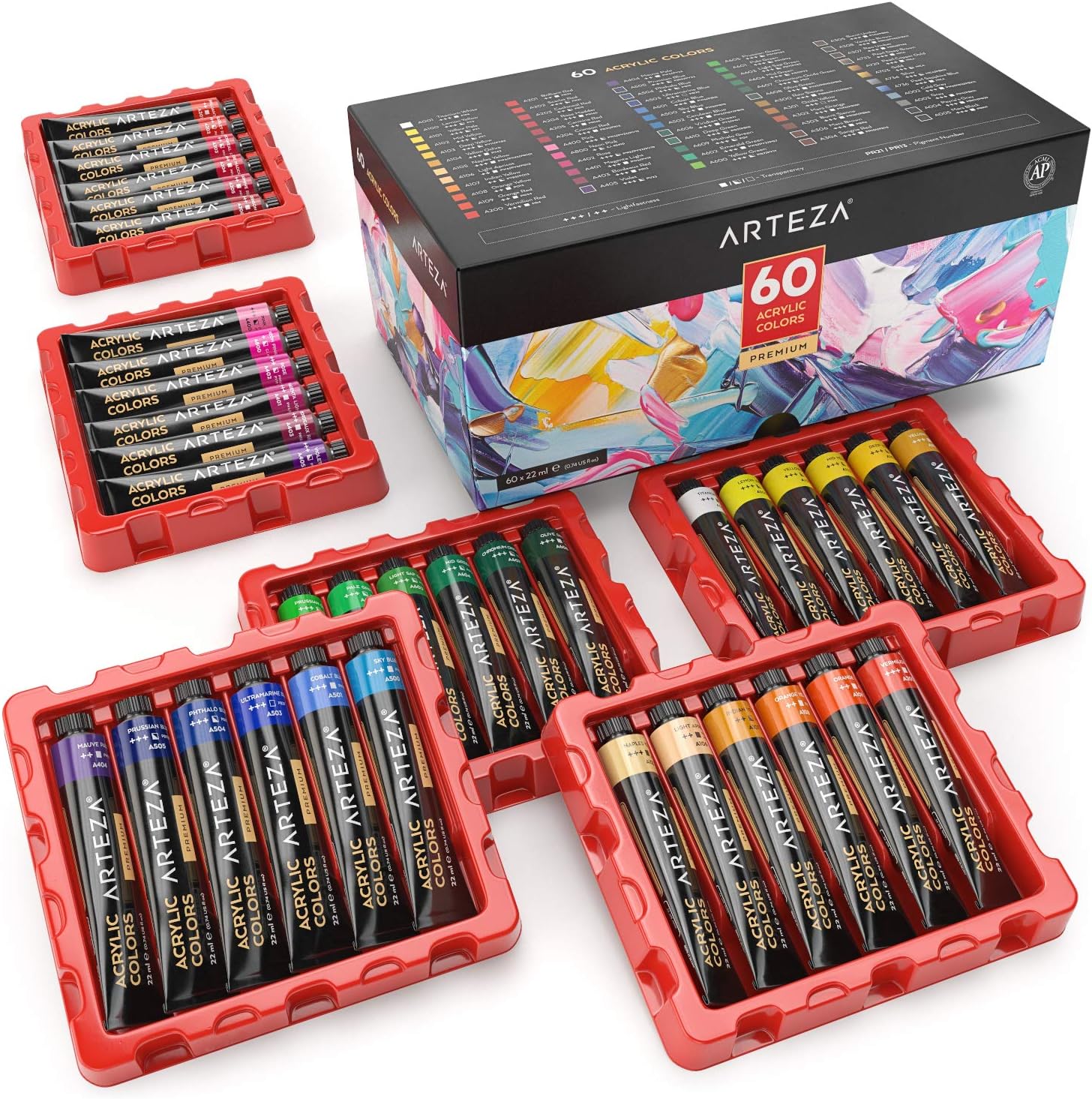
Painting Supplies and Art Materials
Compare painting supplies by medium, surface, color, application method, and project needs. K-Catalog helps you review product specifications and features before visiting Amazon.
7,238 products in catalog
7,238 results
Filters


Apple Barrel
Apple Barrel PROMOABI Acrylic Paint Set, 2 Fl Oz (Pack of 18), Assorted Matte Colors, 18 Count
See current price
![Twilight [DVD]](https://m.media-amazon.com/images/I/71iHLfCWsZL._SL1146_.jpg)
Kristen Stewart (Actor), Robert Pattinson (Actor), Catherine Hardwicke (Director) & 0 more Rated: Unrated Format: DVD
Twilight [DVD]
See current price


Plaid Enterprises, Inc.
Apple Barrel Acrylic Paint in Assorted Colors (2 Ounce), 20503 White
See current price


Winsor & Newton
Winsor & Newton Cotman Watercolor Paint Set, Palette Pocket Set, 12 Half Pans w/ Brush
See current price

Hulameda
Hulameda 28 Pcs Paint Tray Palettes Plastic for Kids to Put Cupcake and Art Painting
See current price


Apple Barrel
Apple Barrel Acrylic Paint in Assorted Colors (8 oz), K2602 Bright Magenta
See current price

Winsor & Newton
Winsor & Newton Winton Oil Color, 200ml (6.75-oz) Tube, Phthalo Blue
See current price


Liquitex
Liquitex BASICS Acrylic Paint Set, 6 x 22ml (0.74-oz) Tube Paint Set, Primary
See current price
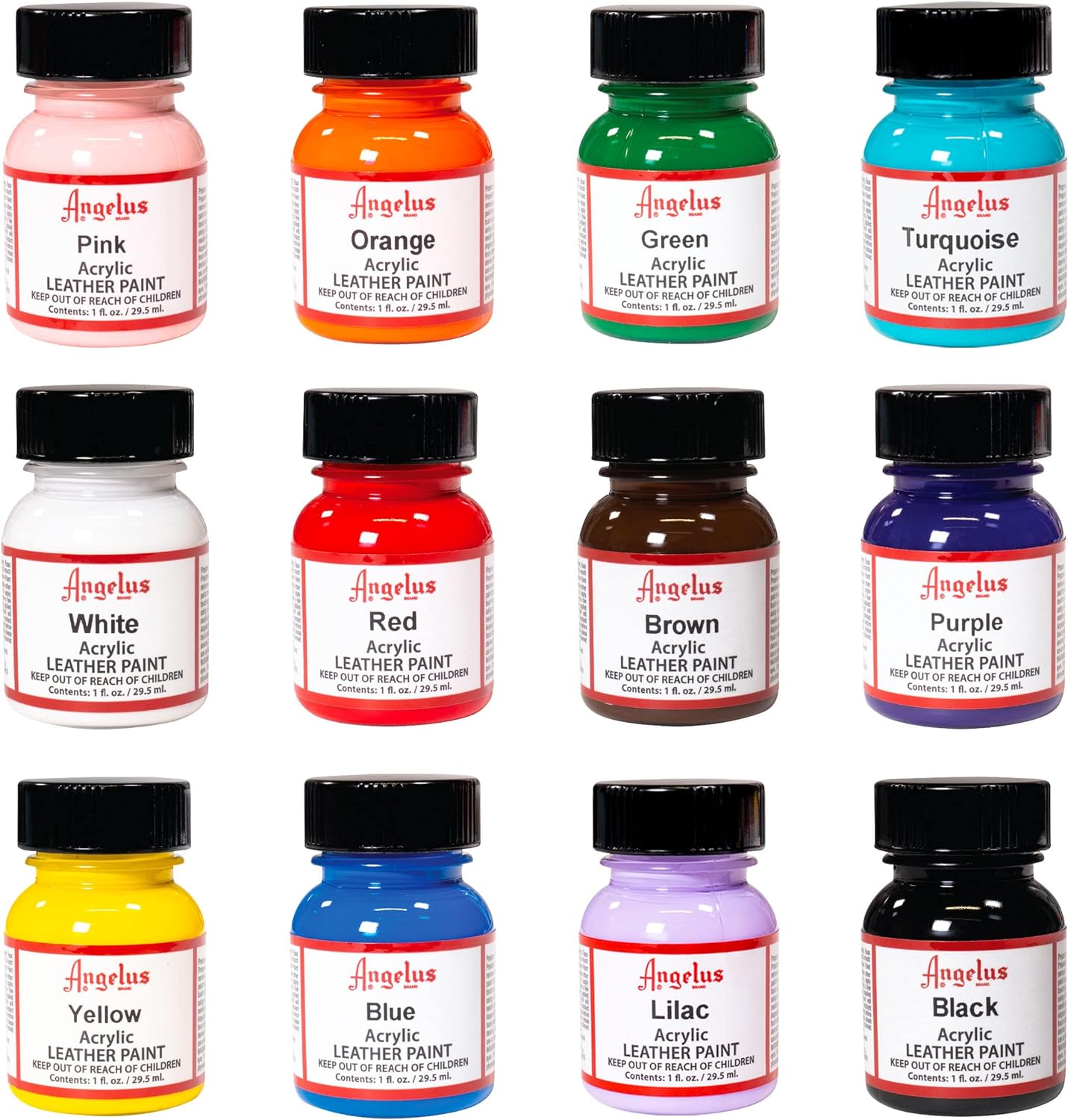
Popular brands in Painting
Painting covers a wide range of materials, from beginner-friendly craft paints to professional artist mediums and specialized airbrush colors. The right choice depends on the effect you want, the surface you are decorating, your working style, and how much control you need over color and texture.
Use this catalog to compare paint types, brushes, sets, surfaces, and supporting tools in one place. Product descriptions can help clarify intended uses, finish, coverage, cleanup requirements, and compatibility before you choose an option.
How to choose painting supplies
Start with the project rather than the brand. A small canvas study, a detailed miniature, a fabric decoration, and a large wall accent can all require different paint characteristics and tools.
Consider these factors:
- Paint medium: Acrylic, oil, watercolor, gouache, tempera, fabric paint, and specialty paints each behave differently while being applied and dried.
- Surface: Check whether the product is intended for canvas, paper, wood, fabric, glass, ceramic, metal, or another material.
- Finish: Matte, satin, gloss, metallic, transparent, opaque, and textured finishes create different visual results.
- Skill level and working time: Fast-drying paints can suit quick projects, while slower-drying mediums may allow more blending and correction.
- Application method: Brushes, sponges, palette knives, airbrushes, and other tools produce distinct marks and coverage patterns.
- Cleanup: Look for care and cleanup instructions, especially when choosing paints for shared workspaces or use with children.
A coordinated set can be practical for exploring a medium or building a basic palette. Individual colors may be better when you already know which hues you use often or need to replace a specific color.
Main types of painting materials
Acrylic paint
Acrylics are versatile for canvas, paper, wood, craft projects, and many prepared surfaces. They can be applied in thin layers or built up for more texture. Compare consistency, opacity, finish, drying behavior, and whether the formula is intended for a particular surface.
Oil paint
Oil paints are commonly selected for rich blending, layered work, and expressive brushwork. When comparing oil-paint supplies, check the recommended mediums, cleanup requirements, drying characteristics, and the type of surface preparation needed.
Watercolor and gouache
Watercolor is suited to transparent washes, flowing color, and layered effects. Gouache generally offers a more opaque appearance and can be useful when you want stronger coverage. Paper weight and surface texture matter for both, particularly when a project uses generous amounts of water.
Tempera and craft paint
Tempera and general craft paints can be useful for classroom activities, decorative work, signs, and simple creative projects. Compare the intended surface, finish, washability, coverage, and application guidance rather than assuming all craft paints work the same way.
Specialty paints
Specialty options may include fabric, face and body, glass, ceramic, metallic, fluorescent, and airbrush paints. These products often have specific preparation, curing, sealing, or safety instructions. Confirm that the product is designed for the exact surface and use before starting a project.
Brushes, tools, and surfaces to compare
Paint quality is only part of the result. Brush shape, size, and fiber affect how much paint is loaded, how smoothly it moves, and what type of mark it leaves.
- Round brushes: Useful for lines, details, and controlled strokes.
- Flat brushes: Suitable for broad coverage, edges, and rectangular marks.
- Filbert brushes: Offer a rounded edge for blending and softer shapes.
- Liner and detail brushes: Helpful for fine lines and small areas.
- Fan, wash, and specialty brushes: Can support blending, broad washes, texture, or decorative effects.
Compare natural or synthetic fibers, handle length, brush shape, ferrule construction, and the recommended medium. A long handle may suit an easel-based painting style, while a shorter handle can offer closer control at a desk.
The surface also affects the result. Canvas, canvas panels, watercolor paper, mixed-media paper, boards, and prepared wood each have different textures and absorbency. For surface options, explore Boards & Canvas and Art Paper. An easel can improve viewing angle and working posture; see Easels when comparing display and support options.
Features and specifications that matter
Product listings can vary substantially even within the same paint type. Pay attention to the following details:
- Color information: Look for the color name, pigment or color description when provided, transparency, and whether the shade is intended for mixing or direct use.
- Container format: Tubes, jars, bottles, pans, markers, and refill containers suit different workflows and storage preferences.
- Consistency: Fluid, heavy-body, gel, liquid, and solid formats behave differently with brushes and other tools.
- Lightfastness: For artwork intended to last, check any available permanence or lightfastness information.
- Water resistance: A dried paint may remain soluble or become more water-resistant depending on its formula and the surface.
- Set contents: For sets, check the included colors, tools, accessories, and whether the selection matches your intended projects.
- Safety and use instructions: Follow the label guidance for ventilation, skin contact, food-contact surfaces, children’s use, and cleanup.
When comparing similar items, prioritize the specifications that affect your project most. For example, opacity may matter for painting over a dark base, while flow and nozzle compatibility are more important for airbrush work.
Brands represented in the catalog
The Painting catalog includes products from brands such as Master Airbrush, FolkArt, Angelus, DecoArt, MEEDEN, PRINCETON ARTIST BRUSH CO., Winsor & Newton, U.S. Art Supply, Sargent Art, Daniel Smith, US Art Supply, and MXJSUA. These brands cover different parts of the painting supply market, including paints, brushes, sets, surfaces, and specialty tools.
Brand familiarity can be a useful starting point, but specifications should guide the final comparison. Review the listed medium, surface compatibility, color information, dimensions, included accessories, and care instructions for each product.
Related art supplies
Painting often overlaps with other creative disciplines. If a project includes preliminary sketches, lettering, illustration, or mixed-media techniques, compare the options in Drawing. For a broader view of materials across the category, visit Painting, Drawing & Art Supplies.
Keeping related supplies together can also simplify project planning. Choose the surface first when possible, then select a compatible paint, brushes suited to the medium, and any palette, easel, sealant, or cleaning tools required by the product instructions.
Frequently asked questions
What type of paint is best for beginners?
Acrylic paint is often a practical starting point because it can be used for many projects and applied to several prepared surfaces. Compare the product’s intended uses, finish, consistency, and cleanup guidance.
How do I choose paint for a specific surface?
Check the product description and label for explicit surface compatibility. Fabric, glass, ceramic, wood, canvas, and paper may require different formulas or preparation methods.
Should I buy a paint set or individual colors?
A set can provide a convenient starting palette and may suit experimentation. Individual colors are useful when you need specific shades, larger quantities, or replacements for frequently used paints.
What should I compare when buying paint brushes?
Compare brush shape, size, fiber type, handle length, and compatibility with the chosen medium. Also consider whether you need detail work, broad coverage, blending, or texture.
Does the painting surface affect the final result?
Yes. Texture, absorbency, flexibility, and preparation can influence paint flow, coverage, drying, and appearance. Match the surface to the medium and the intended finished work.
How can I compare painting products efficiently?
Define the project, select the medium and surface, then compare color, finish, consistency, container format, included accessories, care instructions, and compatibility details across listings.