

Bird Toys
Compare bird toys by design, materials, size, attachment method, and play style. K-Catalog helps you review product specifications before visiting Amazon to check availability and the current price.
332 products in catalog
332 results
Filters


Super Bird Creations
Super Bird Creations SB541 Crinkle Crinkle Little Star Bird Toy, Small Bird Size, 6" x 2"
See current price

![Jusney Bird Rope Perches,Parrot Toys 21 inches Rope Bungee Bird Toy (21 inches)[1 Pack]](https://m.media-amazon.com/images/I/71dtZeE3PCL._AC_SL1500_.jpg)
Jusney
Jusney Bird Rope Perches,Parrot Toys 21 inches Rope Bungee Bird Toy (21 inches)[1 Pack]
See current price

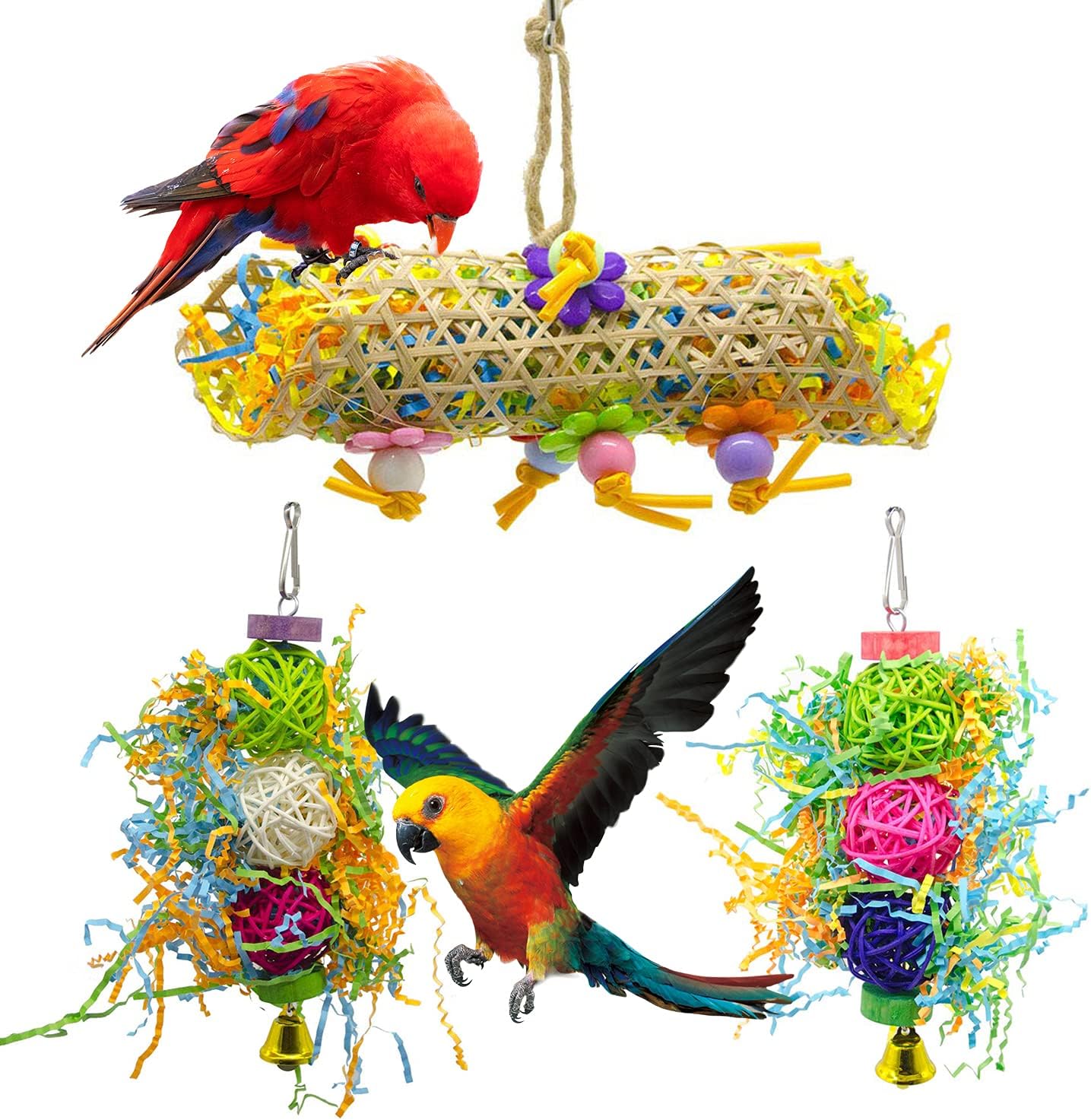

JW Pet Company
JW Pet Company Activitoys Hol-ee Roller Parrot Toy, 4 Inch Diameter (Colors Vary )
See current price

Luffy Pets Collection
SunGrow Small Pets Wooden and Rope Chewing Toy, Multi-Shaped and Multicolored Blocks and Cotton Rope with Hanging Loop
See current price


Penn-Plax
Penn-Plax Bird Life Wooden Playpen – Perfect for Parakeets, Lovebirds, and Parrotlets – Small
See current price


Super Bird Creations
Super Bird Creations SB747 Mini Flying Trapeze Bird Toy, Small Bird Size, 6” x 7” x 9”
See current price

Super Bird Creations, LLC
Super Bird Creations SB1107 Bagel Cascade Bird Toy, Large Bird Size, Refillable Bagels, 15” x 4.5”
See current price


Bonka Bird Toys
Bonka Bird Toys 2 Mini Sneakers Colorful Cotton Chew Parrot Quaker Budgie Finch Cockatiel Dove
See current price




Popular brands in Toys
Bird toys can add variety to a bird’s environment and provide opportunities for movement, exploration, chewing, or manipulation. The right choice depends on the bird’s size, habits, cage layout, and the type of activity you want to encourage.
Use the catalog to compare construction details and practical features rather than choosing by appearance alone. Product pages can help clarify dimensions, materials, intended use, and installation requirements.
How to choose a bird toy
Start with your bird’s size and behavior. A toy should be appropriate for the bird’s beak and strength, with components that are large enough to reduce the risk of accidental swallowing but not so heavy or bulky that they limit movement.
Consider where the toy will be used. A hanging toy needs a secure attachment point and enough clearance from cage walls, perches, food, and water. Toys placed inside a cage should leave sufficient room for the bird to move comfortably.
Useful questions to ask include:
- Is the toy intended for chewing, climbing, foraging, swinging, or general activity?
- Are the materials suitable for the intended bird and use?
- Can the toy be cleaned or inspected easily?
- Will the attachment hardware fit the cage securely?
- Does the size suit the available space?
Common bird toy styles
Bird toys come in many combinations of textures and activities. Chewable toys may use wood, fiber, or other textured components that appeal to birds that like to work with their beaks. Climbing and swinging toys can add movement and may include ropes, ladders, rings, or platforms.
Foraging-style toys are designed to make birds investigate, manipulate, or search for a reward. These can be useful when a bird enjoys problem-solving, but the design should be easy to inspect and maintain. Bell and sound toys may provide auditory stimulation, although individual birds can respond differently to noise.
Some products combine several activities in one hanging design. Combination toys can be convenient, but compare their overall size and weight with the cage before ordering.
For more equipment to use with toys, browse Birdcage Accessories. A suitable Birdcage can also make it easier to arrange toys, perches, feeding areas, and open space safely.
Features and specifications to compare
Pay close attention to the following details on each product listing:
- Dimensions: Check the full length, width, and depth, including hanging hardware or projecting parts.
- Materials: Look for clear material descriptions and consider whether the construction matches your bird’s chewing and climbing habits.
- Attachment method: Hooks, clips, chains, and other connectors may differ in how they fit and secure to a cage.
- Construction: Inspect how parts are joined and whether small components, loose fibers, or accessible fasteners could become a concern.
- Maintenance: Removable or washable parts may be more practical for regular cleaning.
- Activity level: Compare whether the toy is mainly stationary, swinging, climbable, chewable, or interactive.
Specifications are especially important when replacing a familiar toy. Matching the previous item’s general size and attachment style can make setup easier, while a different texture or activity can add variety.
Brands represented in the catalog
The catalog includes bird toy products from Bonka Bird Toys, Super Bird Creations, JW Pet Company, Keersi, Rypet, MEWTOGO, Birds LOVE, Mrli Pet, Coppthinktu, KATUMO, JW, and QBLEEV. These brands may offer different approaches to materials, shapes, attachment hardware, and play features, so compare the specifications of individual products rather than relying on the brand name alone.
Safety and care tips
Inspect a new toy before placing it in the cage. Check for damaged parts, sharp edges, loose connections, frayed fibers, or components that could detach. Continue checking toys during use, particularly if the bird is an active chewer.
Remove or replace a toy when it becomes damaged or excessively worn. Clean it according to the product instructions and allow washable parts to dry fully before returning them to the cage. Introduce unfamiliar toys gradually if your bird is cautious around changes in its environment.
Keep toys positioned so they do not block access to Feeding & Watering Supplies. Food and treats should not be placed where a toy can repeatedly contaminate them. For related care products, see Health Supplies.
Frequently asked questions
How many toys should a bird have?
There is no single ideal amount. Choose enough to provide suitable activity without overcrowding the cage or restricting movement, and rotate appropriate toys when variety is needed.
Are all bird toys suitable for every bird?
No. Size, strength, chewing habits, and activity level vary. Check the intended use, dimensions, materials, and attachment method before choosing a toy.
Where should a hanging bird toy be placed?
Place it where the bird can access it without blocking the cage door, perches, food, or water. Leave enough surrounding space for comfortable movement.
How often should bird toys be inspected?
Inspect them regularly and whenever you clean the cage. Active chewers may require more frequent checks for fraying, cracks, loose parts, or other damage.
Can bird toys be cleaned?
Some can be cleaned, but the correct method depends on the materials and construction. Follow the product instructions, and remove any toy that cannot be cleaned safely after heavy soiling.