

Abrasive Brushes for Industrial Surface Finishing
Compare abrasive brushes for deburring, cleaning, blending, and surface preparation. Check brush shape, abrasive material, dimensions, and tool compatibility to find a suitable option.
176 products in catalog
176 results
Filters


Performance Tool
Performance Tool W1149 3-Piece Brass and Stainless-Steel Wire Brush Set
See current price



Popular brands in Abrasive Brushes
Abrasive brushes are used to remove burrs, scale, rust, coatings, and surface imperfections while helping prepare material for further finishing. They are available in forms suited to handheld work, powered tools, and specialized equipment, so the right choice depends on the workpiece, desired finish, and application method.
This K-Catalog selection is part of Abrasive & Finishing Products. Compare specifications and features across products, then check the current listing on Amazon for compatibility and availability.
How to choose an abrasive brush
Start with the material and condition of the surface. Metal, wood, plastic, and composite materials can respond differently to the same brush. A brush that is suitable for aggressive material removal may leave a finish that is too coarse for light blending or final preparation.
Consider these factors before choosing:
- Task: Match the brush to deburring, cleaning, rust removal, weld preparation, edge rounding, blending, or surface texturing.
- Workpiece: Account for the base material, shape, edges, recesses, and areas that need protection.
- Abrasive action: Coarser or more aggressive brush construction generally removes material faster, while finer action is better suited to controlled finishing.
- Tool and access: The brush must fit the tool and reach the work area without interfering with nearby surfaces.
- Finish expectations: Decide whether the goal is rapid removal, a uniform appearance, or preparation for painting, coating, or bonding.
Common abrasive brush types
Abrasive brushes differ by shape, mounting method, and the way they contact the surface. The product specification should identify the intended tool or use.
Wheel brushes
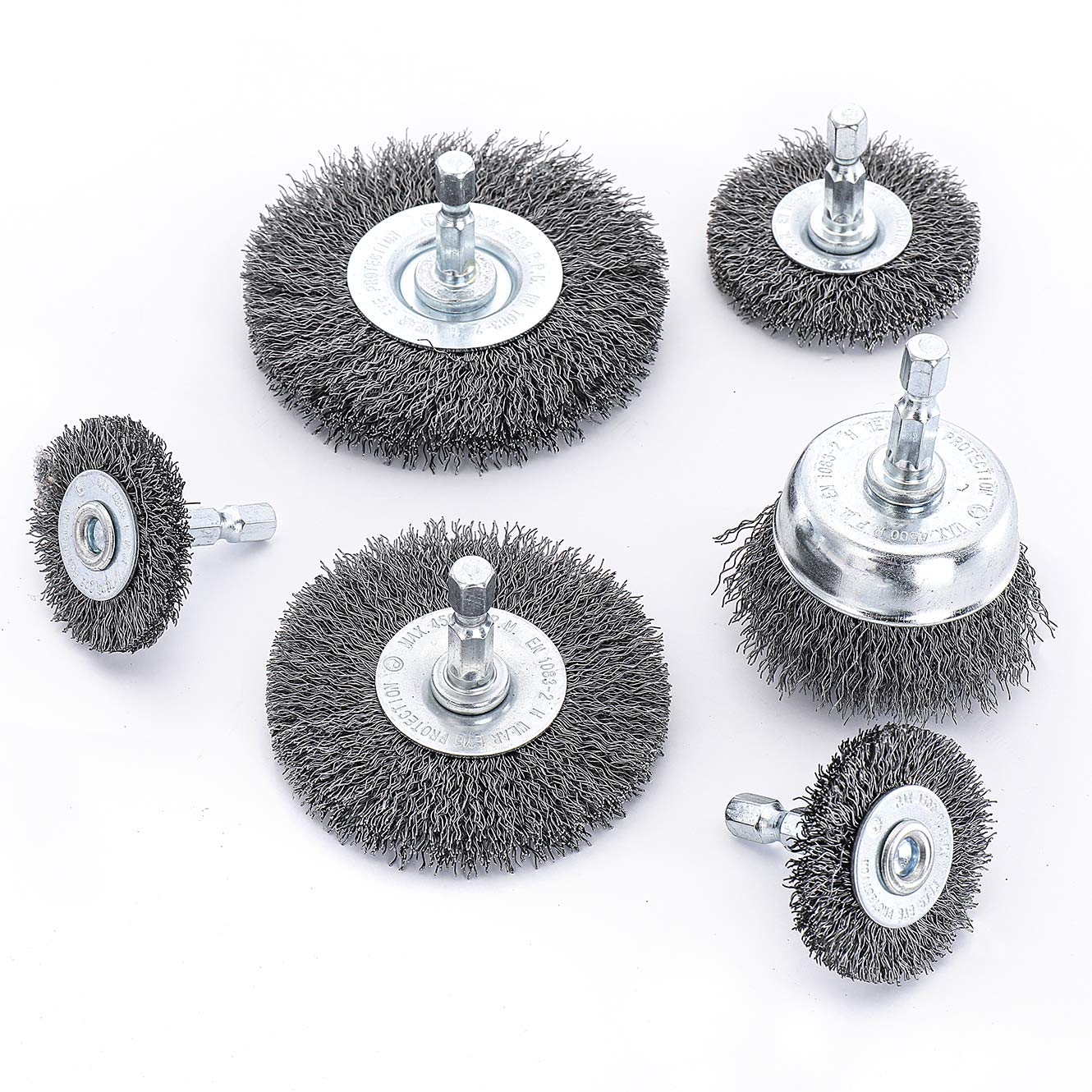
Wheel brushes are designed for rotary tools and machinery. Their profile can work well along edges, welds, narrow surfaces, or long sections of material. Verify the arbor, mounting arrangement, outer dimensions, and tool requirements before selecting one.
Cup brushes
Cup-style brushes present a broader working face and are often considered for cleaning or preparing larger, relatively open surfaces. Check the mounting thread or connection, brush diameter, and the tool’s ability to operate with that configuration.
End and narrow brushes
End brushes are useful for grooves, holes, corners, and other confined areas. Their smaller contact area can provide more focused action, but access and control are especially important when working around delicate surfaces.
Hand and specialty brushes
Handheld or specialty designs can suit detail work, touch-up tasks, and locations where a powered tool is impractical. Look for information about the handle, shape, abrasive filament, and intended application.
For powered options that use a different cutting format, compare the selection of Abrasive Wheels & Discs. Products intended for a broader finishing process can also be found in Finishing Products.
Specifications and features to compare
The most useful product details depend on the brush style, but several specifications commonly affect selection:
- Abrasive material: The filament or abrasive element influences cutting action, durability, and the types of surfaces it can treat.
- Brush dimensions: Diameter, width, length, and working face affect coverage and access.
- Mounting details: Check the arbor, shank, thread, hole size, or other connection required by the tool.
- Operating requirements: Follow the listed tool compatibility and operating limits. Do not assume that a brush fits every drill, grinder, polisher, or machine.
- Filament density and layout: The arrangement of the abrasive material can affect contact, flexibility, and consistency across the surface.
- Construction materials: Inspect the body, backing, handle, and connection for suitability in the intended environment.
When comparing similar products, prioritize the specifications that directly affect fit and the finish you need rather than selecting by appearance alone.
Brands represented in the catalog
The catalog includes abrasive brush listings from Forney, Dewalt, Rocaris, MAXMAN, HOYIN, TILAX, Weiler, FPPO, Purdy, Osborn, RamPro, and Makita. These brands are represented across the available selection; compare each product’s construction, dimensions, mounting details, and intended use rather than treating brand presence alone as a substitute for specifications.
Safe and consistent use
Inspect the brush before use and confirm that it is correctly secured to the tool. Use the protective equipment and guards appropriate for the tool and material, and follow the manufacturer’s instructions. Keep bystanders away from loose debris and avoid applying excessive pressure, which can reduce control and produce an uneven result.
Test the brush in an inconspicuous area when the surface or finish is sensitive. Work progressively, clean away residue, and inspect the result before increasing the aggressiveness of the process. For related mounting pieces and supporting components, see Abrasive Accessories.
Frequently asked questions
What are abrasive brushes used for?
They can help remove burrs, rust, scale, coatings, weld residue, and other surface contamination. Some are also used for blending, texturing, or preparing a surface for a later finish.
How do I choose between a wheel and cup brush?
Choose based on the working area and tool. Wheel brushes suit edges and linear contact, while cup brushes offer a broader face for open surfaces. Confirm the mounting requirements for either style.
Can one abrasive brush work on every material?
No. Abrasive action should be matched to the workpiece and desired finish. Always review the product’s stated applications and test carefully when the surface may be damaged.
What should I check for tool compatibility?
Review the connection type, arbor or thread, shank or hole size, brush dimensions, and the tool requirements listed for the product. The brush must be securely mounted and appropriate for the equipment.
What safety equipment is appropriate?
Use the protective equipment recommended for the tool and task, including suitable eye and face protection. Follow the manufacturer’s instructions, use guards where required, and control loose debris.