

Battery Chargers: Compare Types and Features
Compare battery chargers by battery chemistry, size compatibility, charging behavior, and safety features. This guide helps you narrow the options and check specifications before clicking through to Amazon.
338 products in catalog
338 results
Filters


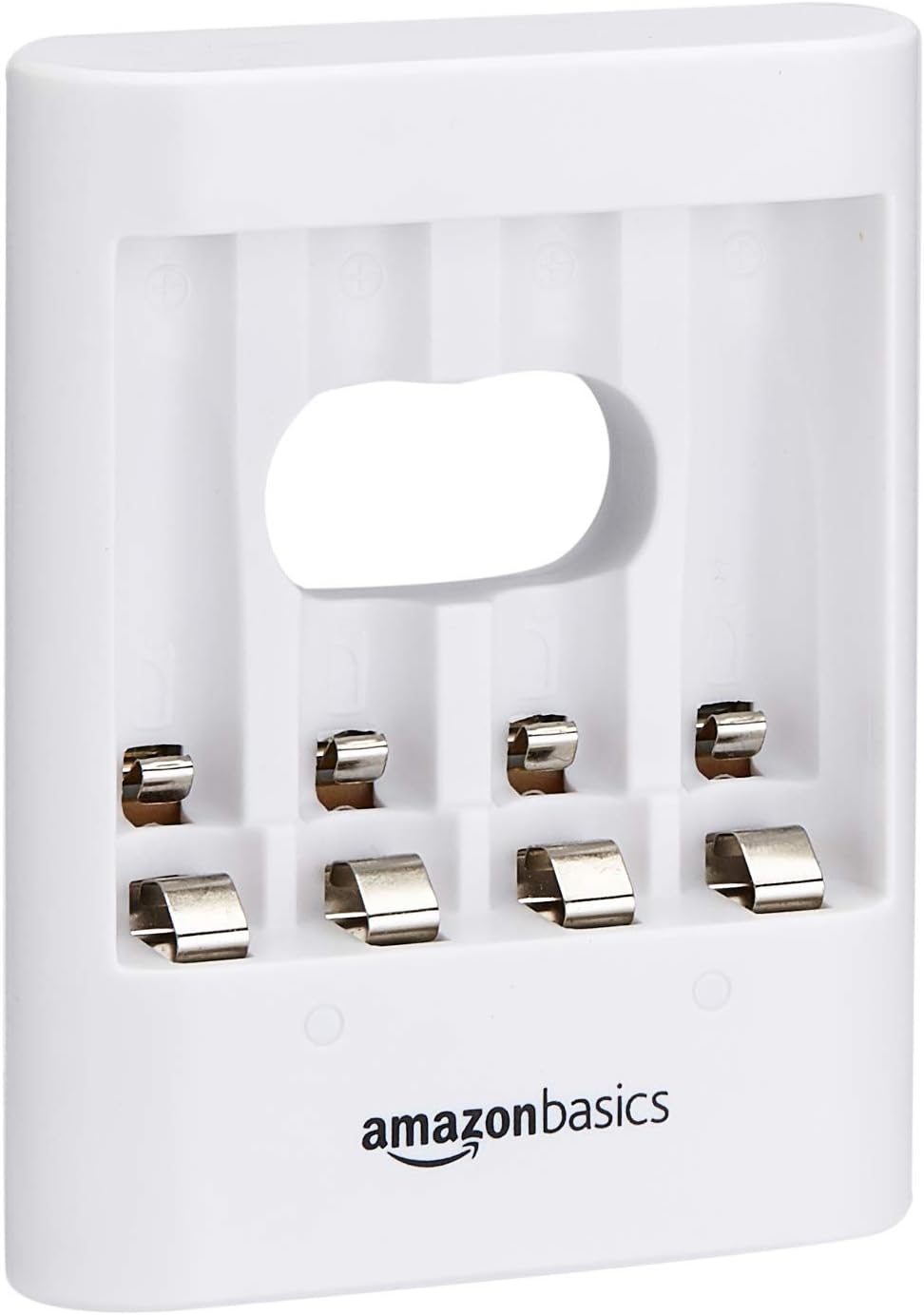
Amazon Basics
Amazon Basics Overnight USB Battery Charger for AA / AAA Nickel-Metal Hydride batteries (Ni-MH) - White
See current price

Amazon Basics
Amazon Basics Rapid USB Battery Charger for AA/ AAA Nickel-Metal Hydride batteries (Ni-MH) - White
See current price

Amazon Basics
Amazon Basics Overnight USB Battery Charger for AA / AAA Nickel-Metal Hydride batteries (Ni-MH) - Charcoal
See current price

Amazon Basics
Amazon Basics Rapid USB Battery Charger for AA / AAA Nickel-Metal Hydride batteries (Ni-MH) - Black
See current price


Duracell Distributing, Inc
Duracell Ion Speed 4000 Battery Charger for AA and AAA batteries, Includes 2 Pre-Charged AA and 2 AAA Rechargeable Batteries, for Household and Business Devices
See current price

Energizer
Energizer 1 Hour Battery Charger for AA Batteries and AAA Batteries with 4 Rechargeable AA Batteries
See current price


Popular brands in Battery Chargers
Battery chargers can look similar while serving very different batteries and use cases. The right choice depends on whether you need a charger for everyday household cells, rechargeable lithium-ion batteries, vehicle batteries, or a mix of battery formats.
K-Catalog helps you compare listed products by their specifications and features. Start by identifying the batteries you already own, then confirm that the charger supports their chemistry, size, and charging requirements.
How to choose a battery charger
Match the battery chemistry
Battery chemistry is one of the most important compatibility checks. Common rechargeable formats include nickel-metal hydride, nickel-cadmium, and lithium-ion. A charger designed for one chemistry may not be suitable for another, even when the batteries appear similar in size.
Check the product description and manufacturer specifications for explicit compatibility. If you use more than one battery chemistry, look for a charger that clearly supports each type rather than assuming a universal label means every battery is compatible.
Check battery size and format
Household chargers often support cylindrical batteries such as AA, AAA, C, or D cells, while other chargers are made for specialized rechargeable batteries. Confirm that the charging slots, contacts, and included adapters match the batteries you need to charge.
Also consider whether the charger accepts individual cells or requires batteries to be charged in pairs. Independent charging channels are useful when batteries have different charge levels, while paired charging may be adequate for a simple, consistent battery set.
Types of battery chargers
The catalog includes chargers for several common needs, even though products are not separated into formal subcategories. Understanding the main types can make comparison easier.
- Household rechargeable battery chargers: Designed for reusable cylindrical cells used in remotes, toys, flashlights, cameras, and other electronics.
- Multi-chemistry chargers: Built to support more than one rechargeable battery type. These can be convenient for households with varied devices, but compatibility should be verified carefully.
- Specialized lithium-ion chargers: Intended for compatible rechargeable lithium-ion cells and often focused on controlled charging, status information, and battery protection.
- Portable or USB-powered chargers: Useful when charging from a wall adapter, computer, power bank, or vehicle USB port is more convenient than using a dedicated outlet.
- Dedicated battery-system chargers: Made for a particular battery format or device ecosystem. These may offer a more straightforward fit but can be less flexible for mixed battery collections.
For related battery-care equipment, browse Battery Storage Containers, Battery Testers, and Battery Holders. The broader Household Batteries, Chargers & Accessories category can also help when comparing adjacent products.
Features and specifications to compare
Charging performance is more than a simple fast-versus-slow decision. Compare the features that affect convenience, battery care, and everyday usability.
- Charging channels: Separate channels can allow each battery to be managed independently.
- Charge status indicators: LEDs, displays, or other indicators can show whether a battery is charging, full, or affected by an error condition.
- Automatic shutoff: This feature can help stop or reduce charging when the battery reaches its intended charge state.
- Overcharge, short-circuit, and reverse-polarity protection: These safeguards are valuable when batteries may be inserted incorrectly or used frequently.
- Input and output options: Check whether the charger uses a wall outlet, USB connection, vehicle power, or a supplied adapter.
- Included accessories: Look for adapters, cables, spacers, or storage components if they are important to your setup.
- Size and portability: A compact charger may suit travel, while a larger design may be more convenient for charging multiple cells at home.
Do not choose solely by the number of charging slots or a fast-charging claim. Confirm that the stated charging behavior is appropriate for your battery type and that the necessary power adapter is included or readily available.
Brands represented in the catalog
Battery chargers in the catalog are available from brands including EBL, Tenergy, Nitecore, POWEROWL, POWXS, Duracell, BONAI, XTAR, HiQuick, Amazon Basics, RayHom, and EdisonBright. These brands cover a range of household, portable, and specialized charging products.
Brand familiarity can help narrow a search, but the specifications remain the most useful comparison point. Check the supported battery chemistry, compatible sizes, power input, charging indicators, and protection features for each product.
Safe and practical charging habits
Use a charger only with batteries it is designed to support. Avoid mixing incompatible chemistries, damaged cells, or batteries with visibly swollen, leaking, or corroded casings. Follow the manufacturer’s instructions for inserting batteries and connecting the power source.
Place the charger on a stable, nonflammable surface with adequate ventilation. Remove batteries when charging is complete if the instructions recommend doing so, and store charged batteries in a suitable container away from loose metal objects. A battery tester can also help identify cells that no longer perform consistently.
Frequently asked questions
Can one charger handle every rechargeable battery?
No. Chargers differ by chemistry, size, voltage requirements, and physical design. Always confirm compatibility in the product specifications.
Are universal battery chargers a good choice?
They can be convenient for households using several compatible battery formats. Verify that the charger explicitly supports each chemistry and size you plan to use.
Why do charging channels matter?
Independent channels can charge batteries separately when their starting charge levels differ. This may be more convenient than using a charger that requires matched pairs.
What should a charger display tell me?
Depending on the design, indicators may show charging status, completion, power connection, or an error. Compare the listed display or indicator functions before choosing.
Is a USB battery charger suitable for travel?
It can be useful when you have access to a compatible USB power source. Check the required input, included cable, and supported batteries before relying on it away from home.