

Battery Holders for Household and Electronic Projects
Compare battery holders by battery size, contact design, lead wires, mounting method, and build details. K-Catalog helps you review specifications before choosing an option for electronics, repairs, or DIY projects.
86 products in catalog
86 results
Filters


CO-RODE
CO-RODE 8 x AA 12V Battery Holder Case Box Wired ON/Off Switch w Cover Pack of 2
See current price


Bluewo
2 Pcs 2 x1.5V AA Battery Holder with On Off Switch Cap Lead Wires (for AA 2 CELL)
See current price

Bluewo
2 Pcs 4 x1.5V AA Battery Holder with On Off Switch Cap Lead Wires (for AA 4 CELL)
See current price

LampVPath
LAMPVPATH (Pack of 2) 9v Battery Holder, 9 Volt Battery Holder with Switch, 9v Battery Case with Switch
See current price

Bluewo
2 Pcs 8 x1.5V AA Battery Holder with On Off Switch Cap Lead Wires (for AA 8 CELL)
See current price

Bluewo
2.1x5.5mm DC Connector 8x1.5V AA Plastic Battery Case Holder (for AA 8 x CELL)
See current price


QTEATAK
2Set 8 x AA Thicken Battery Holder with I Type Wired Battery Clip Standard Snap Connector
See current price




Powertron Batteries
Powertron 3 Pack AA/AAA / CR123A Black Battery Holder Storage Cases
See current price
Popular brands in Battery Holders
Battery holders keep loose cells positioned securely and provide a practical connection to a device, circuit, or project. They can be useful for replacing a damaged compartment, powering a prototype, or creating a removable battery pack without soldering directly to the cells.
The right holder depends on more than the battery name. Check the cell format, number of cells, connection style, available space, and how the holder will be attached before comparing individual specifications.
How to choose a battery holder
Start by identifying the battery format your device or project requires. Common household cells include cylindrical formats such as AA and AAA, along with larger C and D cells. Coin-cell holders use a different shape and contact arrangement. A holder must match the cell dimensions closely enough to maintain reliable contact without making insertion difficult.
Consider the electrical arrangement as well. Holders may place cells in series to increase voltage, in parallel to support capacity, or in a single-cell configuration. Confirm that the holder’s layout suits the circuit and that its output matches the requirements of the device.
Also measure the available installation area. A holder that fits the battery may still be too tall, wide, or deep for the enclosure.
Common battery holder designs
Battery holders vary by how they connect and where they are installed. Comparing designs can narrow the catalog to options that suit the project.
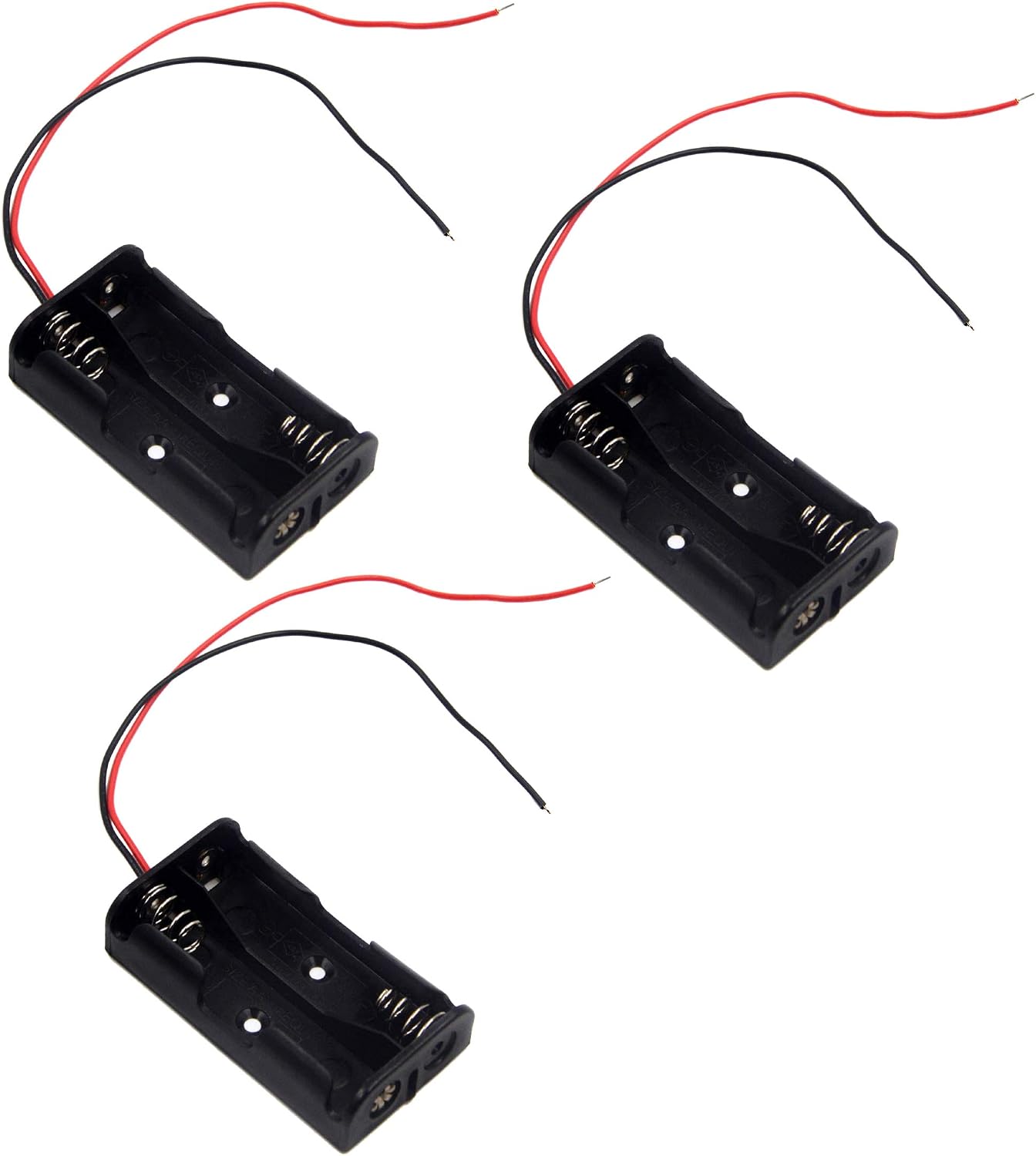
- Lead-wire holders: These have attached wires for connecting to a circuit, switch, terminal, or connector. Check the wire length, wire ends, polarity markings, and insulation.
- Snap or connector holders: A built-in connector can make battery changes or disconnection more convenient. Verify that the connector type matches the rest of the project.
- PCB-mount holders: These are designed to sit on a circuit board, often using solder terminals or through-hole contacts. Confirm the footprint and terminal spacing before ordering.
- Panel-mount or screw-mounted holders: These can be useful when the battery compartment needs to attach to an enclosure or project surface. Look for mounting holes, tabs, clips, or screw provisions.
- Open and covered holders: Open designs make cells easy to access, while covers, clips, or doors can help keep batteries in place during movement.
Key specifications to compare
Pay close attention to the details that affect fit, connection reliability, and installation:
- Battery compatibility: Check the stated cell type and whether the holder accepts rechargeable cells as well as disposable cells. Physical dimensions and terminal placement still need to match.
- Cell capacity: A holder designed for one cell differs from a multi-cell holder. Review how the cells are arranged and whether the holder’s polarity markings are clear.
- Contact material and construction: Spring contacts, flat terminals, and metal clips each affect how a cell is retained and connected. Look for contacts that appear suitable for the intended environment and frequency of battery changes.
- Wiring: Compare lead length, wire gauge when provided, insulation, stripped ends, and connector style. These details can determine whether extra splicing or adapters are needed.
- Mounting method: Check dimensions, hole locations, adhesive provisions, solder terminals, or other attachment features. A holder that is easy to install can be more useful than one that only matches the cell size.
- Protection and retention: Covers, latches, clips, and recessed contacts may help prevent cells from shifting or being inserted incorrectly. For portable projects, retention is especially important.
Brands represented in the catalog
The Battery Holders catalog includes products from LampVPath, Bluewo, QTEATAK, Hilitchi, SDTC Tech, Ltvystore, PKCELL, weqcter, DSLRKIT, DGZZI, Corporate Computer, and CO-RODE. Compare their listings by construction, compatibility, wiring, mounting details, and included components rather than relying on the brand name alone.
Related battery accessories
Battery holders are one part of a larger battery setup. If the project uses rechargeable cells, compare Battery Chargers for charging compatibility and connection requirements. For organizing loose cells outside the device, Battery Storage Containers may be more appropriate than a powered holder. A Battery Tester can help check cell condition when troubleshooting inconsistent operation.
Installation and safety tips
Confirm positive and negative markings before connecting a holder. Reverse polarity can damage electronics, so follow the circuit diagram and check the wiring with the power disconnected. Avoid forcing a cell into a holder, and do not mix incompatible battery types or cells with noticeably different conditions in the same arrangement.
For soldered installations, protect exposed connections from accidental contact and provide strain relief for wires. Make sure the holder is secured so vibration does not pull on terminals or allow cells to shift. Remove batteries from unused projects when appropriate, particularly if the holder or device has no protective power switch.
Frequently asked questions
What does a battery holder do?
A battery holder positions one or more cells and connects them to a circuit or device through contacts, wires, terminals, or a connector.
How do I know which battery holder size to choose?
Match the holder to the battery format and verify the cell dimensions, contact arrangement, number of cells, and available installation space.
Are battery holders suitable for rechargeable batteries?
Some are, but suitability depends on the battery format, electrical arrangement, contact design, and the device’s charging method. Check the product specifications and charger requirements.
Is a covered battery holder better than an open holder?
A cover can help retain cells and reduce accidental contact, while an open holder may offer faster access. Choose based on portability, access, and enclosure requirements.
What should I check on a wired battery holder?
Review the wire length, polarity, connector or bare-wire ends, insulation, cell compatibility, and how the wires will attach to the project.