

Brain Teasers for Curious Puzzle Solvers
Explore brain teasers in many formats, from twisty and mechanical puzzles to logic challenges and disentanglement designs. Compare features to find a puzzle suited to the solver and setting.
756 products in catalog
756 results
Filters

Educational Insights
Educational Insights Kanoodle 3D Brain Teaser Puzzle Game, Featuring 200 Challenges, Gift for Ages 7+
See current price


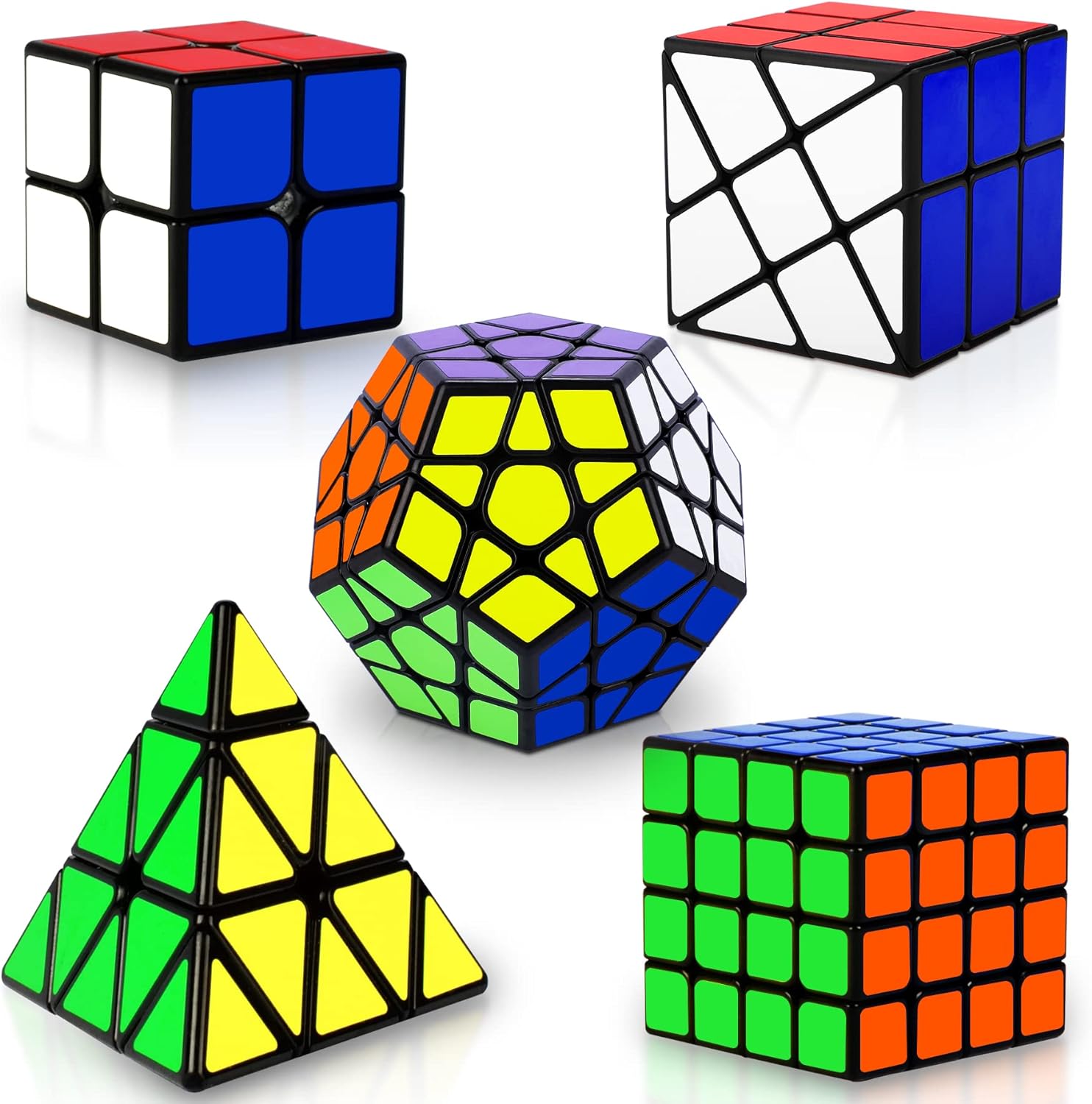
Roxenda
ROXENDA Speed Cube Set, Magic Cube Set of 2x2x2 3x3x3 Pyramid Cube Smooth Puzzle Cube (Black)
See current price



Bepuzzled
BePuzzled | News Hanayama Metal Brainteaser Puzzle Mensa Rated Level 6, for Ages 12 and Up
See current price

Rubik's
Rubik’s Cube | The Original 3x3 Colour-Matching Puzzle, Classic Problem-Solving Cube
See current price

Bepuzzled
BePuzzled | Square Hanayama Metal Brainteaser Puzzle Mensa Rated Level 6, for Ages 12 and Up
See current price


Educational Insights
Educational Insights Kanoodle Extreme Classroom Pack of 10, Featuring Over 300 Challenges, Puzzle Challenges, Brain Teaser Game, Ages 8+
See current price


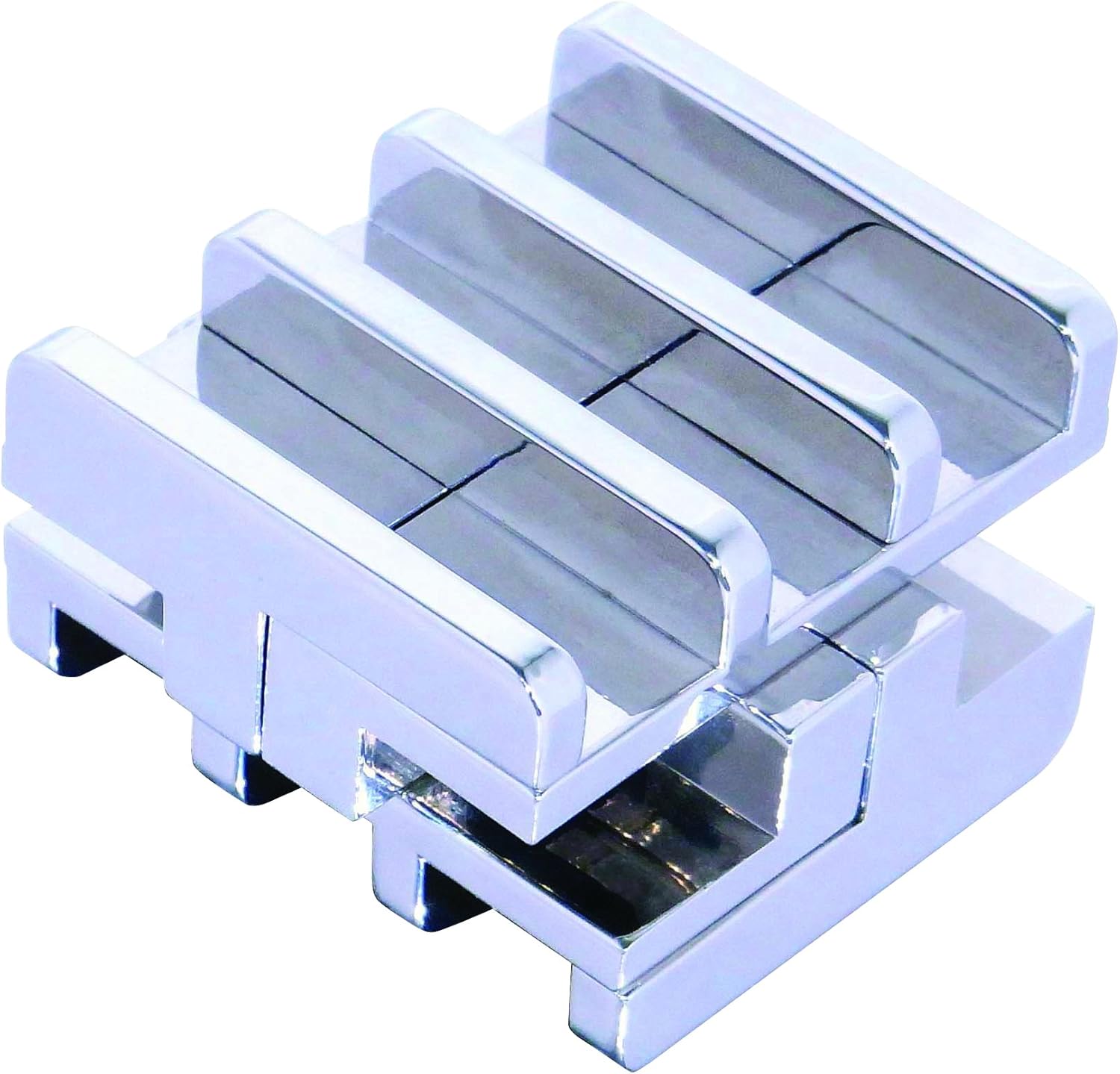
Bepuzzled
BePuzzled |Rattle Hanayama Metal Brainteaser Puzzle Mensa Rated Level 4, for Ages 12 and Up
See current price

Educational Insights
Educational Insights BrainBolt Handheld Electronic Memory Game with Lights & Sounds, 1 or 2 Players, Ages 7+
See current price
Popular brands in Brain Teasers
Brain teasers turn problem-solving into hands-on play. Unlike picture-assembly puzzles, they often ask you to identify patterns, plan a sequence of moves, manipulate parts, or find a solution through trial and deduction. The right choice depends on the solver’s experience, preferred challenge, and whether the puzzle is meant for quiet solo play, family entertainment, or a gift.
K-Catalog brings together brain teasers from brands including Bepuzzled, Cuberspeed, Coogam, D-FantiX, GAN, UGears, Roxenda, Vdealen, Melissa & Doug, Ravensburger, Spin Master, and Bits and Pieces. Compare each listing’s specifications and features, then check the current price and availability on Amazon.
How to choose a brain teaser
Start with the type of thinking the solver enjoys. Some people prefer visual pattern recognition, while others like physical mechanisms, spatial reasoning, or puzzles with a clear goal and repeatable solution. A challenging puzzle is not necessarily a better choice if its format does not match the player’s interests.
Consider these questions before choosing:
- Is the puzzle intended for one person, a group, or shared parent-and-child play?
- Does the solver prefer a compact handheld challenge or a larger tabletop activity?
- Should the puzzle provide a single solution, multiple configurations, or open-ended experimentation?
- Is it for a beginner, an experienced puzzler, or someone who enjoys advanced challenges?
- Will it be played at home, carried while traveling, or displayed between uses?
The product description and specifications can clarify the intended audience, dimensions, materials, included pieces, and any special play instructions.
Popular brain teaser types
Brain teasers cover several styles, so comparing formats is often more useful than relying on the category name alone.
- Twisty and combination puzzles: These use rotating, sliding, or turning sections. They suit players who enjoy memorizing patterns, planning moves, and practicing toward smoother solutions.
- Mechanical puzzles: Often made with interlocking or moving components, these challenge players to understand how parts interact. They can also appeal to adults who appreciate craftsmanship and displayable designs.
- Disentanglement puzzles: The goal is usually to separate connected pieces and then determine how to put them back together. They are a good fit for patient, hands-on problem solvers.
- Logic and deduction puzzles: These focus on rules, sequences, spatial relationships, or identifying the correct solution from several possibilities.
- Construction and motion puzzles: Some designs ask players to assemble components or operate a mechanism. These may appeal to solvers who enjoy building as much as solving.
For picture-based or assembly-focused play, browse Jigsaw Puzzles. Shoppers looking for spatial construction can also compare 3-D Puzzles.
Features and specifications to compare
Difficulty is one of the most important details, but difficulty labels can vary between products. Look for descriptions of the solving process, recommended experience level, and whether hints or instructions are included. A puzzle with a gradual learning curve may be more suitable for a beginner than one that offers little guidance.
Materials and construction affect the feel of each move and the puzzle’s ability to withstand repeated handling. Compare wood, plastic, metal, cardboard, and mixed-material designs according to the intended user. Check whether components are loose, assembled, or designed to be taken apart.
Size and portability matter for storage and play space. Compact puzzles can be useful for travel or desk play, while larger designs may be easier to handle but require more room. Also check whether the product includes a container, stand, storage solution, or other accessories.
Instructions and solution support can make a major difference. Some solvers want a challenge with no assistance, while others appreciate step-by-step directions or access to a solution after an attempt. Confirm what is included rather than assuming every puzzle provides the same level of guidance.
Brands represented in the catalog
The catalog includes products from Bepuzzled, Cuberspeed, Coogam, D-FantiX, GAN, UGears, Roxenda, and Vdealen, along with Melissa & Doug, Ravensburger, Spin Master, and Bits and Pieces. Brand selection can help narrow a search, but the individual product specifications remain the best way to compare format, materials, difficulty, and intended use. A familiar brand does not guarantee that every design will suit every solver.
Related puzzle categories and accessories
Brain teasers are easy to pair with other puzzle activities. Puzzle Accessories may help with organization or presentation, while Puzzle Play Mats can provide a dedicated surface for tabletop activities. For younger or more tactile play, explore Pegged Puzzles and Floor Puzzles. The broader Puzzles category can help when comparing brain teasers with other puzzle formats.
Frequently asked questions
Are brain teasers suitable for beginners?
Many are, but difficulty varies widely. Check the product description for the recommended experience level, solving method, and whether instructions or hints are provided.
What is the difference between a brain teaser and a jigsaw puzzle?
A brain teaser usually focuses on logic, manipulation, spatial reasoning, or a mechanism. A jigsaw puzzle primarily involves fitting interlocking pieces together to form an image.
What should I compare when buying a brain teaser as a gift?
Consider the recipient’s interests, experience, preferred challenge type, available play space, materials, portability, and the amount of guidance included.
Are mechanical brain teasers good for display?
Some may be designed with visually interesting materials or mechanisms, but display suitability depends on the individual product. Check its dimensions, construction, and whether it is intended for repeated handling.
How can shoppers compare similar brain teasers?
Review the stated difficulty, puzzle type, materials, dimensions, included components, instructions, and intended age or experience level. These details reveal how the products differ beyond their titles.