
BalanceFrom
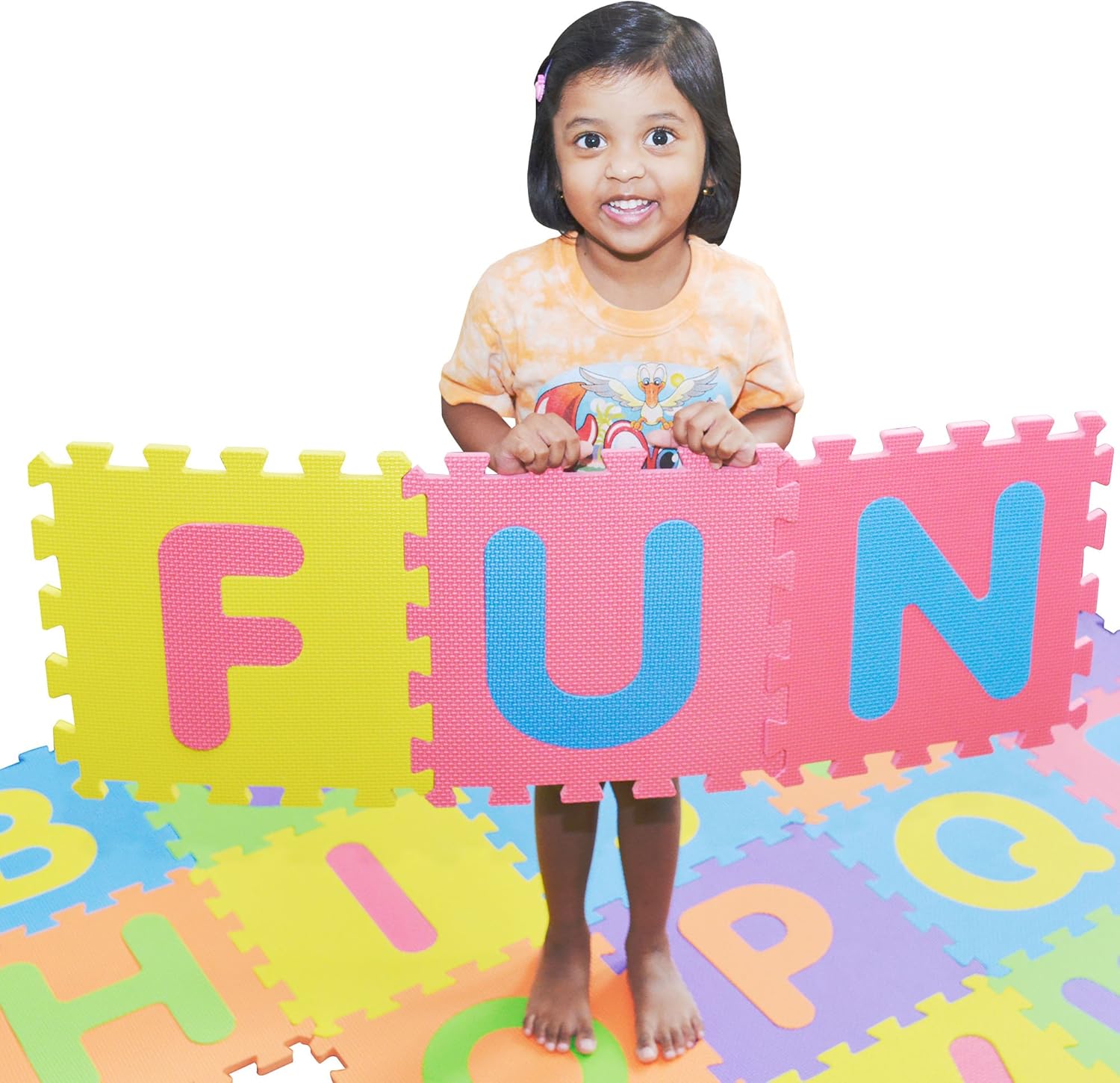
BalanceFrom Kid's Puzzle Exercise Play Mat with EVA Foam Interlocking Tiles
See current price

Compare puzzle play mats by workspace, surface, portability, and storage features. Find options suited to occasional puzzling, family activities, or keeping an unfinished puzzle organized.
102 products in catalog
102 results
BalanceFrom
See current price


ProSource
See current price


ProSource
See current price


Click N' Play
See current price




Melissa & Doug
See current price


Puzzle play mats provide a dedicated surface for sorting, assembling, and storing puzzle pieces. They can help keep an unfinished project together when a dining table, desk, or other shared space needs to be cleared. The right mat depends on the puzzle size you work on, where you plan to use it, and whether you need simple protection or a more portable setup.
When comparing options, pay attention to the usable work area, surface texture, edge design, rolling or folding method, and storage accessories. A mat that fits your routine is more useful than one chosen only for appearance.
Start by considering the size of the puzzles you usually assemble. The mat should provide enough room for the completed design and the loose pieces you want nearby. If the work area is too narrow, pieces may be pushed off the surface or sorted somewhere less convenient.
Think about where the mat will be used and stored:
It is also worth checking whether the mat is intended for rolling, folding, or stationary use. Each design has different storage needs and may suit different types of puzzle builders.
Puzzle mats generally differ by their construction and how they handle unfinished puzzles. A flat mat offers a simple workspace and can be useful when the puzzle will remain in place. Roll-up mats are designed for compact storage, while models with securing straps, tubes, or separate sorting areas may be more suitable for moving an active project.
Some mats emphasize a soft felt-like surface, while others use a firmer material intended to stay flat. If pieces tend to shift during assembly, look for a surface and border designed to keep them contained. If comfort matters, consider the mat’s cushioning and how it feels during extended use.
For other puzzle formats, browse Jigsaw Puzzles, Floor Puzzles, or Puzzle Accessories. These related categories can help when a play mat is only one part of a larger puzzle setup.
Working dimensions: Check the stated usable area rather than relying only on the overall dimensions. A wide border or storage zones can reduce the space available for assembling the image.
Material and surface: The surface should allow pieces to be moved while limiting unwanted sliding. Material descriptions can also indicate whether the mat is soft, firm, washable, or intended for indoor use.
Storage method: Compare how the mat is secured when stored. Straps, closures, tubes, and compartments can make a difference when a puzzle needs to be put away between sessions.
Portability: Consider the packed size, carrying handle, and overall weight if the mat will move between rooms or travel outside the home.
Edge and piece control: Raised edges, borders, or designated sorting areas may help reduce lost pieces. These features are particularly useful on busy tables or in homes with limited workspace.
Compatibility: Confirm that the mat is suitable for the puzzle dimensions you plan to use. A large puzzle may require more than the mat’s listed work area once sorting space is included.
The Puzzle Play Mats catalog includes products from Amazon Basics, Kangler, Tebery, Play Platoon, Deke Home, Melissa & Doug, CUTE STONE, MQIAOHAM, StillCool, FUN LITTLE TOYS, qqpp, and ProSource. These brands are represented across the available catalog, so comparing the specifications of individual products is more useful than choosing by brand name alone.
Review the listed dimensions, materials, included accessories, and storage design for each option. Product details can vary even among mats intended for similar puzzle sizes.
Before starting, reserve space for sorting pieces so the main image area remains clear. Keep the mat on a flat, stable surface, especially when rolling or repositioning it. If the mat is stored with an unfinished puzzle, follow the product’s instructions for securing it and avoid placing heavy items on top.
Keep pieces dry and away from food, drinks, and pets. When selecting a mat for children, check the stated age guidance and supervise use where small puzzle pieces could present a concern. For more challenging formats, see Brain Teasers or 3-D Puzzles. Traditional tabletop puzzles and their tools can also be compared with Puzzle Accessories if additional organization is needed.
A puzzle play mat provides a surface for assembling and sorting pieces and can help protect an unfinished puzzle when the work area must be cleared.
Choose a mat with a usable area that accommodates the completed puzzle plus room for loose pieces. Check the manufacturer’s dimensions against the puzzle size before choosing.
They can be useful when storage space is limited or a puzzle needs to be moved. Compare the securing system and instructions to ensure the pieces can remain organized while stored.
A surface that is reasonably smooth, stable, and resistant to unwanted sliding is generally practical. The best choice also depends on whether you prefer a soft or firmer work area.
Not necessarily. Check the mat’s usable dimensions and intended design, particularly for large, irregular, floor, or three-dimensional puzzles.
A mat can be paired with sorting trays, piece containers, or other puzzle accessories, provided they do not add pressure or weight that could damage an unfinished puzzle.