

Compressed Air Treatment Equipment
Compare compressed air treatment equipment by filtration method, moisture control, connection size, pressure requirements, and intended use before choosing a product.
28 products in catalog
28 results
Filters


Shop-Vac Corporation
Shop-Air by Shop-Vac 1032000 Mighty Mini Air Mover 3-Speed 3-Position Dryer for Wet Carpets, Floors, Walls & Ceilings, 500 CFM Motor
See current price
Shop-Vac Corporation
Shop-Air by Shop-Vac 1032000 Mighty Mini Air Mover 3-Speed 3-Position Dryer for Wet Carpets, Floors, Walls & Ceilings, 500 CFM Motor
See current price

Shop-Vac Corporation
Shop-Air by Shop-Vac 1032000 Mighty Mini Air Mover 3-Speed 3-Position Dryer for Wet Carpets, Floors, Walls & Ceilings, 500 CFM Motor
See current price


Ingersoll Rand
Ingersoll Rand ARO F35341-400-VS Air Line Filter, 1/2" NPT - 150 psi Max Inlet, Black
See current price


Primefit
Primefit R1401G Mini Air Regulator with steel-Protected Gauge, 60-Scfm At 100-Psi, 1/4" Npt
See current price

China SNS Pneumatic Co.,Ltd
SNS AR4000-N04 Female Thread 1/2 NPT Air Pressure Regulator 0-150 PSI Adjustable,Bracket,Gauge
See current price

PneumaticPlus
PneumaticPlus PPR2-N02BG-2 Miniature Air Pressure Regulator 1/4" NPT - Gauge, Bracket, Instrument Pressure (3-30 PSI)
See current price

Ingersoll Rand
ARO C38231-600-VS Air Filter-Regulator-Lubricator Combination, 3/8" NPT
See current price


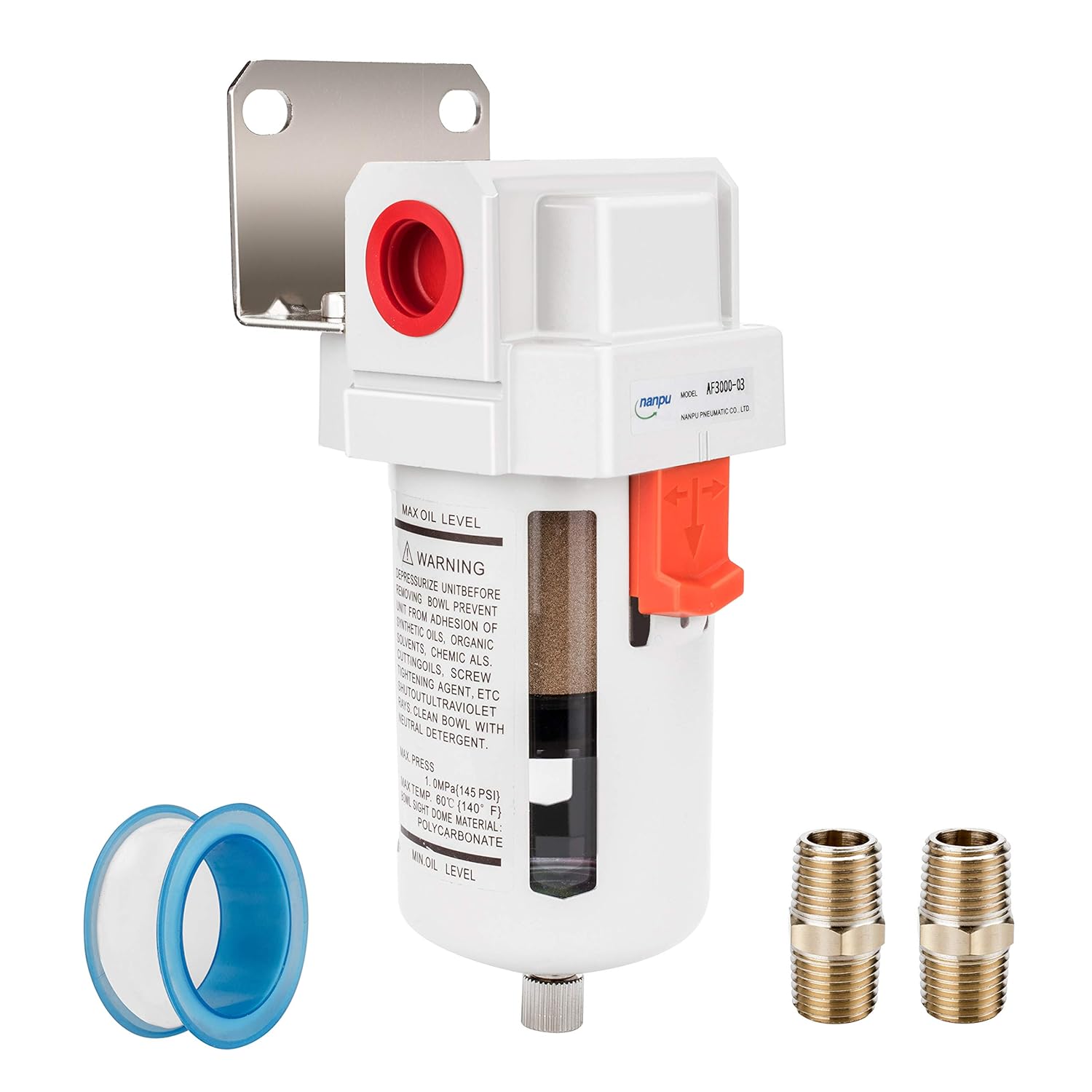
NANPU
NANPU 3/8" NPT Air Regulator for Compressed Air System, 150 psi Steel-Protected Gauge
See current price




Popular brands in Compressed Air Treatment
Compressed air treatment equipment helps prepare compressed air for tools, machinery, and pneumatic systems. Depending on the setup, treatment may involve removing water, oil, particulates, or other contaminants before air reaches downstream components.
K-Catalog brings together products from brands including NANPU, Ingersoll Rand, Bostitch, Primefit, WEN, and TAILONZ PNEUMATIC. Use the product specifications to narrow your choices based on system compatibility and the type of air quality your application requires.
How to choose compressed air treatment equipment
Start by identifying what needs to be removed from the air and where the equipment will be installed. A small workshop compressor, a production air line, and a specialized pneumatic system can have very different flow, pressure, and connection requirements.
Consider these factors before comparing individual products:
- Contaminant type: Determine whether the main concern is water, oil, dust, rust particles, or a combination of contaminants.
- Airflow capacity: The treatment component should support the air volume required by the connected tools or equipment.
- Operating pressure: Check the product’s working-pressure specifications against the compressor and downstream system.
- Connection details: Match inlet and outlet sizes, thread type, and fitting style to the existing air line.
- Installation position: Some components are designed for point-of-use installation, while others are better suited to a compressor outlet or central line.
- Maintenance needs: Check whether the unit has a drain, replaceable filter element, or other serviceable parts.
Common types of air treatment
Compressed air treatment is an umbrella category that can include several different functions. Understanding the role of each type makes it easier to compare products with similar-looking specifications.
Particulate filters capture solid debris that could otherwise reach valves, tools, and other pneumatic components. They are useful when the air line needs protection from dust, scale, or particles introduced by the compressor and piping.
Water separators and moisture-management components help remove liquid condensate from compressed air. Moisture can collect as air cools, so drainage design and installation location are important considerations.
Coalescing or oil-separation filters are intended for applications where oil aerosols and fine contaminants need additional control. Review the manufacturer’s filtration specifications and recommended replacement schedule rather than selecting solely by connection size.
Filter-regulator combinations combine air cleaning with pressure adjustment in one assembly. These can be convenient at a point of use, but confirm that the included functions match the needs of the tool or equipment being supplied.
Specifications worth comparing
Product descriptions can use similar terminology while offering different performance characteristics. Pay close attention to the complete specification list, including the following:
- Filter grade or filtration rating, when provided
- Maximum inlet pressure and operating temperature
- Airflow or flow-rate capacity
- Port size and connection standard
- Drain style, such as manual or automatic
- Bowl material and visibility, if moisture collection is involved
- Replacement-element availability and service instructions
- Overall dimensions and mounting requirements
A higher filtration level is not automatically the right choice for every installation. Fine filtration can be valuable for sensitive equipment, while a general-purpose separator may be more suitable for basic shop-air applications. The system’s flow demand, pressure drop, and maintenance plan should all be considered together.
Brands represented in the catalog
The catalog includes compressed air treatment products from NANPU, Shop-Vac Corporation, Ingersoll Rand, TAILONZ PNEUMATIC, Stadler Form, JR Products, Rectorseal, Bostitch, Primefit, China SNS Pneumatic Co.,Ltd, Quickun, and WEN. These brands provide options to compare across different equipment styles and specifications. Brand presence in the catalog is not an endorsement, so verify the technical details for the specific product you are considering.
Installation and maintenance tips
Install treatment components in the direction indicated by the product documentation and leave enough space for draining or replacing filter elements. If a separator or filter has a collection bowl, inspect it regularly and follow the manufacturer’s instructions for safe draining.
Keep the air line layout in mind. A treatment device installed close to the compressor may protect the main line, while point-of-use treatment can address the needs of a particular tool. In either case, confirm fittings and seals are suitable for the system and avoid exceeding the stated pressure limits.
Before ordering, compare the product’s connection format with your existing hose, pipe, regulator, or compressor outlet. Adapters can change the connection arrangement, but they may also add complexity and potential leak points.
For adjacent filtration needs, browse Industrial Process Filtration, Lab Filters, or Strainers. The broader Filtration category may also help when comparing related equipment.
Frequently asked questions
What does compressed air treatment do?
It prepares compressed air by helping control contaminants such as moisture, oil, and solid particles before the air reaches tools or pneumatic equipment.
Do I need a filter, a separator, or both?
That depends on the contaminants and the equipment requirements. A separator may address liquid moisture, while a filter may target solid particles or oil aerosols. Some assemblies combine multiple functions.
How do I choose the correct port size?
Match the inlet and outlet specifications to the air line, hose, or equipment connections. Also verify the thread type and whether an adapter is required.
Why is airflow capacity important?
A treatment component with insufficient flow capacity can restrict the air supply to connected equipment. Compare its stated flow capability with the demands of the system.
How often should a compressed air filter be maintained?
Maintenance depends on air quality, operating conditions, usage, and the product design. Follow the manufacturer’s inspection, draining, and replacement guidance.