

Power Converters
Compare power converters by voltage conversion, output capacity, connector type, and safety features. Use the specifications to find a suitable option for electronics, appliances, travel, or specialized equipment.
388 products in catalog
388 results
Filters



![[3-Pack] Type E/F Germany European Travel Adapter,VINTAR Schuko International Power Plug with 2 USB and 2 Outlet,US to Most of Europe EU German French Russia Iceland Spain Greece Norway](https://m.media-amazon.com/images/I/51fWaKdijXL._AC_SL1500_.jpg)


Wagan
Wagan EL2599 12V, 24V 12ft. DC Extension Cable with Panel Mount and Weather Proof Cover
See current price




Popular brands in Power Converters
Power converters help adapt electrical power to the voltage, current, or connection format required by a device. The right choice depends on the source power, the equipment you plan to connect, and whether the converter will be used at home, in a vehicle, at work, or while traveling.
This category is part of K-Catalog’s broader Power Accessories selection. Compare the listed specifications and features carefully before clicking through to Amazon for current product details.
How to choose a power converter
Start by identifying the electrical requirements of the device. Check its input voltage, frequency, current draw, and connector style. These details should be compatible with the converter’s input and output specifications.
Important questions include:
- Is the converter designed to step voltage up, step it down, or support a selectable range?
- Does its output match the device’s required voltage and current?
- Is the available wattage sufficient for the connected equipment?
- Will it be used with household outlets, vehicle power, or international electrical systems?
- Does the converter use the correct plug, socket, barrel connector, or terminal arrangement?
For equipment with motors, heating elements, compressors, or other higher-demand components, pay close attention to continuous and peak power requirements. A converter that appears suitable for basic electronics may not be appropriate for equipment with a substantial startup load.
Common power converter uses
Power converters cover several practical use cases, even when products have similar appearances. A voltage step-down converter can help adapt higher-voltage supply power for equipment designed for a lower voltage. A step-up converter serves the opposite purpose. Some models are intended for travel, while others are built for fixed installations or specialized electronic projects.
A converter is not always the same as an adapter. An adapter may only change the plug shape or provide a compatible connection, while a converter changes electrical characteristics. If you only need a different plug format, compare AC Adapters as well.
For larger installations, centralized power distribution may be more appropriate than a single converter. PDUs can be useful when multiple devices need organized access to a shared power source. For applications where electrical isolation is important, compare Isolation Transformers separately.
Specifications and features to compare
The product specifications provide the clearest way to narrow down compatible options. Focus on the following details:
- Input and output voltage: Confirm the source voltage and the voltage required by the device. Some converters have fixed values, while others offer selectable or adjustable output.
- Current and wattage: The output must support the connected equipment’s normal operating demand. Leave appropriate headroom rather than choosing a converter that operates at its limit.
- Waveform and output type: For AC-to-AC or DC-to-AC equipment, the output characteristics can affect compatibility with sensitive electronics, motors, and chargers.
- Conversion direction: Verify whether the unit steps voltage up, steps it down, converts AC and DC, or supports more than one function.
- Connectors and plugs: Examine both the source-side plug and the device-side connection. A converter can have suitable electrical specifications but still require a separate cable or adapter.
- Protection features: Look for clearly described safeguards such as overload, short-circuit, over-temperature, surge, or fuse protection when relevant to the application.
- Size and cooling: Portable units may prioritize compactness, while higher-output designs may need ventilation, a fan, or more installation space.
Brands represented in the catalog
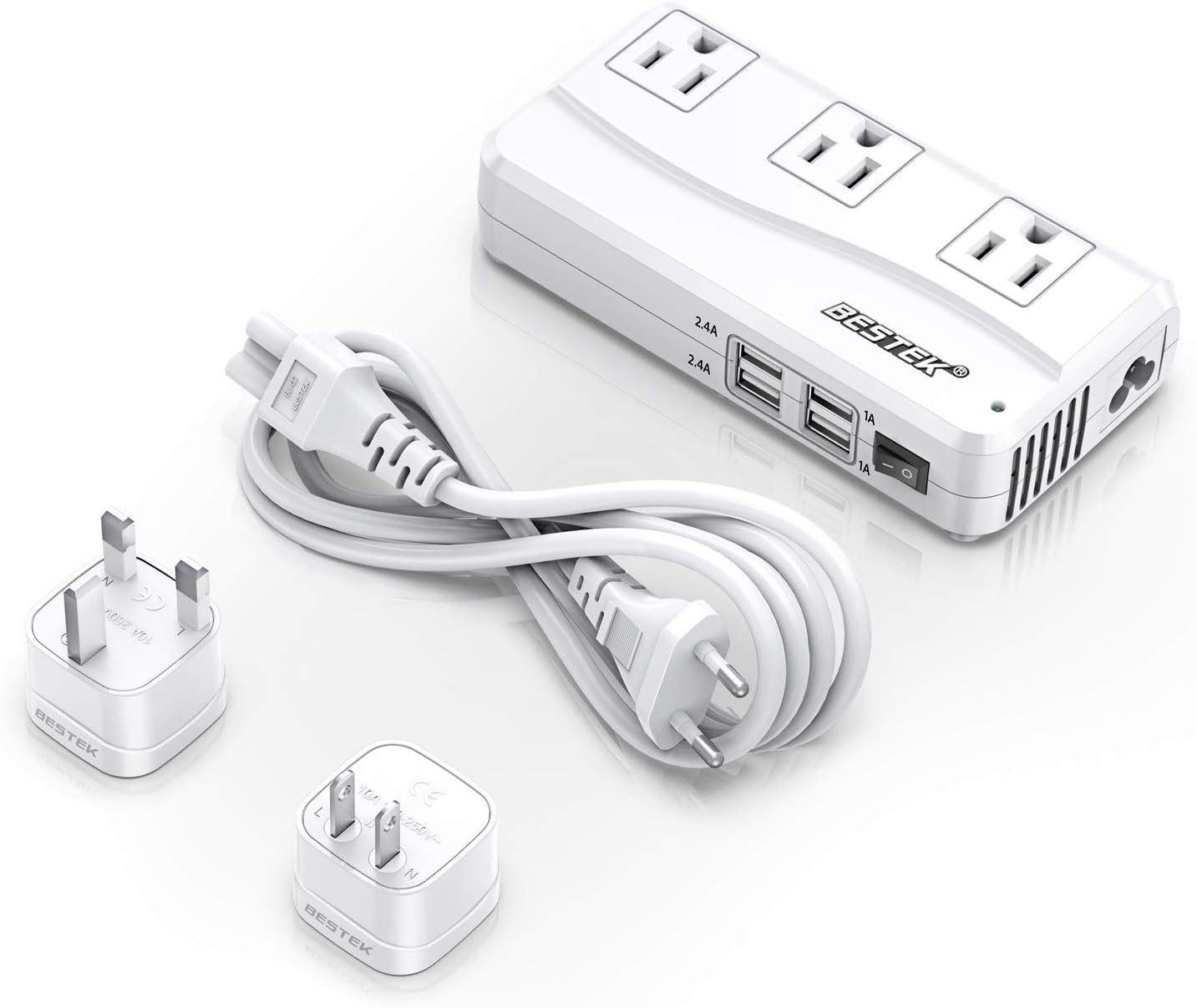
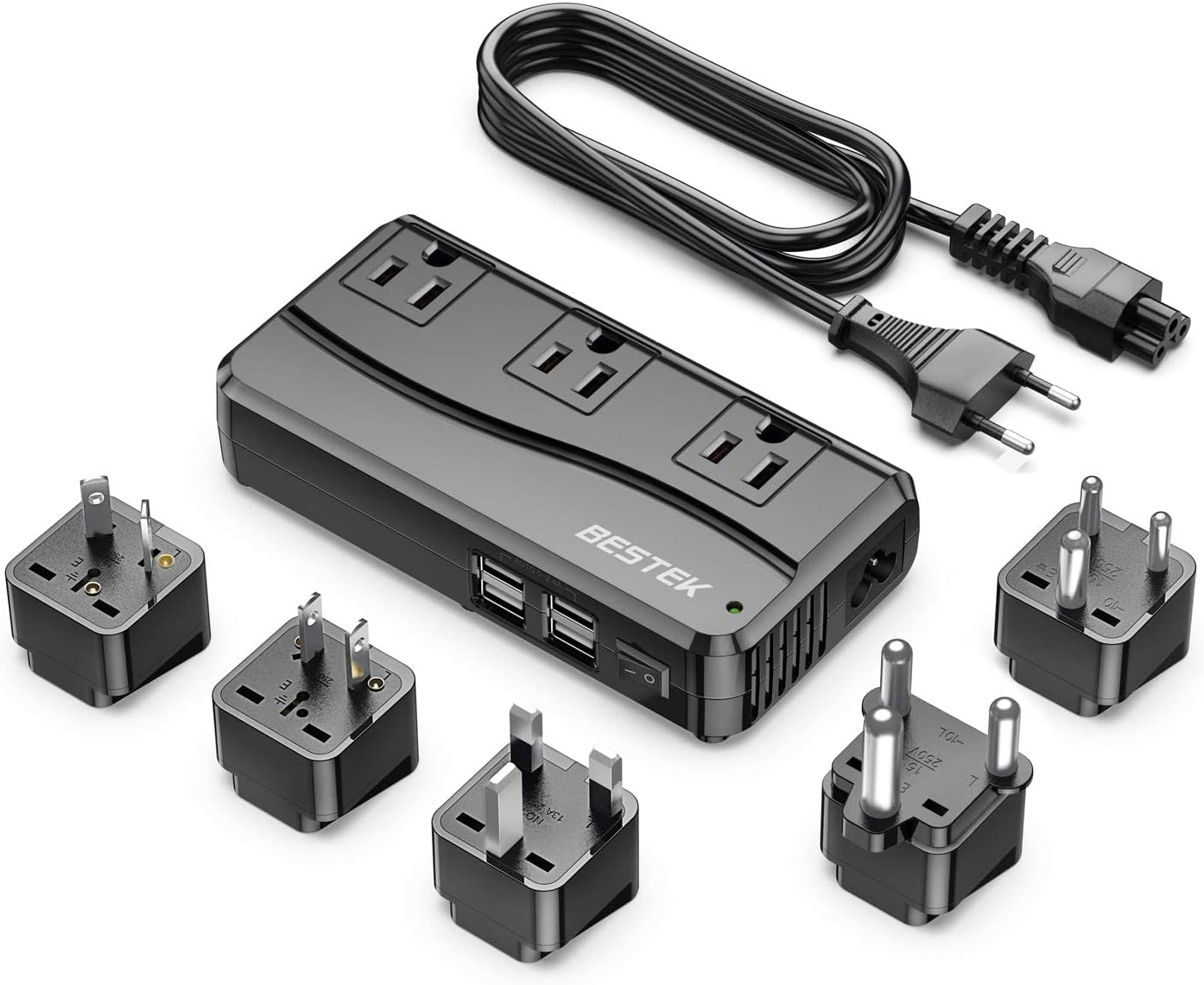
The catalog includes power converters from DROK, BESTEK, OREI, Ceptics, Pyramid, Simran, Goldsource, Yqltd, SHNITPWR, TESSAN, SublimeWare, and CKITZE. These brands may focus on different applications, form factors, and electrical specifications, so compare the individual product details rather than choosing by brand name alone.
Safe setup and compatibility tips
Read the converter’s input and output markings before connecting equipment. Do not assume that a matching plug guarantees electrical compatibility. Check polarity for DC connections, confirm the local mains voltage for travel use, and verify whether the device requires grounding or a particular frequency.
Keep ventilation openings clear and place the converter on a stable, dry surface unless the product documentation specifies another installation method. Avoid exceeding the stated output capacity, and disconnect power before changing wiring or connector arrangements. For permanent installations, high-power equipment, or uncertain wiring, consult a qualified electrician.
Frequently asked questions
What does a power converter do?
A power converter changes electrical power from one voltage, current, or form to another so it can work with a compatible device. The exact function depends on the converter design.
How do I know which voltage converter I need?
Compare the source voltage with the device’s required input voltage. Then choose a converter whose input accepts the source and whose output matches the device, while also checking current and wattage.
Is a power converter the same as a plug adapter?
No. A plug adapter generally changes the physical plug connection without changing electrical power. A converter changes voltage, current, or the type of electrical output.
Can one converter power several devices?
Only if the converter is designed for multiple outputs and its total capacity supports all connected devices. Check the output arrangement and combined power demand before use.
Can I use a power converter while traveling?
Some converters are designed for travel, but compatibility depends on the destination’s voltage, frequency, outlet style, and the requirements of the device. Check each specification before connecting equipment.