
Behringer
Behringer Xenyx 802 Premium 8-Input 2-Bus Mixer with Xenyx Mic Preamps and British EQs
See current price

Compare powered mixers for live sound by amplifier power, channel capacity, connectivity, controls, and portability. Review specifications to find a practical match for your PA setup.
17 products in catalog
17 results
Behringer
See current price

Behringer
See current price
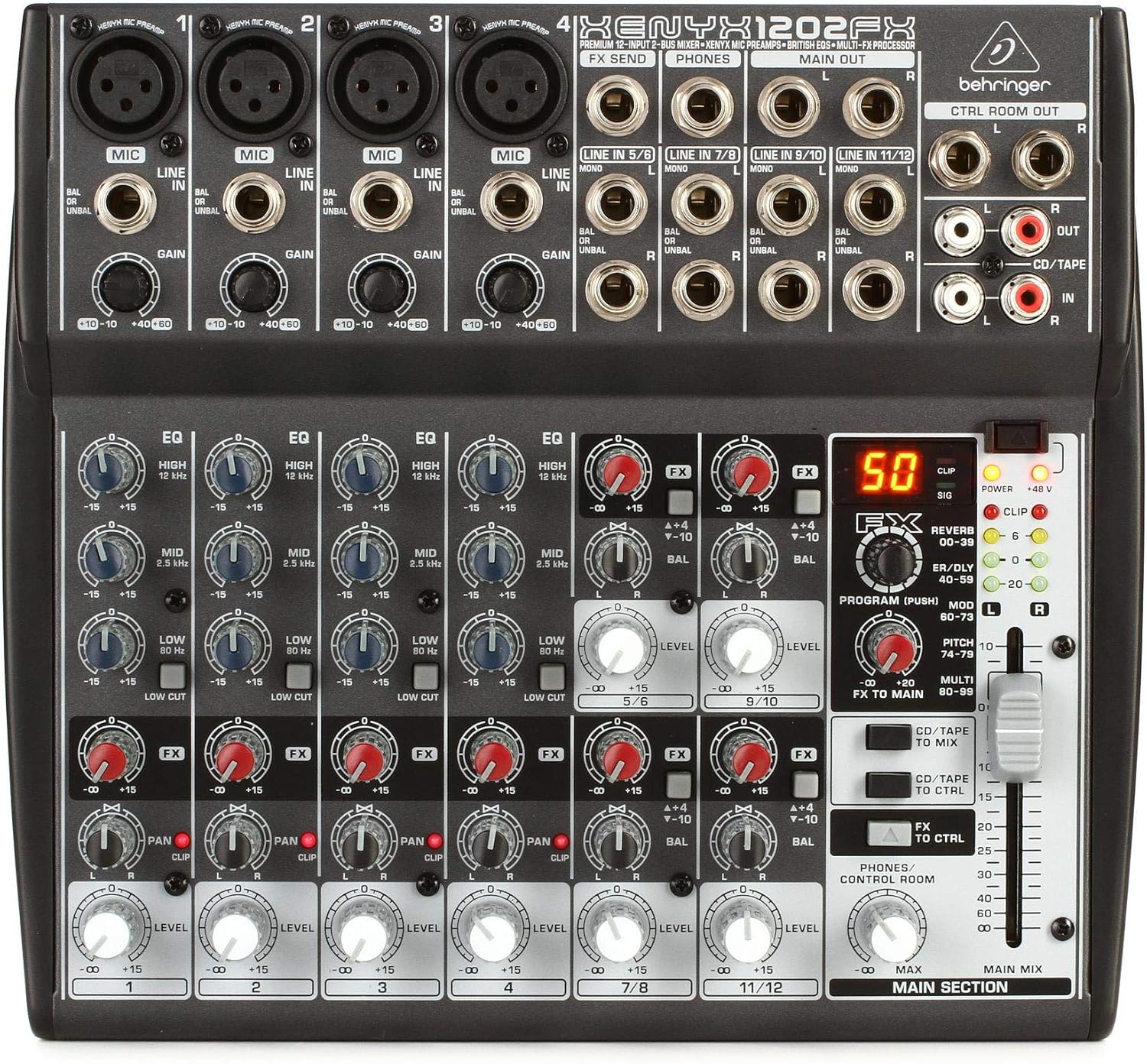

Rockville
See current price


Yamaha
See current price


Yamaha
See current price


Rockville
See current price
Powered mixers combine a mixing console and power amplifier in one unit. They can be a practical choice for bands, venues, presenters, houses of worship, mobile performers, and other setups that need to route and amplify several audio sources without assembling separate components.
When comparing models in this category, start with the needs of your complete system. Consider how many microphones and instruments you connect, what speakers you use, how much control you need during a performance, and whether the mixer will remain installed or travel regularly.
The right powered mixer should match both your input sources and your speakers. A compact setup may only need a few microphone and line inputs, while a full band or event system may require more channels for vocals, instruments, playback devices, and microphones used for announcements.
Pay close attention to the relationship between the amplifier section and your speakers. Check the mixer’s output capabilities, speaker impedance requirements, and power specifications against the documentation for your passive speakers. A mismatch can limit performance or create a safety concern, so compatibility matters more than choosing the highest stated output.
Portability is another important consideration. A mixer that travels to rehearsals and events should have a layout that is easy to operate, durable controls, and a manageable form factor. For a fixed installation, prioritize the connections, routing options, and control features that support the room and the people operating the system.
A powered mixer is generally intended to work with passive speakers because its amplifier section provides power to the speaker outputs. If your system uses active speakers, a conventional mixer may be a better fit, since powered outputs may not be needed. Always confirm the connection and power requirements of every component before building a signal chain.
For compatible speaker options, browse PA Systems and Monitors, Speakers & Subwoofers. Reliable connections are just as important as the mixer itself, so compare suitable Stage & Studio Cables for microphones, speakers, instruments, and other equipment.
A live production may also include Power Amplifiers when a separate amplifier and mixer offer more flexibility than an all-in-one powered mixer. For event setups beyond audio, Lighting Equipment & Accessories and Special Effects can help complete the stage system.
The Powered Mixers catalog includes products from Behringer, Yamaha, Rockville, Maker hart, Soundcraft, Pyle, and Zoom. These brands are represented across the available selection; compare each product by its own specifications rather than choosing by brand name alone. Channel layout, amplifier compatibility, inputs, outputs, and included functions can vary substantially between models.
Before connecting equipment, turn the mixer and connected components down or off where appropriate. Connect microphones and sources to the correct inputs, route the main and monitor outputs carefully, and verify that speaker cables and connectors are suitable for powered speaker outputs.
Set gain methodically: bring the source level up while watching the mixer’s signal indicators, then use channel and master controls to reach the desired listening level. Avoid sustained clipping, keep ventilation areas clear, and transport the unit in a way that protects knobs, faders, and connectors.
If several people will operate the system, a straightforward control layout can be as important as additional features. For a permanent installation, label cables and inputs so common connections can be checked quickly before an event.
A powered mixer combines audio mixing controls with an integrated power amplifier. It can mix connected sources and provide amplified outputs for compatible passive speakers.
They can be used only when the connections and signal flow are appropriate. Since active speakers already contain amplification, confirm the mixer’s outputs and avoid sending amplified speaker outputs where a line-level signal is required.
Choose enough channels for all microphones, instruments, playback devices, and other sources you expect to use at the same time. Leave room for future additions when possible.
Some models include built-in effects, while others focus on basic mixing and amplification. Check the individual product specifications for effects, auxiliary routing, and control options.
Many systems can route a monitor mix through suitable auxiliary or monitor outputs, but the available routing and amplification depend on the model and the speakers being used. Verify the manual and connection requirements before setup.