

Aquarium Thermometers
Compare aquarium thermometers by display type, placement, temperature range, and ease of reading. Use the specifications to find a practical match for your tank.
106 products in catalog
106 results
Filters


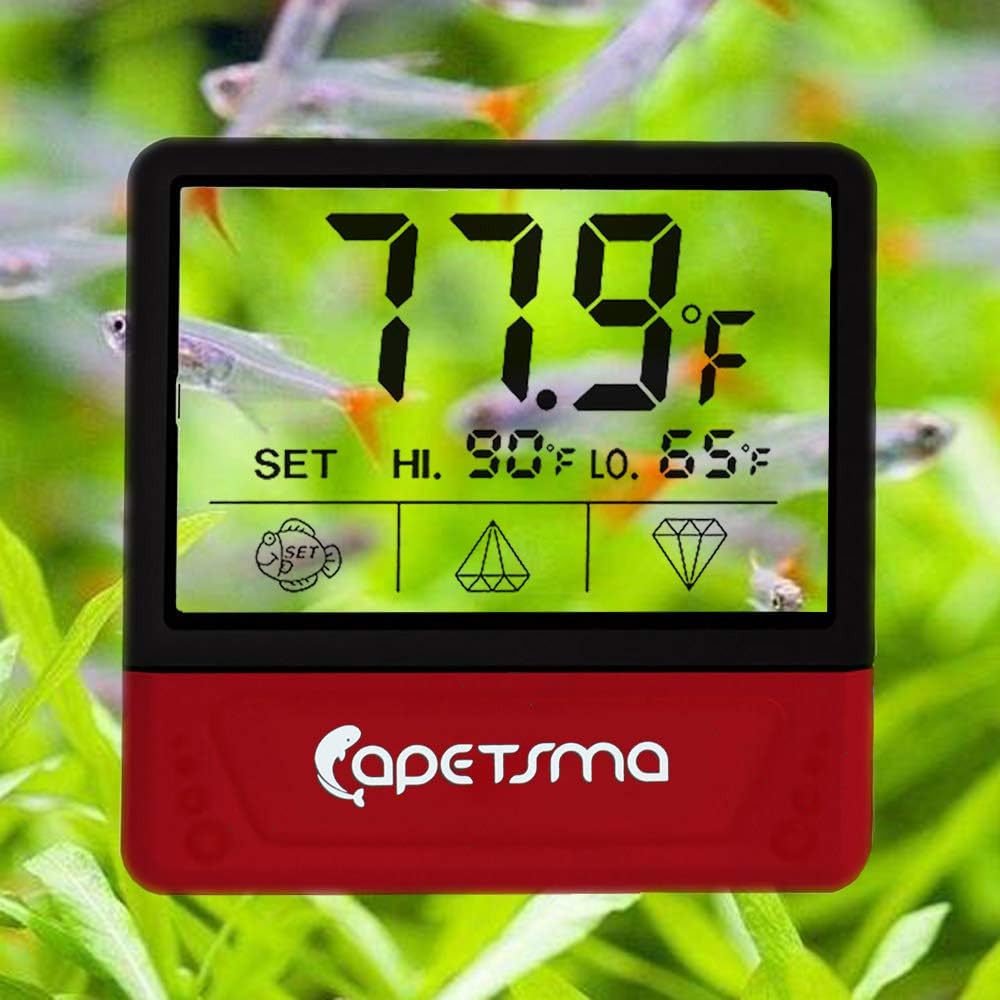
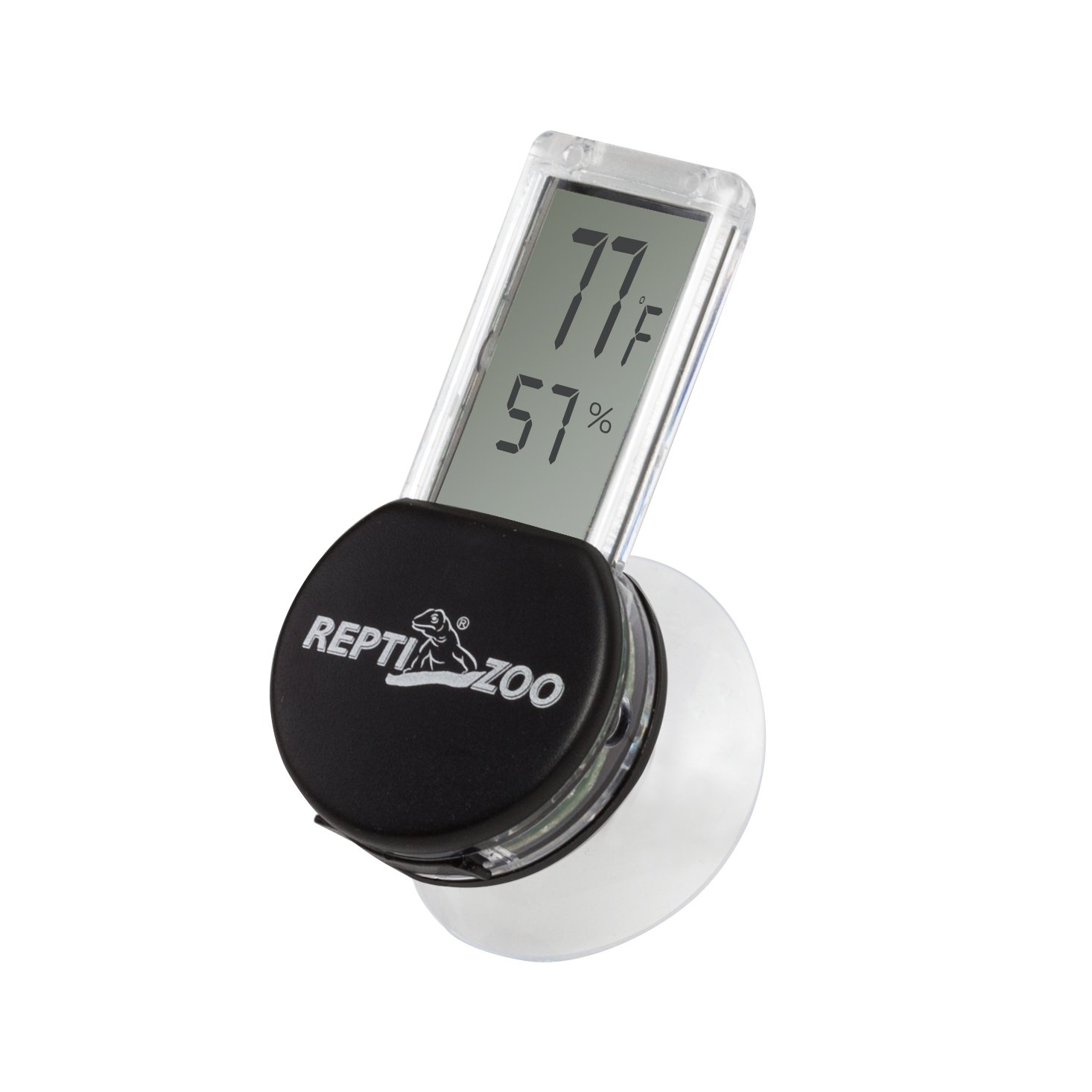

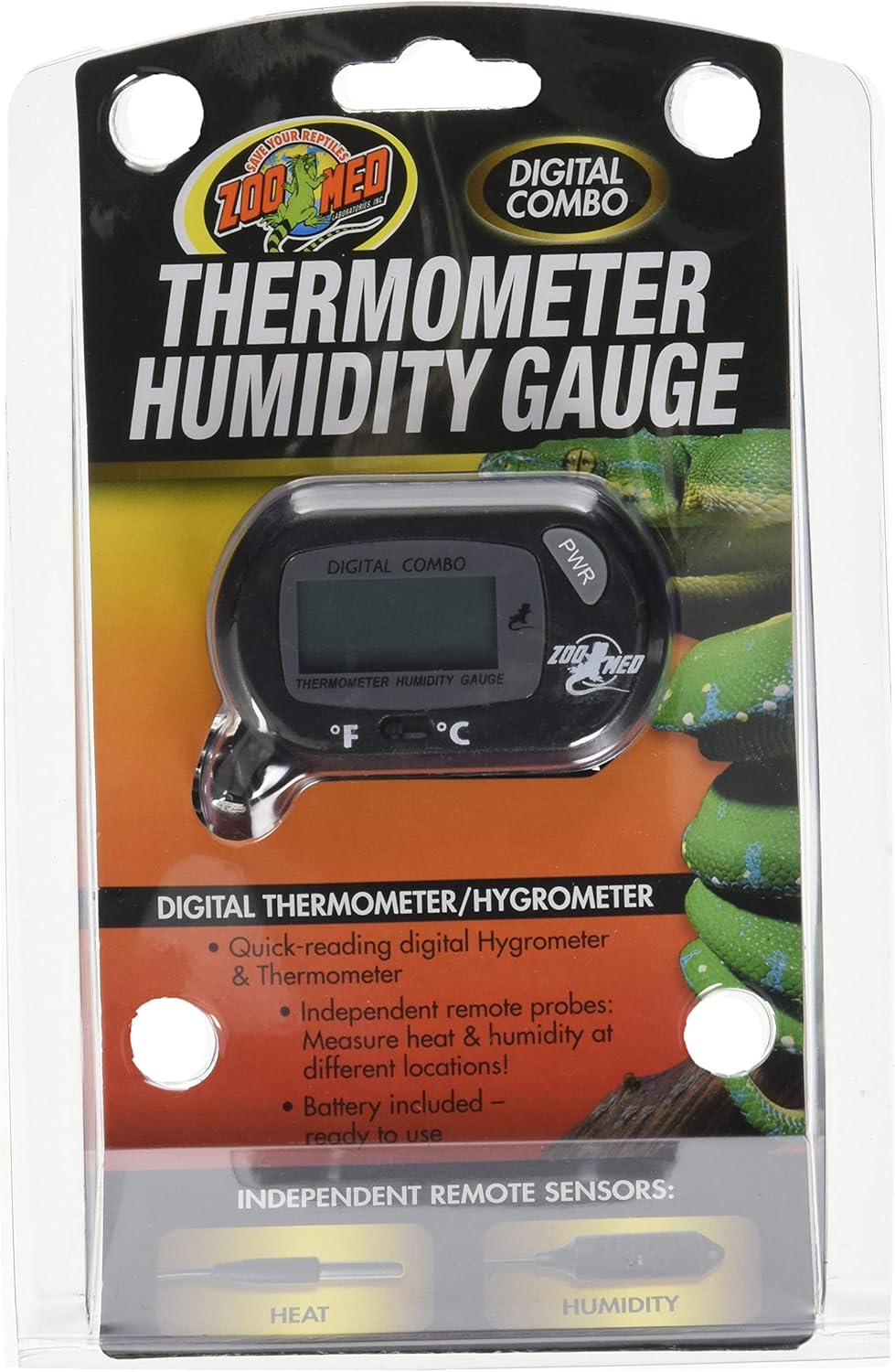




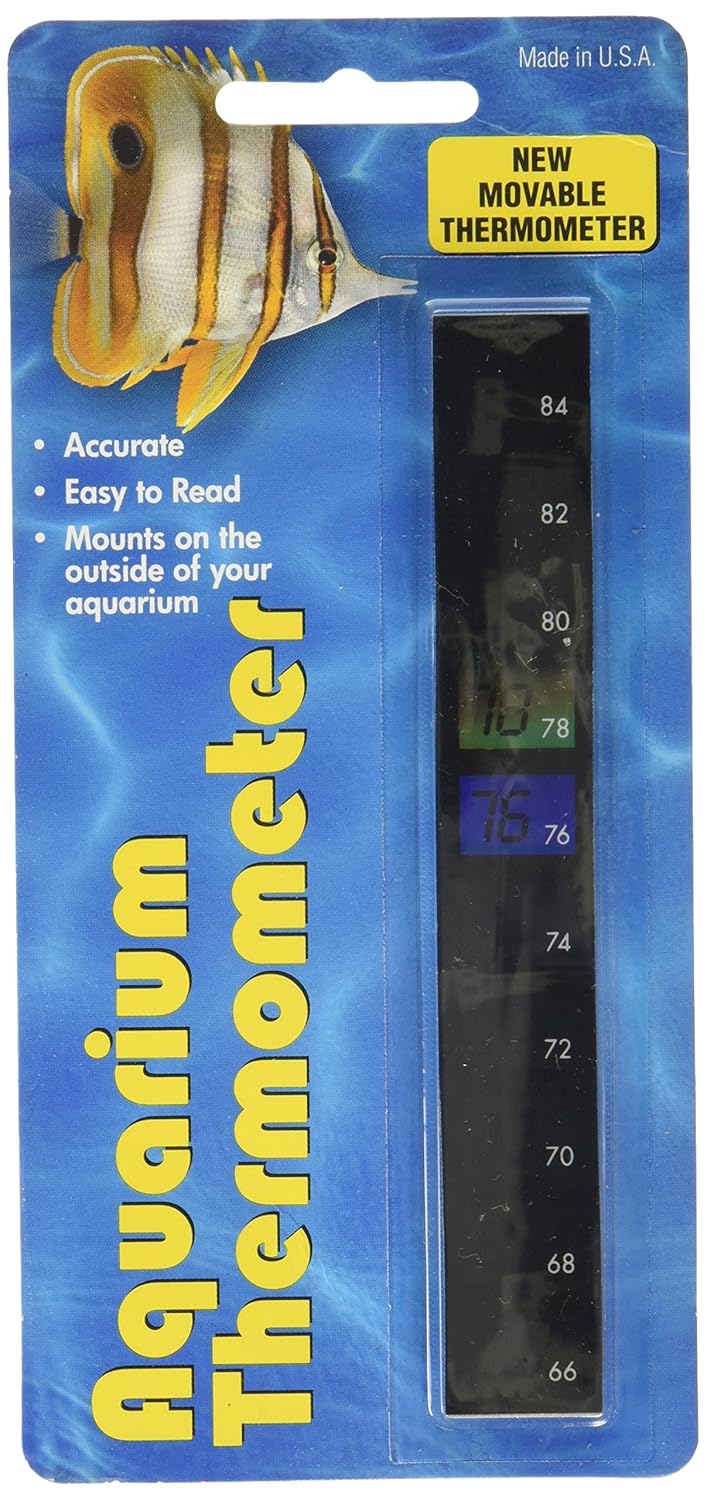
LCR Hallcrest LLC
LCR Hallcrest 43330972: Liquid Crystal Aquarium Thermometer Vertical
See current price





Popular brands in Aquarium Thermometers
An aquarium thermometer helps you monitor water conditions and spot changes that may affect fish, plants, and other aquatic life. The right choice depends on your tank setup, where you want to read the temperature, and how much visibility or convenience you need.
K-Catalog organizes options from brands represented in the catalog so shoppers can compare specifications and features before checking current product details on Amazon. Aquarium thermometers are part of the broader Fish & Aquatic Pets selection.
How to choose an aquarium thermometer
Start with placement. A thermometer may attach to the inside of the aquarium, sit or hang in the water, or read temperature from outside the glass. Choose a location that is easy to view and does not interfere with decorations, filters, heaters, or routine maintenance.
Consider how often you want to check the tank. A clearly visible display can be useful for quick daily checks, while a thermometer with a remote sensor or an external display may suit aquariums where the waterline or equipment makes interior viewing difficult.
The thermometer should also suit the aquarium’s inhabitants. Fish and other aquatic animals can have different environmental needs, so compare the thermometer’s stated measurement range with the temperature conditions appropriate for your setup.
Common thermometer types
Aquarium thermometers generally fall into a few practical groups:
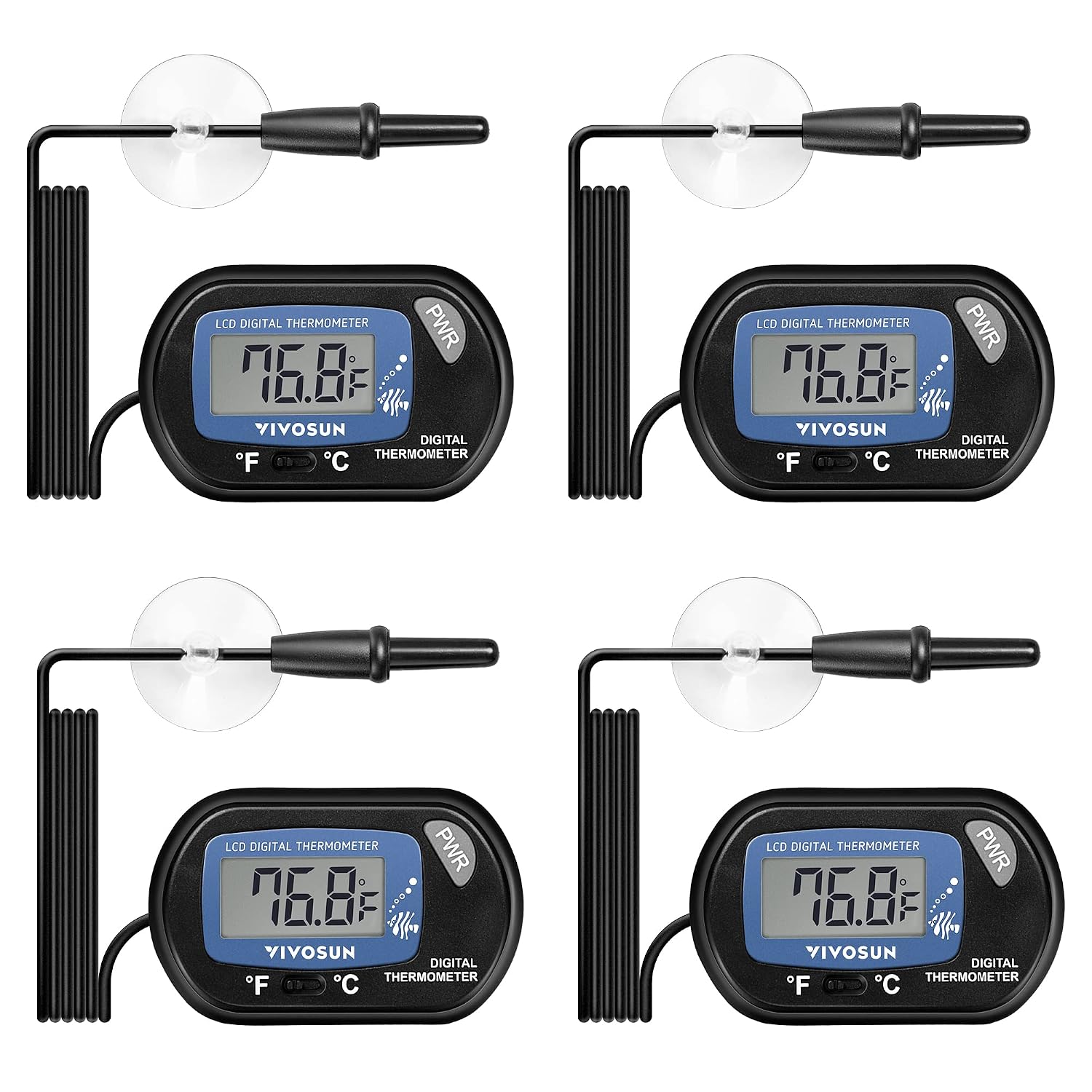
- Digital thermometers: Often designed for quick readings on a digital display. Compare the display size, sensor arrangement, power requirements, and controls.
- Glass or analog thermometers: These provide a simple visual reading and may use a floating, hanging, or suction-cup design. Check how they attach and whether the scale is easy to read.
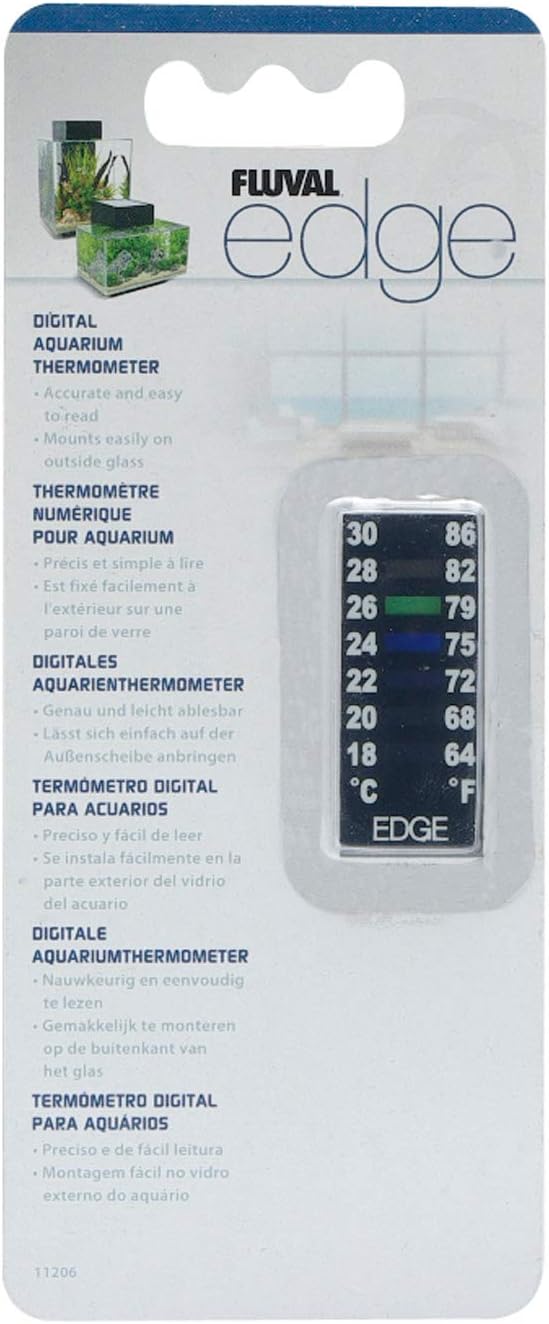
- Stick-on thermometers: These attach to the outside of the tank and can be convenient when an interior device would be obstructed. Placement and viewing angle matter because the reading must be easy to interpret through the glass.
- Probe-based thermometers: A separate probe can be positioned in the water while the display remains outside or above the aquarium. Review the probe design, cable length, and attachment method.
Features and specifications to compare
When comparing aquarium thermometers, pay attention to details that affect daily use:
- Temperature range: Confirm that the stated range covers the conditions you need to monitor.
- Display readability: Look for a scale, digits, contrast, or viewing angle that works with the aquarium’s location and lighting.
- Placement method: Suction cups, adhesive backing, clips, floating bodies, and probes each suit different tank layouts.
- Measurement units: Check whether the thermometer displays Fahrenheit, Celsius, or both if multiple users will read it.
- Power source: Digital models may require batteries or another power arrangement. Consider access for replacement or maintenance.
- Water resistance: For any device used in or near the tank, examine the product specifications for intended water exposure and handling instructions.
- Size and cable design: A compact body may be less noticeable, while a longer cable can make remote placement easier.
A thermometer is most useful when it remains in a consistent, representative location. Avoid placing it directly beside a heater outlet or another source of localized heat, unless the goal is specifically to monitor that area.
Brands represented in the catalog
The Aquarium Thermometers catalog includes products associated with REPTI ZOO, Coralife, SunGrow, AikTryee, Capetsma, Marina, AQUANEAT, Thermometer World, Fluval, PAIZOO, General Tools, and Zoo Med. These brands give shoppers several specifications and designs to compare, but the most suitable option depends on the aquarium, placement preference, and desired display style.
For a broader setup comparison, related categories include Aquarium Pumps & Filters, Aquarium Water Treatments, and Aquarium Lights. Equipment placement is especially important when combining a thermometer with filtration, heating, lighting, or décor.
Setup and care tips
Position the thermometer where water movement is representative of the tank rather than in a stagnant corner. Keep the display visible, and check that attachments remain secure during water changes or cleaning. For digital or probe-based products, follow the manufacturer’s instructions for battery replacement, sensor handling, and water exposure.
If the reading changes unexpectedly, first check whether the thermometer has shifted, the probe is clean and properly positioned, or the device needs fresh power. Comparing readings with another suitable thermometer can also help identify whether the issue is related to placement or the device itself.
Frequently asked questions
Where should an aquarium thermometer be placed?
Place it where water temperature is representative of the tank and the display is easy to read. Keep it away from direct heater output unless you specifically need to monitor that area.
Are digital or analog aquarium thermometers better?
Neither type is right for every aquarium. Digital models may offer prominent displays and probes, while analog designs can provide a simple, low-maintenance way to view temperature.
Can a thermometer attach to the outside of an aquarium?
Some stick-on models are designed for external placement. Check the product specifications and install it on a clean, suitable section of glass where the reading can be viewed clearly.
What temperature range should an aquarium thermometer cover?
Choose a stated range that includes the temperature conditions required by the fish, plants, or other aquatic animals in your aquarium. The appropriate range depends on the inhabitants and setup.
How often should aquarium temperature be checked?
Check it regularly and whenever you notice a change in animal behavior, equipment operation, room conditions, or water maintenance. A visible, easy-to-read thermometer makes routine checks simpler.