Seachem
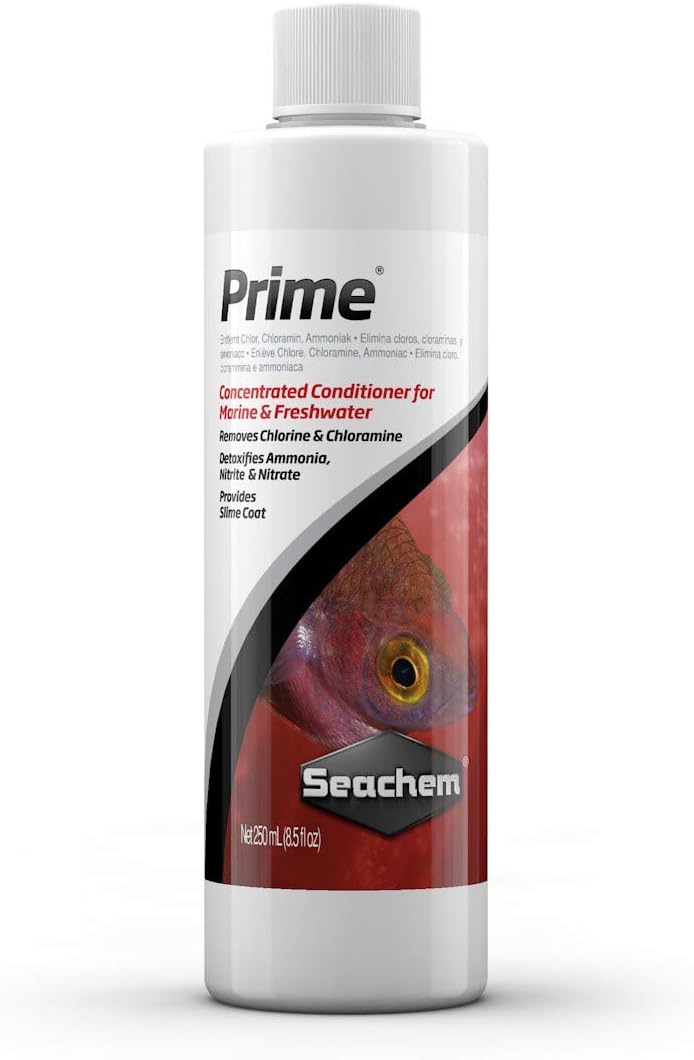
Seachem Prime Fresh and Saltwater Conditioner - Chemical Remover and Detoxifier 100 ml
See current price

Compare aquarium water treatments by purpose, ingredients, compatibility, and application method. Use the catalog to narrow options for freshwater, marine, and specialty aquarium setups.
470 products in catalog
470 results
Seachem
See current price




MarineLand
See current price



Seachem
See current price
Instant Ocean
See current price


Seachem
See current price


Seachem
See current price
Aquarium water treatments help fish keepers prepare, maintain, and adjust aquarium water as part of a regular care routine. The right product depends on your water source, aquarium type, inhabitants, and the specific water issue you are addressing.
This category brings together options for freshwater and marine systems, including products intended for water conditioning, biological support, water clarity, and other maintenance needs. Compare the label directions and specifications carefully before adding any treatment to an aquarium.
Start with the purpose of the product rather than the brand name. A treatment designed to condition new tap water may serve a different role from one intended to support biological filtration or address a particular water parameter.
Consider these questions before choosing:
If the aquarium is new or the water source has changed, check the product directions and test water parameters before deciding which treatment is appropriate.
Water conditioners are commonly used when preparing tap water for aquarium use. Their directions may specify treatment for a particular amount of new water, so the aquarium size and water-change volume matter when comparing products.
Biological supplements are intended to support beneficial bacteria in an aquarium system. These products are often considered during setup, after filter maintenance, or when the aquarium’s biological balance may have been disrupted. They should be used according to the label rather than as a substitute for monitoring water conditions.
Other treatments focus on water clarity, algae-related concerns, or individual water parameters. These products can have more specific restrictions, so review compatibility with fish, invertebrates, plants, filtration equipment, and substrate before use. Saltwater keepers should also distinguish general water treatments from products intended for reef or marine systems.
Product labels provide the most useful comparison points. Look for:
Avoid selecting a treatment solely because it promises a broad result. A measured water test and a clearly defined goal can help prevent unnecessary additions.
The catalog includes aquarium water treatment options from Seachem, API, Tetra, Brightwell Aquatics, Fritz Aquatics, Boyd Enterprises, Aqueon, SunGrow, Instant Ocean, Red Sea, Zoo Med, and Fluval. These brands are well represented in this category, but the best match still depends on the product’s intended use, directions, and aquarium compatibility.
For a complete aquarium setup, compare treatments alongside Aquarium Pumps & Filters, Aquarium Cleaners, and Aquariums & Fish Bowls. Water care is only one part of maintaining a suitable habitat; Food, Aquarium Décor, and Aquarium Lights may also be relevant to the setup.
Follow the product label for dosing, order of use, and water-change instructions. Measure the aquarium volume as accurately as practical, and avoid estimating doses when a treatment is highly concentrated. Do not combine multiple products unless their directions specifically allow it.
Keep a record of water-test results and treatments used. This makes it easier to identify changes over time and reduces the chance of repeatedly adding products without knowing whether they are needed. Store treatments as directed and keep them away from children and pets.
When introducing a new fish, plant, invertebrate, or medication, review compatibility with the treatments already in use. If fish show unusual behavior or signs of distress, stop and reassess the water parameters and product instructions rather than adding another treatment automatically.
A water conditioner is often the relevant starting point for aquariums filled or replenished with tap water, but the correct product depends on the local water source and label directions.
Not necessarily. Freshwater, marine, reef, planted, and invertebrate systems may have different requirements. Check the stated compatibility before use.
Test the water, identify the specific issue, and select a product whose stated purpose matches that result. Avoid treating an undefined problem.
Some conditioners are intended for new replacement water, while other products have different schedules. Follow the product’s instructions instead of assuming every treatment is used the same way.
Treatments are not a substitute for appropriate filtration, routine maintenance, and responsible stocking. Compare them with equipment and cleaning supplies suited to the aquarium.