
Industrial Chains for Hardware and Equipment
Compare industrial chains for hardware, equipment, hanging, securing, and general-purpose applications. Review construction, dimensions, strength specifications, and compatible hardware before choosing.
34 products in catalog
34 results
Filters


Ball Chain Manufacturing Co., Inc.
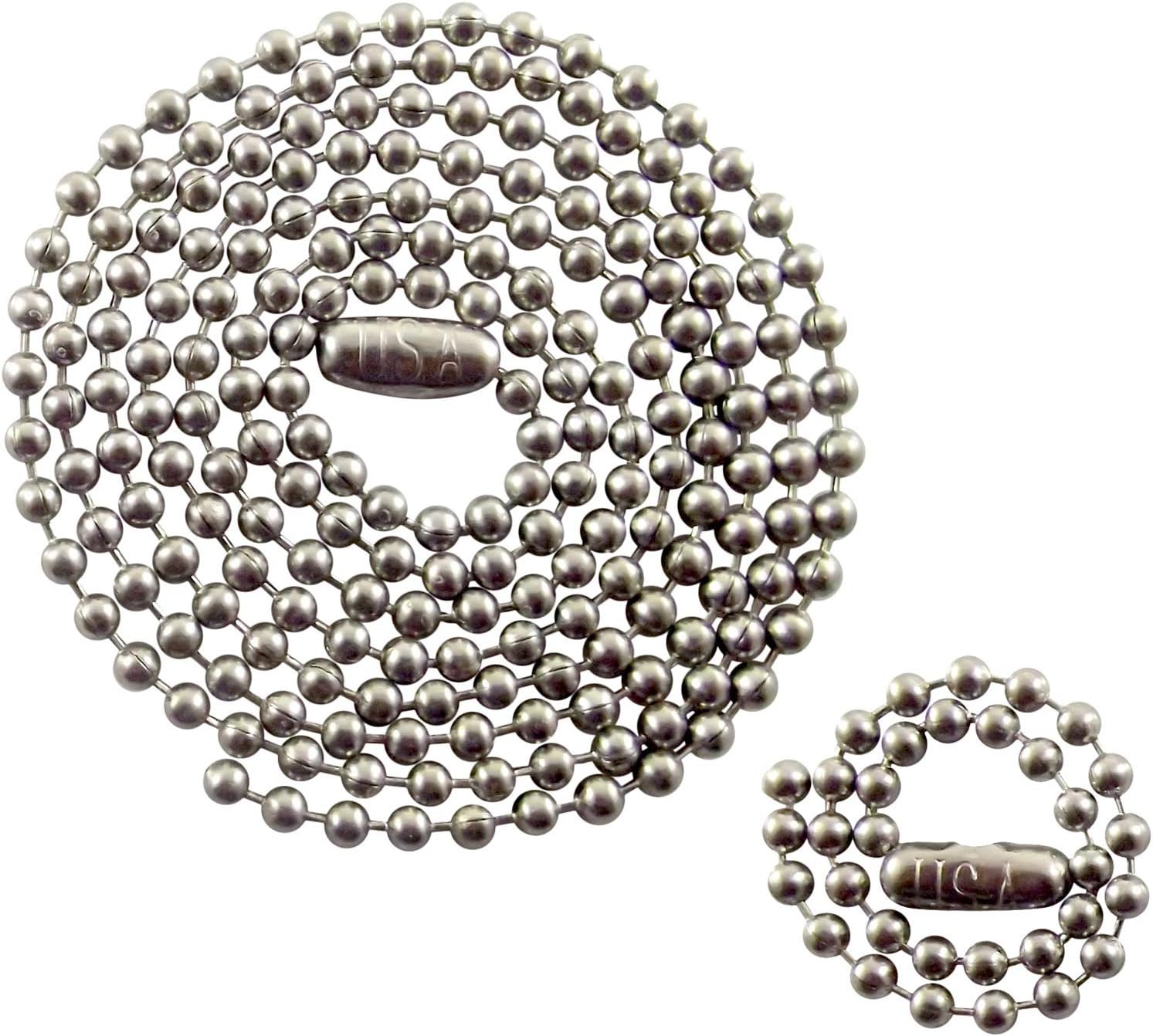
12 Inch Length Ball Chains, 6 Size, Nickel Plated Brass with Matching Pendants and Connectors (3 Pack)
See current price

Perfection Chain Products
Perfection Chain Products 31012 #16 Single Jack Chain, Bright Galvanized, 100 FT Carton
See current price

Perfection Chain Products
Perfection Chain Products 54456 #16 Single Jack Chain, Plated Steel Zinc, 100 FT Carton
See current price

Perfection Chain Products
Perfection Chain Products 31503 #16 Single Jack Chain, Stainless Steel Clean, 25 FT Bag
See current price
Perfection Chain Products
Perfection Chain Products 31011 #16 Single Jack Chain, Bright Galvanized, 50 FT Carton
See current price

Perfection Chain Products
Perfection Chain Products 31311 #16 Single Jack Chain, Brass Clean, 50 FT Carton
See current price
Perfection Chain Products
Perfection Chain Products 11601 #16 Single Jack Chain, Brass Clean, 25 FT Bag
See current price
Perfection Chain Products
Perfection Chain Products 31002 #16 Single Jack Chain, Bright Galvanized, 25 FT Bag
See current price

Apex Tool Group
ASC MC168103002 Low Carbon Steel Case Hardened Proof Coil Chain, Zinc Plated, 3/16" Trade, 3/16" Diameter x 2' Length
See current price

J&R Quality Tools
1/4" X 12' Heavy Duty Tow Chain Automotive Truck Towing Log Chain…
See current price


KOCH
Koch A06212 1/4 by 12-Feet Binder Chain Grade 70 with Grab Hooks, Yellow Chromate
See current price

Koch Industries
Koch Industries A19011 No. 10 Decorator Chain, 10-Feet, Antique Brass
See current price


Koch Industries
Koch A01160 3/16 by 10-Feet Grade 30 Proof Coil Chain, Zinc Plated, Red
See current price


Perfection Chain Products
Perfection Chain Products 30012 #18 Single Jack Chain, Bright Galvanized, 100 FT Carton
See current price
Popular brands in Chains
Industrial chains can support, connect, secure, guide, or suspend components in a wide range of industrial and workshop applications. The right option depends on how the chain will be used, the environment it will face, and which hooks, snaps, brackets, or other fittings will connect to it.
This K-Catalog category helps shoppers compare product specifications and features from brands represented in the catalog. Check the individual listing for the manufacturer’s stated dimensions, material, finish, and application details before buying.
How to choose an industrial chain
Start with the chain’s intended job. A chain used for light-duty hanging or adjustment may have different requirements from one used for securing equipment or handling loads. Do not select by appearance alone; compare the manufacturer’s stated capacity and application guidance.
Consider these factors:
- Use case: Determine whether the chain is for hanging, restraint, adjustment, display, machinery, or another purpose.
- Material: Steel, stainless steel, and other materials offer different combinations of strength, corrosion resistance, flexibility, and appearance.
- Size: Compare link length, link width, wire or bar diameter, and overall chain length with the available attachment points.
- Working load information: For load-bearing applications, use the manufacturer’s rated working load and safety guidance rather than estimating capacity from chain size.
- Environment: Moisture, chemicals, outdoor exposure, abrasion, and temperature can influence the appropriate material and finish.
Common chain types and applications
Industrial chains are available in several formats, each suited to different tasks. Welded link chains are commonly considered for general securing, hanging, and hardware applications, while link dimensions and construction should be matched to the intended load and fittings.
Ball chains use connected spherical beads and are often selected for light-duty attachment, identification, adjustment, or hanging applications. Ball size and connector compatibility are especially important when replacing an existing chain.
Roller and machinery chains are designed around mechanical motion and must be matched to the equipment’s required pitch, width, sprocket, and operating conditions. For any replacement, compare the complete specification rather than relying only on visual similarity.
For connecting and securing, related hardware such as Hooks, Snaps, and Brackets may help complete an installation. These components must be compatible with the chain’s diameter, link opening, and intended load.
Specifications and features to compare
Product listings can differ in how much technical information they provide, so review each specification carefully. Important details include:
- Chain type and construction
- Material and protective finish
- Link shape and inside dimensions
- Wire, bar, or bead diameter
- Overall length and whether the chain is sold as a continuous length or a preassembled piece
- Rated working load, breaking strength, or other manufacturer-provided strength information
- Included connectors, end fittings, or hardware
- Color and surface appearance when the chain will be visible
A chain can fit through an opening yet still be unsuitable for the application. Check the full dimensional drawing or specification table where available, particularly when the chain must pass through a pulley, eyelet, bracket, or connector.
Brands represented in the catalog
The catalog includes industrial chain products from Perfection Chain Products, Ball Chain Manufacturing Co., Inc., Koch Industries, PP OPOUNT, Tag-Z, KingChain, Luanxu, J&R Quality Tools, BBTO, OKG, URBEST, and Perfection Chain. Compare their individual listings by construction, dimensions, included hardware, and stated use rather than choosing by brand name alone.
When replacing an existing chain, the original manufacturer’s specifications can provide a useful starting point. Still, verify the current product details because packaging, finish, included connectors, and available configurations may vary between listings.
Installation, care, and safety tips
Use connectors that are designed for the chain and application. A hook, snap, or bracket with a lower rating than the chain can limit the performance of the complete assembly. For lifting, overhead suspension, fall restraint, or other safety-critical uses, follow the manufacturer’s instructions and applicable workplace requirements.
Inspect chains periodically for stretched links, bent or cracked components, corrosion, sharp wear points, and damaged connectors. Remove any chain from service when its condition or capacity is uncertain. Keep chains clean and dry when appropriate for the material, and use only maintenance products compatible with the manufacturer’s guidance.
If the project involves thin panels, cable pass-throughs, or fastening to wood or sheet material, related Grommets, Braces & Joist Hangers, or Biscuits & Plugs may address different parts of the installation. These are separate hardware categories and should not be treated as substitutes for a properly specified chain.
Frequently asked questions
What is the most important chain specification?
The most important specification depends on the use, but dimensions, material, construction, and manufacturer-stated working load are central considerations. For safety-critical applications, follow the complete rating and usage guidance.
How do I match a chain to a hook or snap?
Compare the chain’s wire, bar, or bead diameter with the connector opening. Also check the connector’s working load and ensure its shape allows the chain to seat correctly without binding.
Are industrial chains suitable for outdoor use?
Some may be suitable, depending on their material and finish. Check the manufacturer’s environmental guidance and consider exposure to moisture, salt, chemicals, and temperature changes.
Can I use a ball chain for heavy-duty securing?
Ball chains are commonly associated with lighter-duty attachment and adjustment tasks, but suitability depends on the specific product. Use only the manufacturer’s stated application and capacity information.
How should I choose chain length?
Measure the required path, including bends, attachment points, and any adjustment allowance. Then compare that measurement with the listing’s stated length and whether connectors or end fittings are included.