

Collars, Harnesses & Leashes for Dogs
Compare collars, harnesses, and leashes for different dogs, walking styles, and daily routines. Check fit, materials, attachment points, and convenience features before choosing gear.
8,672 products in catalog
8,672 results
Filters


Best Pet Supplies
Voyager Step-In Air Dog Harness - All Weather Mesh Step in Vest Harness for Small and Medium Dogs by Best Pet Supplies - Pink Base, M
See current price

Providence Engraving
Providence Engraving Pet ID Tags in 8 Shapes, 8 Colors, and Two Sizes - Personalized Dog and Cat Tags with 4 Lines of Customizable Text
See current price
Providence Engraving
Providence Engraving Pet ID Tags in 8 Shapes, 8 Colors, and Two Sizes - Personalized Dog and Cat Tags with 4 Lines of Customizable Text
See current price


Blueberry Pet
Blueberry Pet Essentials 21 Colors Classic Dog Collar, Emerald, X-Small, Neck 8"-11", Nylon Collars for Dogs
See current price






Vastar
Vastar 2 Packs Adjustable Pet Dog Cat Car Seat Belt Safety Leash Vehicle Seatbelt Harness
See current price


Popular brands in Collars, Harnesses & Leashes
Collars, harnesses, and leashes are everyday essentials for many dogs, but the right combination depends on your dog’s size, behavior, comfort, and where you plan to walk. A collar may be useful for identification and light everyday wear, while a harness can distribute leash pressure across the chest and body. The leash itself affects control, freedom of movement, and convenience.
Use this catalog to compare product specifications and features side by side. Pay close attention to measurements and intended use rather than choosing based only on color or appearance.
How to choose the right walking gear
Start with your dog’s routine. A dog that mainly takes relaxed neighborhood walks may need different gear from a dog that hikes, travels, pulls, or joins structured training sessions. Consider these questions before comparing individual products:
- What level of control is needed? A standard collar and leash may suit calm walkers, while a harness with a well-positioned attachment point can offer a different way to manage leash pressure.
- How active is your dog? Dogs that run, explore, or spend time outdoors may benefit from adjustable, secure gear made for regular movement.
- Will the gear be used every day? For frequent use, look for comfortable materials, strong-looking hardware, and simple cleaning requirements.
- Does your dog dislike gear going over the head? Step-in or other alternative harness designs may be worth comparing.
- Will visibility matter? Reflective details or brighter colors can be useful when walking in low-light conditions, depending on the product design.
The best setup should allow normal movement without rubbing, slipping, or creating unnecessary pressure. If your dog has a medical condition, a history of neck or joint problems, or unusual sensitivity, consult a veterinarian or qualified trainer about suitable equipment.
Main types to compare
Dog collars
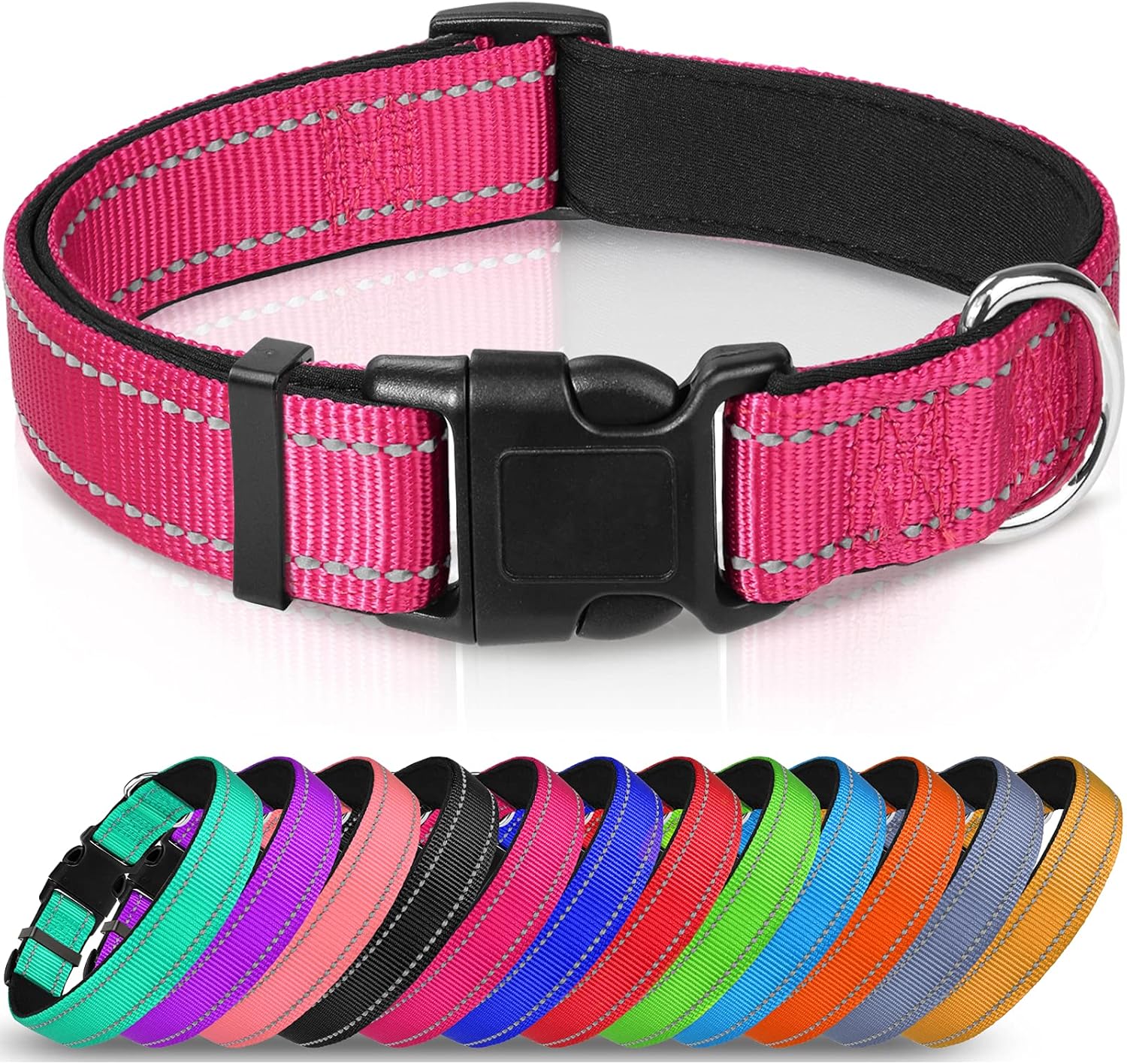
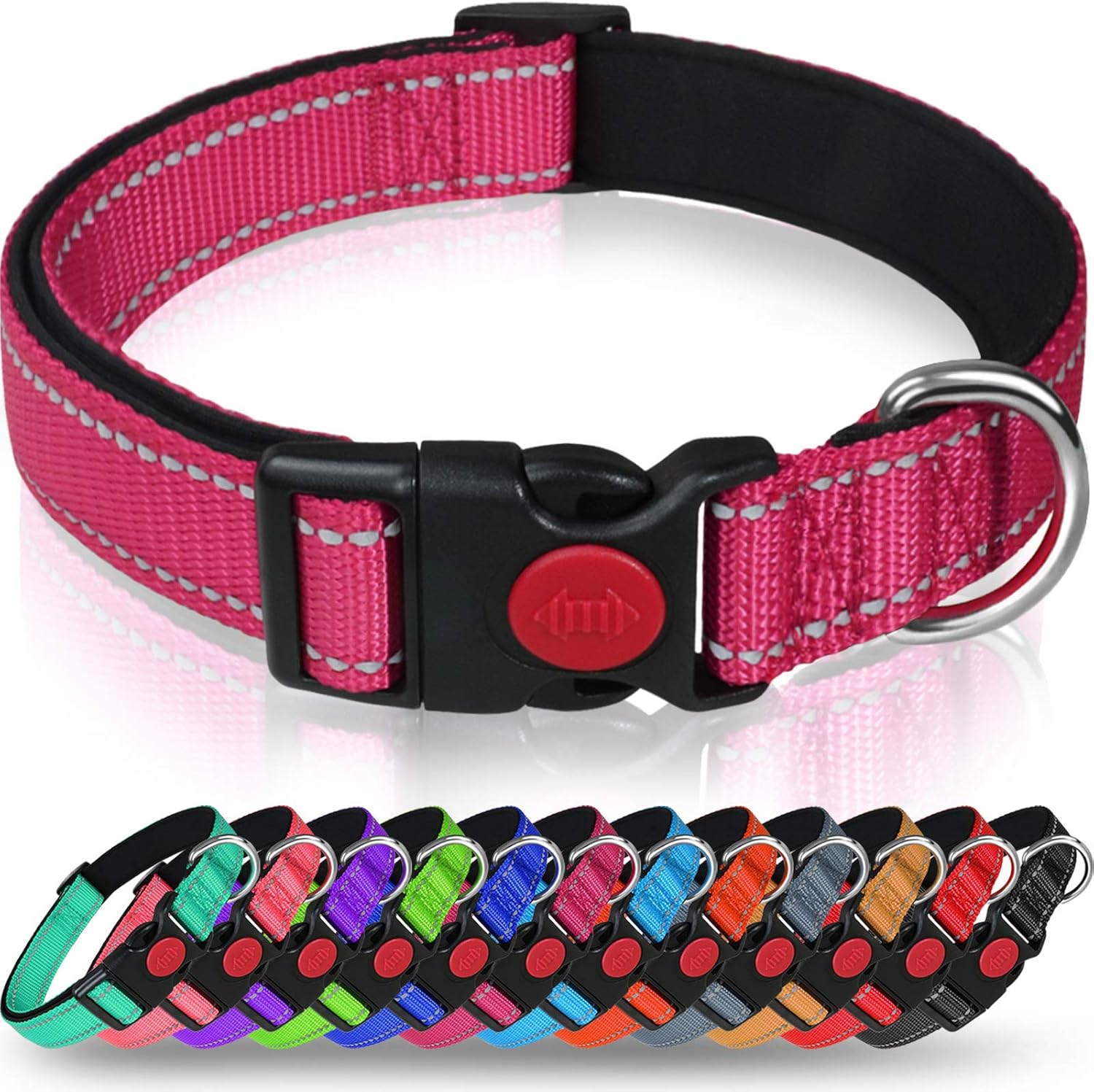
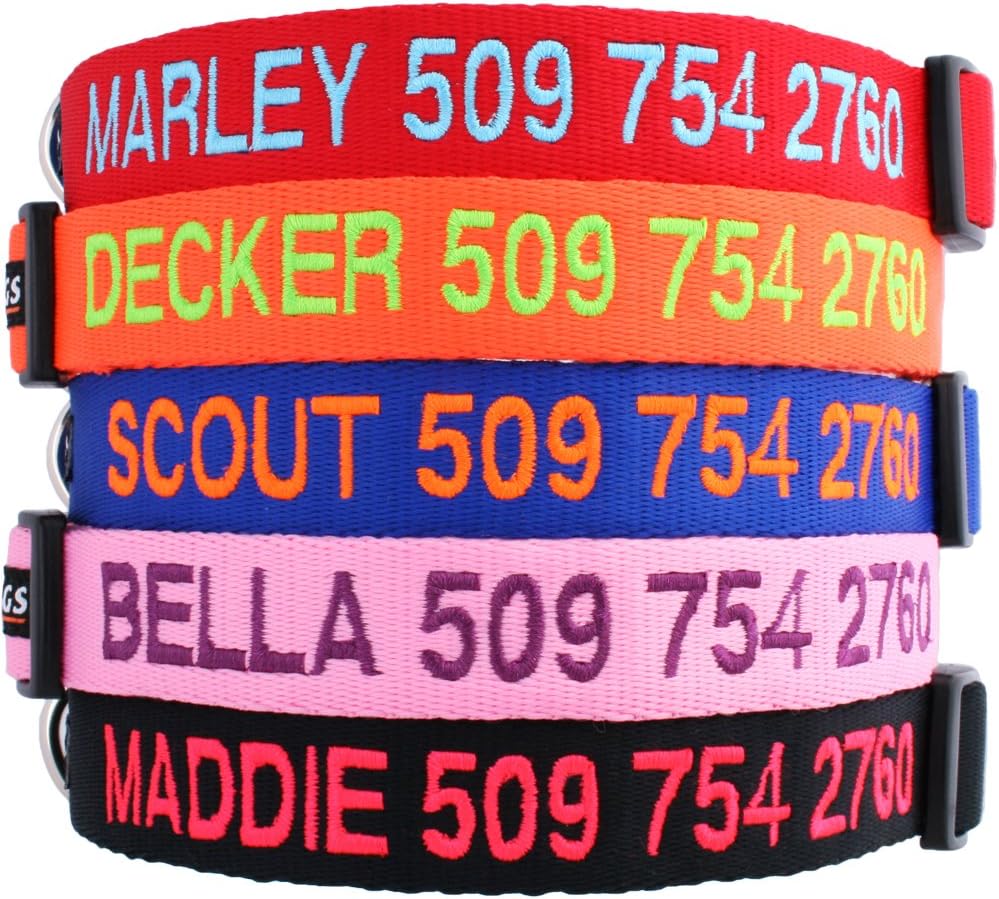
Collars are available in everyday, adjustable, reflective, personalized, and specialty designs. Compare the neck-size range, width, buckle or closure, D-ring placement, and the materials used around the dog’s neck. A collar should sit securely without being so tight that it causes discomfort.
Personalized collars may provide space for a name or contact information, while reflective or high-visibility styles can help make a dog easier to see. Some designs focus on lightweight comfort, whereas others use wider straps or sturdier hardware for specific activities.
Dog harnesses
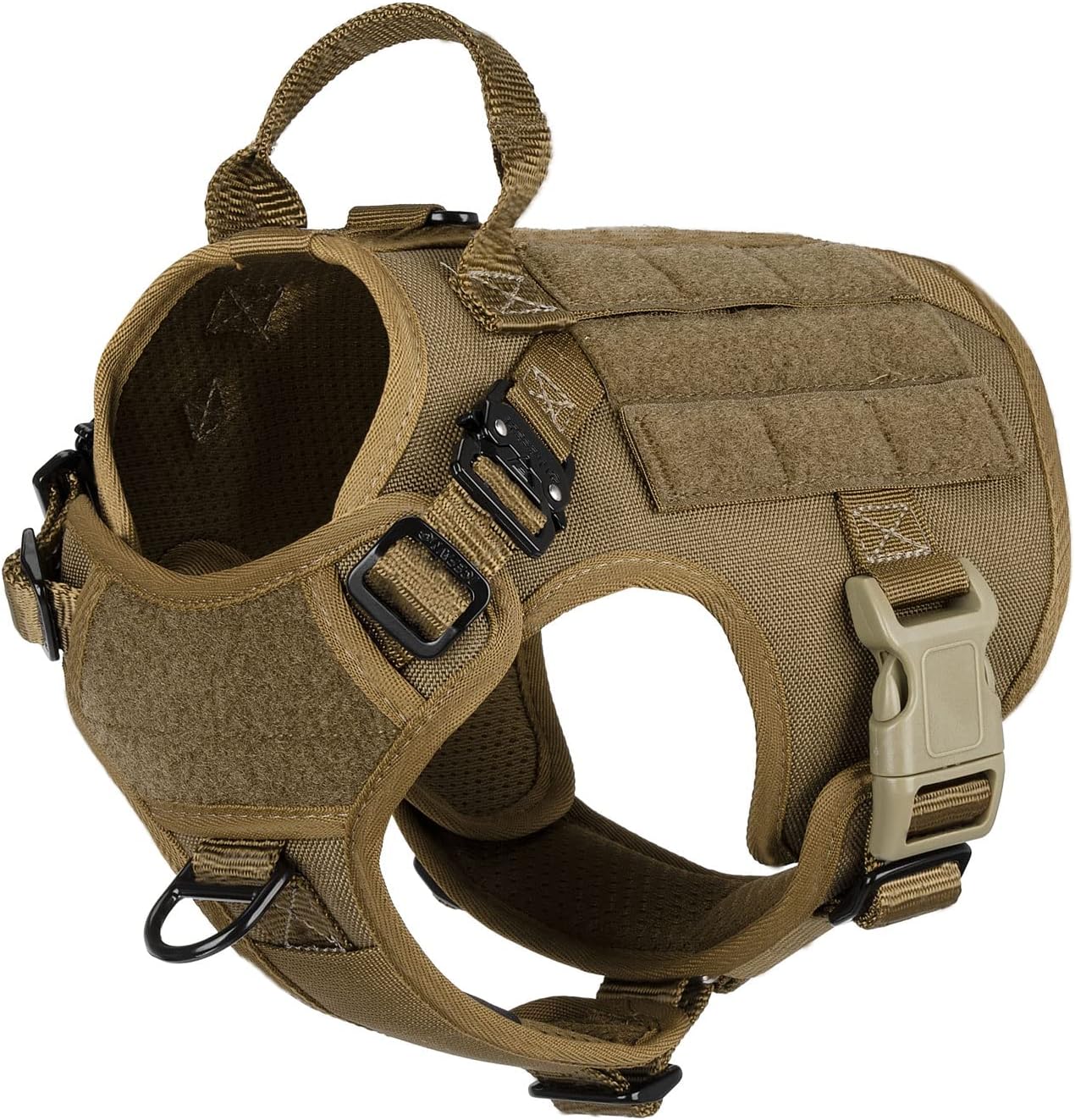
Harnesses differ in how they fit around the chest, shoulders, and torso. Common designs include back-clip, front-clip, dual-clip, step-in, and vest-style harnesses. Each layout can change how the leash attaches and how the harness feels during movement.
Look for adjustable straps in the areas that affect fit most directly. A harness should allow the dog to walk, sit, and move its shoulders naturally. Features such as padded panels, breathable fabric, multiple adjustment points, and easy-release buckles may improve convenience, but they also affect weight and bulk.
Dog leashes
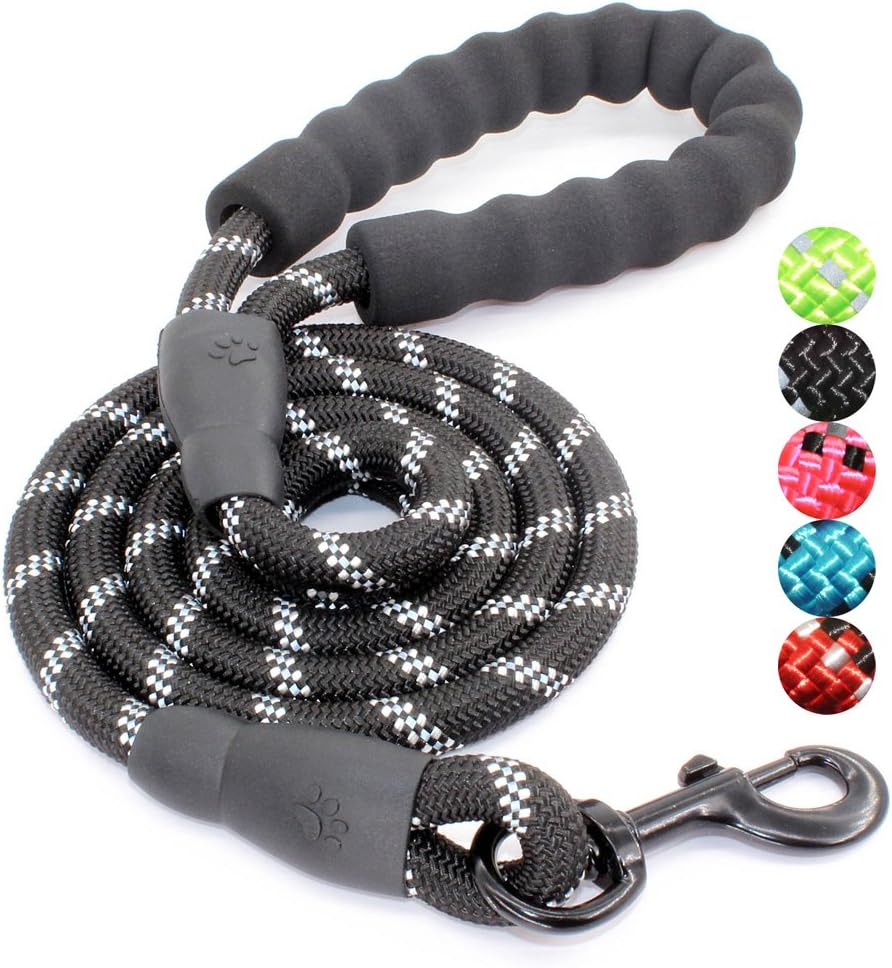
Leashes range from simple walking leads to hands-free, traffic-handle, double-ended, long-line, and retractable designs. Compare the leash length, width, handle style, clip type, and intended activity. A shorter leash can support closer control in busy areas, while a longer design may provide more room to explore where appropriate.
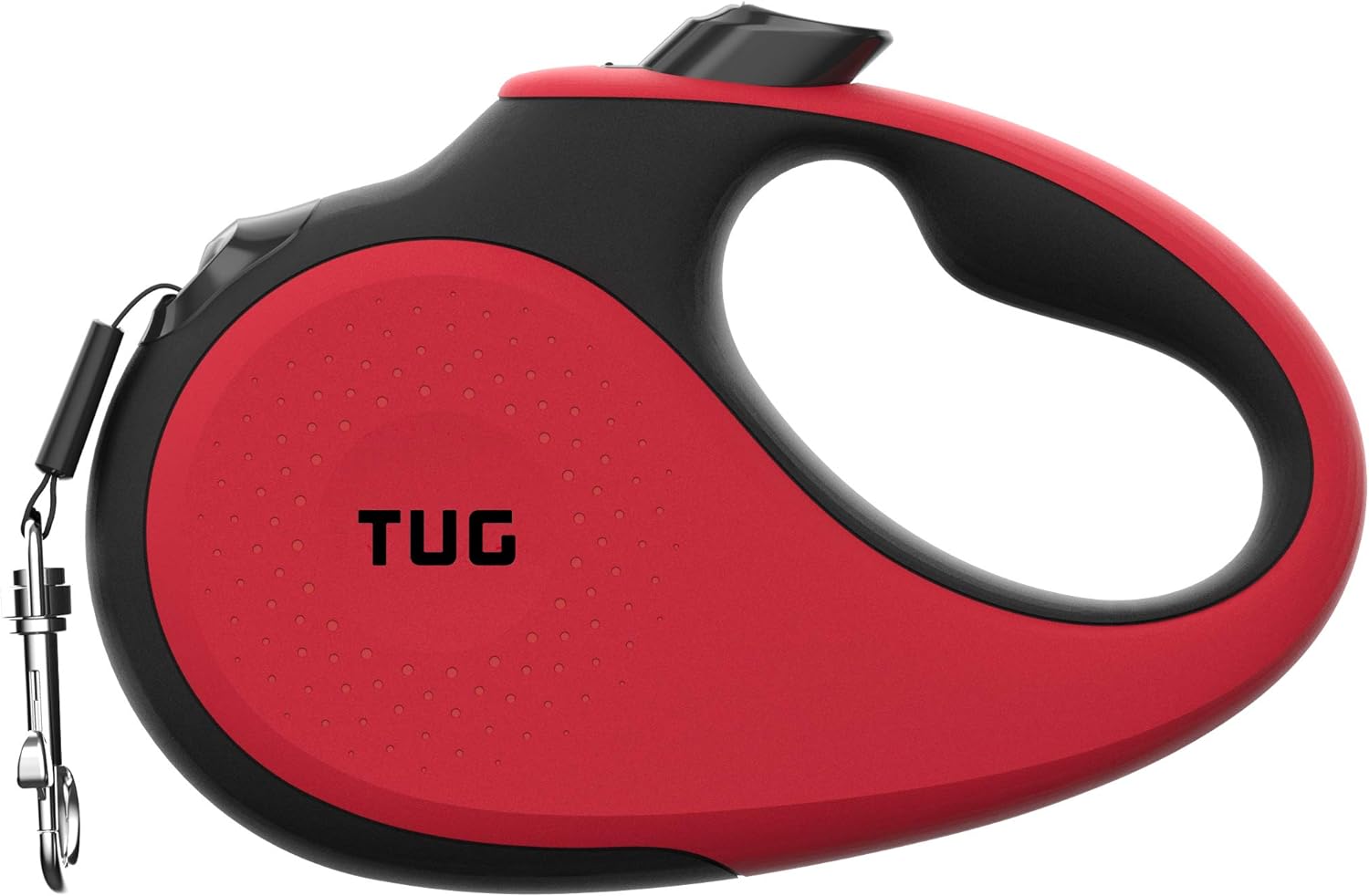
Retractable and long-line leashes require careful handling and suitable surroundings. Check how the locking, clip, or adjustment mechanism works, and choose a design that matches both the dog’s size and the handler’s comfort.
Key features and specifications
Product details can vary substantially even within the same type. These are the specifications most worth checking:
- Sizing range: Confirm the neck or chest measurements and compare them with your dog’s actual measurements. Weight guidance alone may not provide enough information for a reliable fit.
- Adjustability: More adjustment points can help fine-tune fit, but complicated straps may take longer to put on correctly.
- Attachment points: A leash ring on the back, chest, or both can change how the setup is used. Read the manufacturer’s stated purpose for each point.
- Hardware: Examine the buckle, D-ring, snap, and other connection components. Their shape and operation affect daily use.
- Materials: Nylon, polyester, mesh, leather, and coated materials can differ in feel, flexibility, breathability, and care requirements.
- Padding and construction: Padding may improve comfort, while reinforced stitching or layered materials may be relevant for active use.
- Visibility: Reflective strips, bright colors, or light-catching details can be useful additions for some walking conditions.
- Cleaning instructions: Washable fabrics can be convenient for muddy or wet outings. Check whether the product should be hand-washed, air-dried, or kept away from certain cleaners.
Specifications should be considered together. For example, a very lightweight product may be comfortable for a small dog but less suitable for a larger, stronger dog. Conversely, heavy hardware may feel excessive for a small dog or a short indoor-to-outdoor routine.
Fit, use, and care tips
Measure your dog while standing in a natural position. For a collar, measure around the neck where the collar will sit. For a harness, follow the product’s measurement guide and check the chest and torso areas it covers. Leave enough room for comfortable movement, but avoid a fit that can slide over the head or shift significantly during a walk.
Inspect the fit whenever your dog gains or loses weight, grows, or begins using a different coat. Harnesses and collars can also move differently depending on fur length and body shape. Before going outside, check that buckles are fully closed and that the leash clip is attached to the intended ring.
Keep an eye on areas that may rub, especially behind the front legs, around the neck, and beneath straps. Remove the gear after use when appropriate, particularly if the dog is resting, unsupervised, or showing signs of discomfort. Clean and dry fabric products according to their care instructions, and periodically examine stitching, webbing, buckles, and clips for wear.
For broader dog-care shopping, browse Apparel & Accessories, Toys, Grooming, Treats, Health Supplies, and Beds & Furniture.
Brands represented in the catalog
The catalog includes products from Ruffwear, Yellow Dog Design, Vovodog, Blueberry Pet, BRONZEDOG, NOYAL, BOLUX, Fida, GoTags, DEXDOG, PetSafe, and Vivaglory. These brands may offer different approaches to sizing, materials, personalization, visibility, adjustability, and leash attachment. Compare the specifications of individual products rather than assuming that every item from a brand has the same fit or purpose.
When narrowing your choices, match the product details to your dog’s measurements and routine. Product photos can help with design and construction, but the listed dimensions, materials, closure style, and care instructions are usually more useful for a practical comparison.
Frequently asked questions
Should a dog wear a collar, harness, or both?
It depends on the dog and the intended use. Some owners use a collar for identification and a harness for walking, while others prefer one setup. Compare the fit and purpose of each item, and avoid using gear that causes discomfort.
How should a dog collar fit?
A collar should be secure without pressing tightly against the neck. Check the manufacturer’s sizing guidance and your dog’s measured neck circumference, then inspect the fit regularly as the dog’s body or coat changes.
What should I compare when choosing a harness?
Focus on chest and torso measurements, adjustment points, strap placement, padding, attachment locations, closure style, and whether the design allows natural shoulder movement.
Is a front-clip harness better than a back-clip harness?
Neither is universally better. They position the leash differently and may suit different walking habits. Compare the manufacturer’s intended use and choose the design that provides a comfortable, manageable fit for your dog.
How do I choose a leash length?
Consider where you walk and how much freedom or close control is appropriate. Compare length, width, handle design, clip style, and any locking or adjustment features before selecting a leash.
How often should walking gear be replaced?
Inspect collars, harnesses, and leashes regularly for fraying, damaged stitching, bent hardware, faulty closures, or other wear. Replace any item that no longer fits securely or appears compromised.