

Envelopes, Mailers & Shipping Supplies
Compare envelopes, mailers, and shipping supplies by size, material, closure, and protection for business correspondence, document storage, and package preparation.
3,380 products in catalog
3,380 results
Filters

ACCUTECK
ACCUTECK All-in-1 Series W-8250-50bs A-Pt 50 Digital Shipping Postal Scale with Ac Adapter, Silver
See current price


Scotch
Scotch Heavy Duty Shipping Packaging Tape, 2 x 800 - Clear (3 Tapes) (1, Clear)
See current price


Duck Brand
Duck Brand Foam Handle Tape Dispenser with HD Clear Packaging Tape, 1.88 Inches x 50 Yards (280737)
See current price

Amazon Basics
Amazon Basics #10 Security-Tinted Self-Seal Business Letter Envelopes, Peel & Seal Closure - 500-Pack, White
See current price


International Plastics Co.
18" Stretch Film/Wrap 1200ft 500% Stretch Clear Cling Durable Adhering Packing Moving Packaging Heavy Duty Shrink Film Stretch Wrap(1 Pack, Clear)
See current price




Amazon Basics
Amazon Basics #6 3/4 Security-Tinted Envelopes with Peel & Seal, 300-Pack, White
See current price

Popular brands in Envelopes, Mailers & Shipping Supplies
Envelopes, mailers, and shipping supplies help protect documents, products, and correspondence from the moment they are prepared until they reach their destination. The right choice depends on what you are sending, how much protection it needs, and whether presentation, privacy, or speed of packing matters most.
This K-Catalog category brings together options for everyday office mailing, direct shipments, storage, and fulfillment tasks. Use the available product details to compare dimensions, materials, closure styles, and intended use before clicking through to Amazon for the current product information.
How to choose envelopes and mailers
Start with the item being shipped rather than the outer packaging. A document, greeting card, clothing item, book, small accessory, or fragile product may each call for a different format. Measure the contents, including any protective wrapping, and leave enough room for the flap or closure to seal properly.
Consider these factors:
- Size and capacity: Choose an envelope or mailer that fits without excessive empty space, while avoiding a tight fit that can bend or stress the contents.
- Protection: Paper envelopes may suit routine documents, while padded, bubble-lined, rigid, or reinforced formats can provide additional cushioning or structure.
- Material: Paper, plastic, kraft, and other materials offer different balances of flexibility, durability, privacy, and presentation.
- Closure: Adhesive strips, self-sealing flaps, peel-and-seal closures, and reusable options affect packing speed and convenience.
- Quantity and workflow: Match the package format to how often it will be used and whether items are packed individually or in batches.
Common types to compare
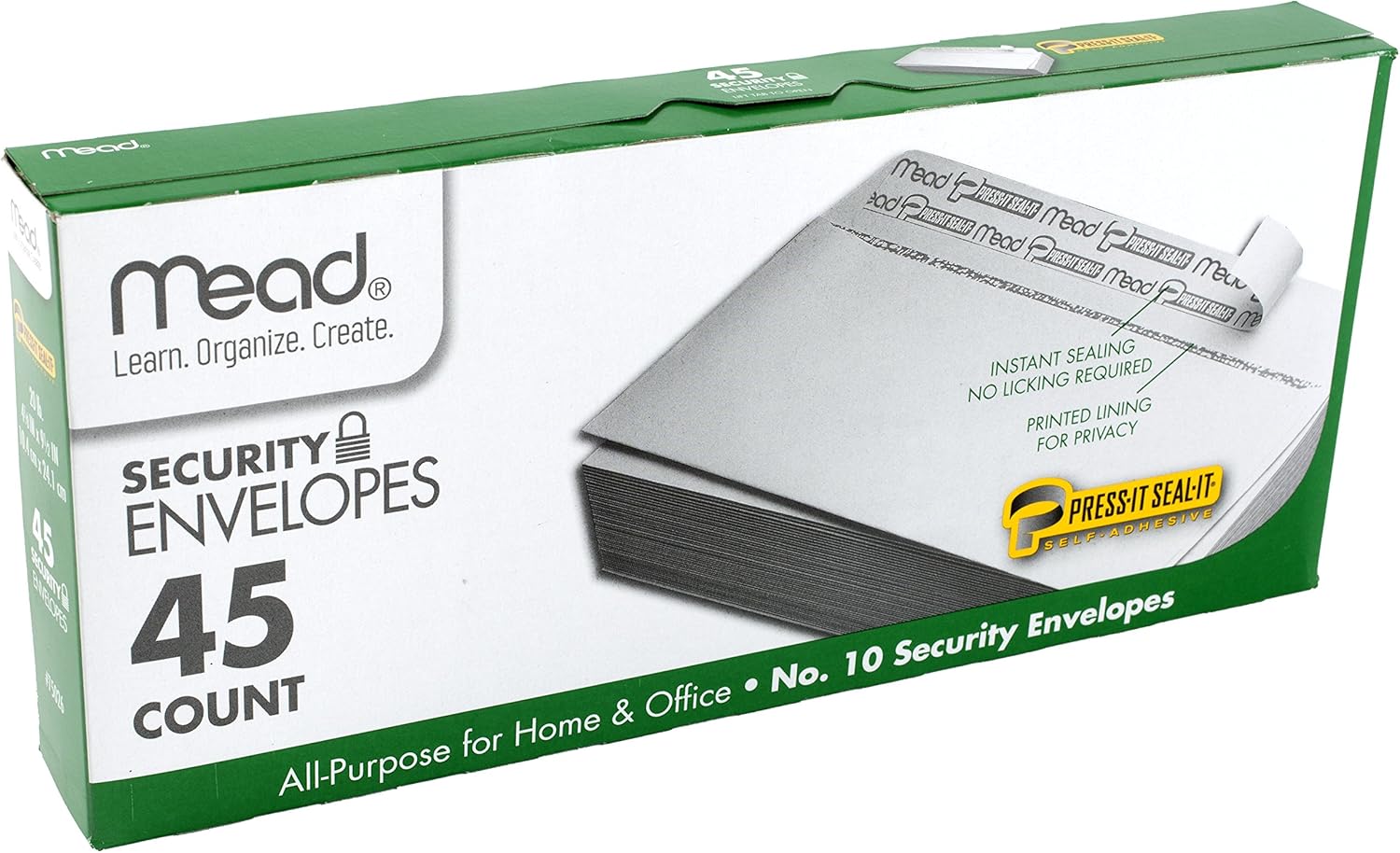
Document envelopes are useful for letters, forms, invoices, photographs, and other flat materials. Look for a suitable opening orientation, paper weight, opacity, and dimensions. Larger formats can help keep pages flat, while smaller envelopes may be better for routine correspondence or inserts.
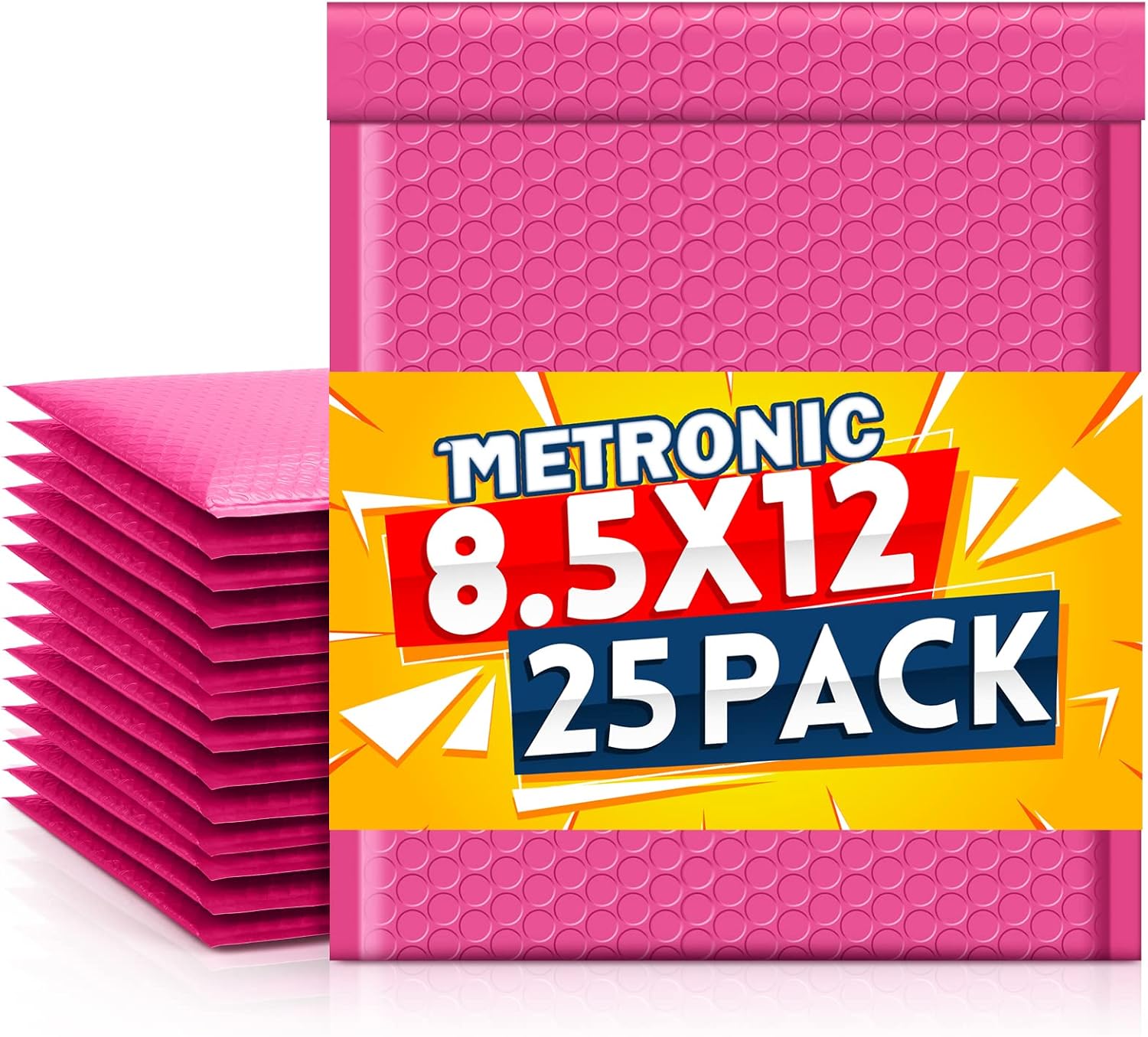
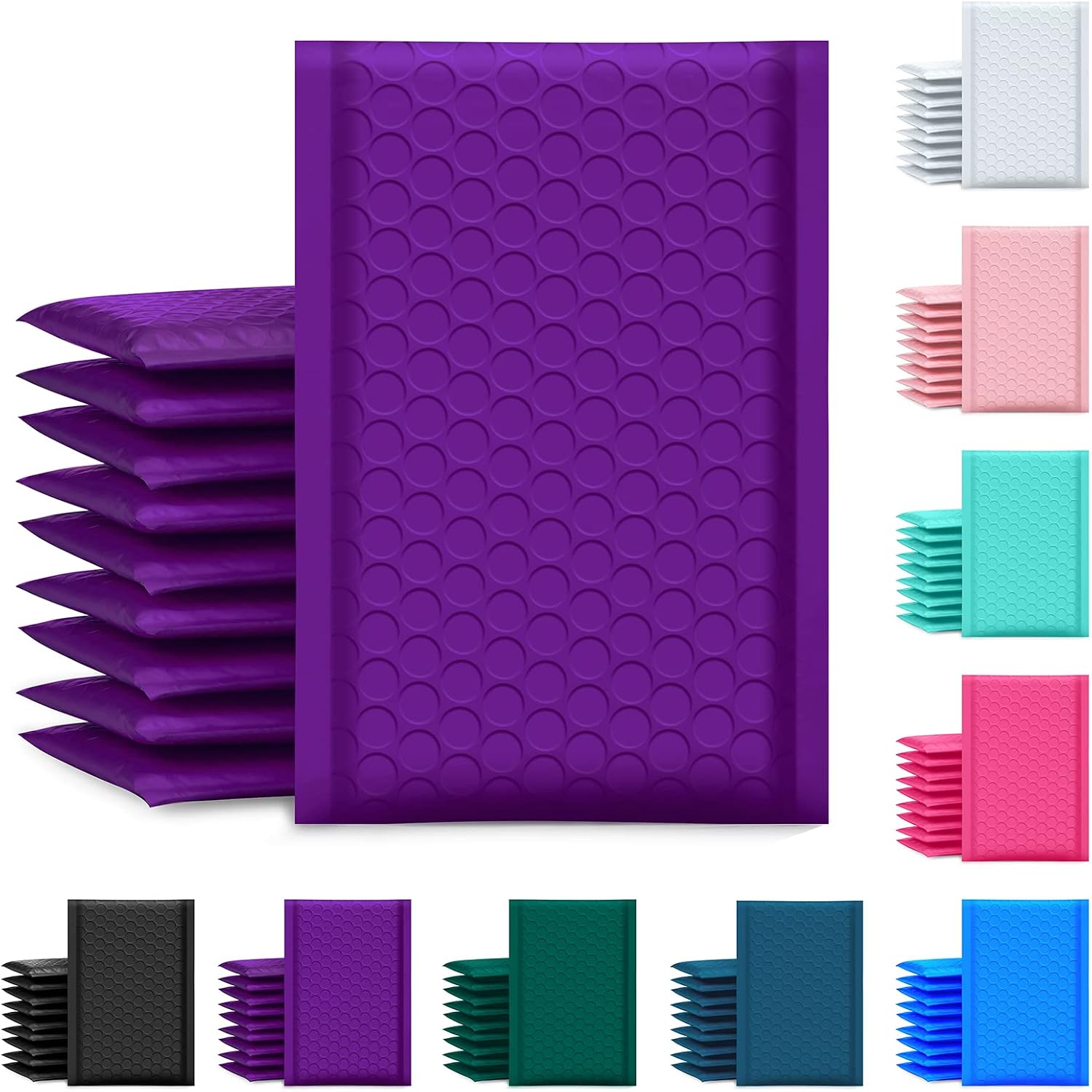
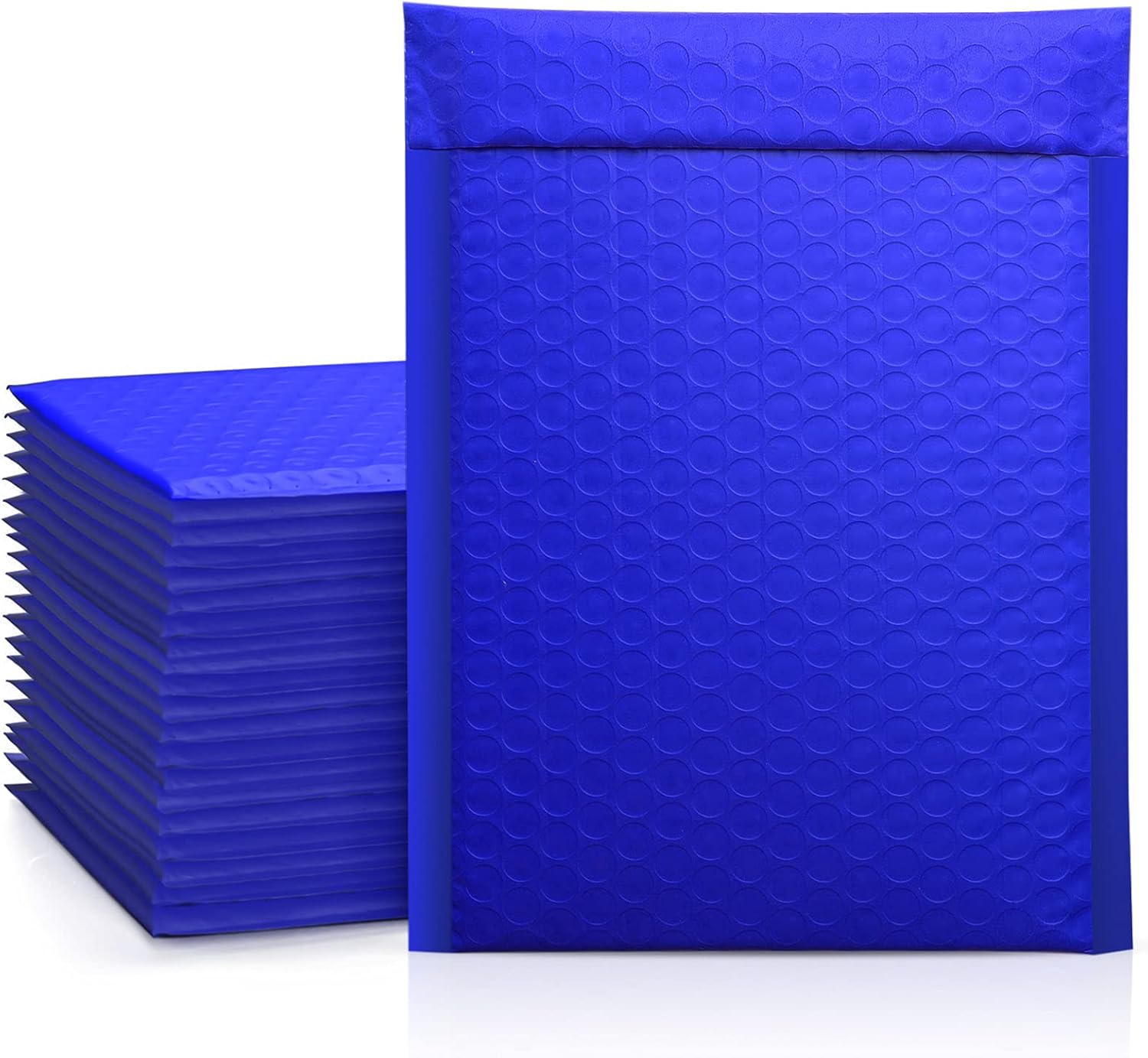
Padded mailers add cushioning for items that could be scratched, dented, or bent during handling. Compare the inner dimensions with the item’s actual size, since padding reduces usable space. A flexible padded mailer can be convenient for irregularly shaped items, while a more structured option may better support rigid contents.
Poly and plastic mailers are lightweight and often useful for soft goods, apparel, and items that benefit from moisture resistance. Check whether the material is opaque, tear-resistant, or designed for repeated opening when those characteristics matter.
Rigid mailers and protective shipping envelopes can help preserve flat items such as prints, certificates, photographs, and documents. Their structure may reduce bending, but they can take up more storage space than flexible mailers.
Key features and specifications
Compare the listed inside dimensions, not just the outside size. The interior must accommodate the product, wrapping, and any paperwork without forcing the closure. For multi-item shipments, check whether the stated capacity is appropriate for the combined contents.
For envelopes, review whether the format is designed for letters, cards, catalogs, documents, or photos. A gummed or self-sealing closure may be suitable for routine mailing, while a reusable closure can be useful for internal organization or repeated access.
For shipping supplies, pay attention to cushioning, seams, tear resistance, moisture resistance, tamper-evident features, and ease of labeling. If the package will be handled frequently, a reinforced construction or secure closure may be more important than a minimal, lightweight design.
Brands represented in the catalog
The catalog includes products from XCGS, USPS, Scotch, Fuxury, Aviditi, METRONIC, Quality Park, Uboxes, Keepack, RUSPEPA, UCGOU, and ValueMailers. Comparing products across these brands can help shoppers evaluate differences in format, material, closure design, packaging quantity, and intended use without assuming that one brand fits every mailing task.
Related office supplies
Mailing projects often require more than an envelope or mailer. Browse Paper when you need compatible sheets, inserts, or packing materials. Labels, Indexes & Stamps may help with addressing, organization, and outgoing correspondence.
For a broader office search, explore Office & School Supplies or pair shipping materials with Desk Accessories & Workspace Organizers to keep packing and mailing areas orderly.
Frequently asked questions
What size envelope or mailer should I choose?
Measure the item with its protective wrapping, then compare those measurements with the product’s interior dimensions. Select a format that allows the closure to seal without compressing the contents.
Are padded mailers suitable for fragile items?
They can add cushioning for some lightweight or moderately delicate items, but very fragile products may need additional internal protection and a more rigid outer package.
What is the difference between an envelope and a mailer?
Envelopes are generally intended for flat documents or lightweight contents. Mailers are often designed for larger, thicker, or more irregular items and may include padding, stronger materials, or added moisture resistance.
When are poly mailers useful?
Poly mailers can suit soft, lightweight, or moisture-sensitive items such as clothing and fabric goods. They are less suitable when the contents need substantial structure or impact protection.
What should I compare for business mailing?
Focus on consistent sizing, closure speed, opacity, durability, labeling space, and compatibility with your normal documents or products. For frequent packing, ease of storage and handling also matter.