

Flash Cards for Learning and Study Practice
Compare flash cards by subject, age suitability, card design, and learning approach. Explore options for vocabulary, reading, math, science, memory practice, and more.
161 products in catalog
161 results
Filters
Availability
Brand
Price


Learning Resources
Learning Resources Mental Blox Critical Thinking Game, Homeschool, 20 Blocks, 40 Activity Cards, Ages 5+,Multicolor
See current price


Star Right
Star Right Education Sight Words Flash Cards, 169 Sight Words and Sentences with 2 Rings
See current price


Melissa & Doug
Melissa & Doug Smarty Pants Kindergarten Card Set - 120 Educational, Brain-Building Questions, Puzzles, and Games
See current price


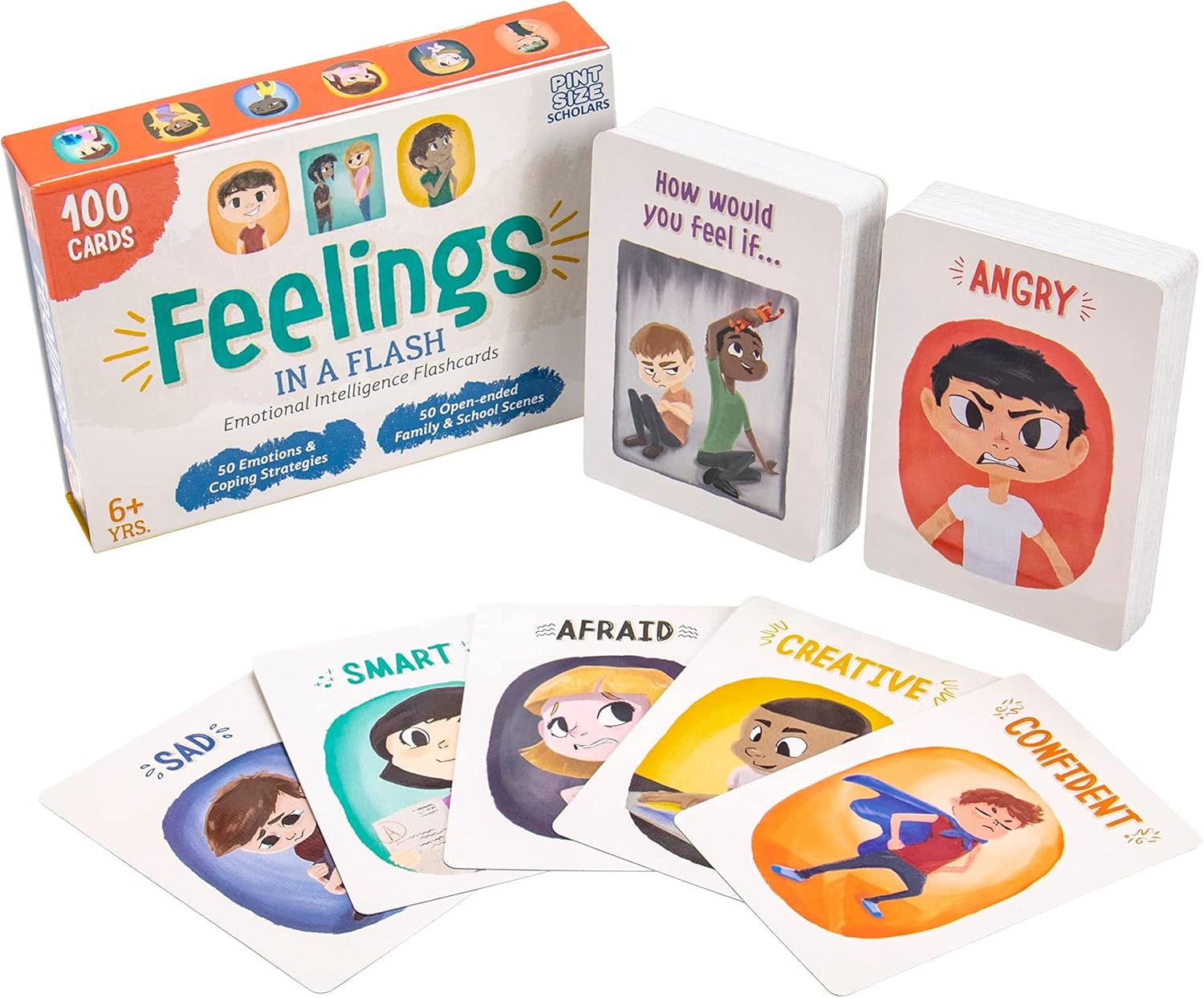


Learning Resources
Learning Resources Basic Vocabulary Photo Cards, Vocabulary/Phonics Learning, Educational Games for Kids, 156 Cards, Ages 5+
See current price

Popular brands in Flash Cards
Flash cards offer a simple, flexible way to introduce concepts, reinforce memory, and make short practice sessions more engaging. They can support early learners, school-age children, language students, and anyone who benefits from visual prompts and repeated recall.
K-Catalog helps you compare the available options by subject, format, and features before visiting Amazon to check the latest product details. The right choice depends on what the learner is studying, how independently they will use the cards, and whether the set is intended for home, classroom, travel, or structured study.
How to choose flash cards
Start with the learning goal. Some sets are designed to introduce basic concepts, while others support memorization, vocabulary building, question-and-answer practice, or subject review. A focused set is often easier to use than one covering too many unrelated topics.
Consider these factors:
- Age and skill level: Look for content, language, and visual complexity that match the learner’s current abilities.
- Subject: Common applications include letters, phonics, numbers, arithmetic, spelling, vocabulary, languages, science, and general knowledge.
- Learning style: Picture-led cards may suit visual learners, while prompts, definitions, and questions can encourage active recall.
- Use setting: Compact sets work well for quick practice, car trips, and tutoring; larger or more structured sets may be better for classroom activities.
- Adult involvement: Beginners may benefit from clear instructions and parent or teacher guidance, while older learners may prefer self-directed study.
Common types of flash cards
Flash cards vary widely even when they look similar. Picture cards can help younger children connect an image with a word, object, sound, or idea. Alphabet and phonics cards may support early reading preparation, while number and math cards can provide practice with recognition and basic operations.
Language-learning cards commonly focus on vocabulary, spelling, definitions, or translation prompts. Study-oriented cards may use questions on one side and answers on the other, making them useful for recall practice. Educational cards can also cover science, geography, social studies, or general knowledge.
For broader hands-on learning, shoppers may also want to explore Science Kits & Toys or Reading & Writing. These categories can complement flash card practice with experiments, activities, books, and writing exercises.
Features and specifications to compare
Card construction matters when a set will be handled frequently. Compare the stated materials, finish, thickness, and rounded or square corners where those details are provided. A wipe-clean surface may be useful for reusable activities, but it should not be assumed unless the product description specifies it.
Also check the organization of the set. Helpful details may include whether cards are sorted by topic, difficulty, lesson, or skill. Instructions, answer keys, pronunciation guidance, storage boxes, rings, or dividers can affect how easy a set is to use and keep organized.
For children, examine the size of the print and images. Text should be easy to see, and the visual layout should leave enough space to focus on the main prompt. For older students, check whether the cards provide enough detail for the intended subject rather than only basic recognition.
Brands represented in the catalog
The catalog includes flash card products from Trend Enterprises, Learning Resources, Merka, Living Magick Publishing, CreateFun, Flat River Group, Star Right, Urban Intellectuals, THINK2MASTER, Junior Learning, TestingMom.com, and ? WORD TEASERS. These brands may offer different approaches to design, subject coverage, and learner level, so compare the individual product descriptions instead of relying on the brand name alone.
If a learner prefers a different kind of interactive practice, Electronic Learning Toys may provide an alternative format. Musical Instruments can also support learning through sound and active participation, although it serves a different purpose from traditional cards.
Tips for effective practice
Keep sessions short enough to maintain attention, especially for young children. Mix familiar cards with a small selection of new or challenging ones, and invite the learner to answer before turning the card over. Saying answers aloud, spelling words, sorting cards, or creating simple games can make practice more active.
Store cards together in their original box, pouch, or organizer when possible. Before choosing a set for a child, review the recommended age, subject level, and any supervision or small-parts information in the product details. For school subjects, compare the content with the learner’s curriculum so the cards reinforce the skills they actually need.
Frequently asked questions
What are flash cards used for?
Flash cards can introduce and reinforce facts, words, images, numbers, sounds, definitions, and question-and-answer material through repeated recall.
Which flash cards are best for young children?
Choose cards with age-appropriate subjects, clear images, readable text, and a manageable level of information. Adult-guided activities can help beginners use them effectively.
Can flash cards help with reading?
Yes. Alphabet, phonics, sight-word, spelling, and vocabulary cards may support reading practice when they match the learner’s current skill level.
Are flash cards useful for older students?
They can be. Question-and-answer cards, vocabulary prompts, definitions, and subject-review cards can support memorization and active recall for older learners.
What should I compare before choosing a set?
Compare the subject, recommended age or level, card size, materials, organization, instructions, visual clarity, and whether the format suits independent or guided practice.