

Science Kits & Toys for Hands-On Learning
Compare science kits and toys by subject, activity style, materials, and included features. Find hands-on learning options for curious children, families, and classrooms.
601 products in catalog
601 results
Filters


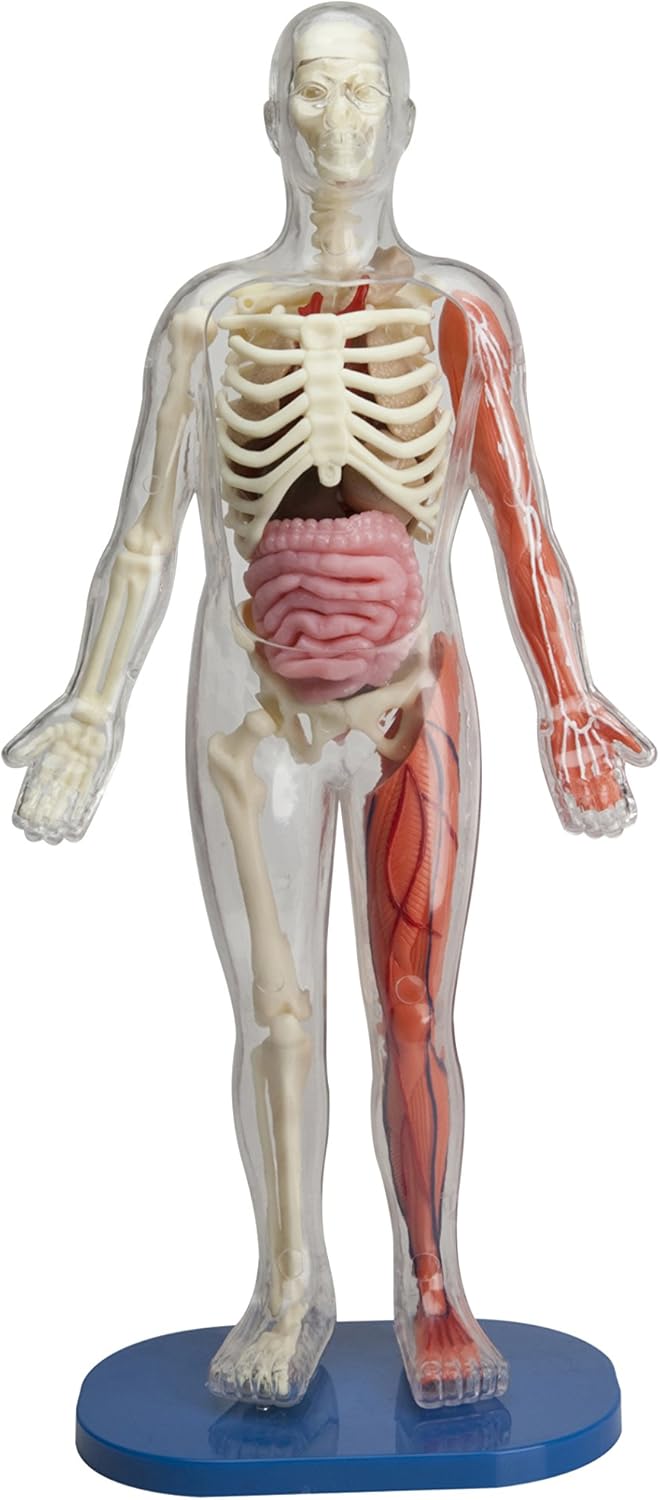
SmartLab
SmartLab Toys Squishy Human Body with 21 Removable Body Parts with Anatomy Book
See current price

Galt
Galt Toys, Science Lab, Science Kit for Kids, 20 Fun Experiments, Ages 6 Years Plus
See current price


Snap Circuits
Snap Circuits Snaptricity, Electronics Exploration Kit (Stem Building), For Kids 8+
See current price

Snap Circuits
Snap Circuits SC-100 Student Training Program with Student Study Guide | Perfect for STEM Curriculum
See current price


Learn & Climb
Science Kit for Kids - 21 Experiments Science Set, Great Gifts for Kids Ages 4-8
See current price


SmartLab
SmartLab Toys TINY Robots with 15 Ingenious Motorized Builds. Big Science. Tiny Tools.
See current price


Digital Dream Labs
Vector Robot by Anki, A Home Robot Who Hangs Out & Helps Out, With Amazon Alexa Built-In
See current price

Elenco Electronics LLC
Snap Circuits Beginner, Electronics Exploration Kit, Stem Kit For Ages 5-9 (SCB-20)
See current price

![Official Arduino Starter Kit [K000007] (English Projects Book)](https://m.media-amazon.com/images/I/617sMRpfODL._AC_SL1000_.jpg)
Popular brands in Science Kits & Toys
Science kits and toys can turn questions about the natural world into practical activities. Depending on the design, a kit may introduce children to chemistry, physics, biology, earth science, engineering, or technology through experiments, building, observation, or problem-solving.
The right choice depends on the learner’s interests, the level of adult involvement, available space, and whether the kit is intended for a single activity or repeated exploration. Use the catalog to compare the details that affect setup, play value, and suitability.
How to choose a science kit or toy
Start with the type of learning experience you want to encourage. Some products are centered on following experiment instructions, while others offer open-ended construction or discovery. Consider these questions:
- What subject is most appealing? Look for a kit that matches an existing interest, such as space, nature, machines, electricity, or chemical reactions.
- How much guidance is needed? A structured kit may suit beginners, while flexible building or experiment sets can offer more independence to experienced learners.
- Who will participate? Check whether the activity is designed for solo play, collaboration with siblings, classroom use, or adult-child interaction.
- Where will it be used? Some projects need a table, water, outdoor space, or careful cleanup. Confirm that the setup fits the intended environment.
- Can it be used again? Compare whether the kit supports repeated experiments, rebuilding, observation, or extensions beyond the first project.
For additional educational categories, browse Learning & Education or compare science-oriented options with Electronic Learning Toys.
Choose by subject and activity style
Science kits and toys cover several kinds of play, even though they may not be separated into formal subcategories. Chemistry-focused sets often emphasize mixing, reactions, crystals, or changes in materials. Nature and biology activities may involve observation, habitats, specimens, or growing projects.
Physics and engineering toys can demonstrate motion, force, balance, magnetism, or simple machines. Building-oriented products are useful for learners who prefer making and testing a working design. Astronomy and space-themed kits may encourage observation and questions about planets, stars, and the wider universe.
For hands-on construction with a strong motion component, Marble Runs can be a related option. Learners interested in viewing distant or small objects may also want to compare Optics products.
Features and specifications to compare
Product details can vary substantially, so compare the following before choosing:
- Included components: Check whether the kit contains the main tools, parts, materials, containers, or accessories needed to begin.
- Instructions: Look for clear, illustrated guidance and explanations that connect an activity with the science behind it.
- Learning level: Product descriptions may indicate whether the activity is introductory, intermediate, or more challenging. Match this with the learner’s ability to follow directions and work independently.
- Activity format: Decide between experiments, building, collecting, observation, puzzles, or a combination of approaches.
- Reusable parts and refills: Some kits use components repeatedly, while others depend on consumable materials. Check what may need to be replaced for continued use.
- Storage and cleanup: Containers, organized parts, and manageable cleanup can make a kit easier to use regularly.
- Size and workspace: Building sets and experiment trays may require more room than compact observation or activity kits.
If the goal is broader academic practice rather than experiments, Flash Cards and Reading & Writing offer different ways to support learning.
Brands represented in the catalog
The catalog includes science kits and toys from Learning Resources, National Geographic, Dan&Darci, Thames & Kosmos, Playz, 4M, Educational Insights, Sunnytech, Snap Circuits, Learn & Climb, TEDCO, and Uncle Milton. These brands may focus on different subjects, formats, and levels of adult involvement, so compare the specifications of individual products rather than choosing by brand name alone.
Safety, supervision, and setup tips
Read the product instructions before starting, especially when an activity involves small parts, liquids, heat, magnets, tools, or electrical components. Follow any stated supervision guidance and keep materials away from children who are not the intended users.
Prepare a clear work surface and gather any household items identified in the instructions. Encourage learners to handle components carefully, record observations, and clean the workspace after use. If a kit uses consumables, check how they should be stored and disposed of. For shared use, keeping pieces together in labeled containers can make future activities easier to repeat.
Frequently asked questions
What can children learn from science kits and toys?
They can practice observation, prediction, measurement, cause-and-effect reasoning, problem-solving, and following procedures while exploring subjects such as physics, chemistry, biology, nature, or engineering.
Are science kits suitable for independent play?
Some are designed for more independent exploration, while others require adult help with setup, supervision, explanations, or cleanup. Check the product instructions and activity complexity before choosing.
What should be included in a science kit?
The included parts vary. Compare the listing for tools, experiment materials, building pieces, instructions, containers, and any components that may need to be supplied separately.
How do I choose a science kit for a beginner?
Look for a clear subject focus, straightforward instructions, manageable activities, and a format that matches the learner’s interests. A guided kit can be a comfortable starting point.
Can science kits be used more than once?
Many include reusable tools or parts, but some activities rely on consumable materials. Review the specifications to understand which components support repeat use and whether refills may be needed.