

Plastics for Industrial and Scientific Applications
Compare plastic materials and products by polymer type, form, dimensions, and performance requirements. Use the catalog to narrow options before checking current availability on Amazon.
135 products in catalog
135 results
Filters


SOURCEONE.ORG
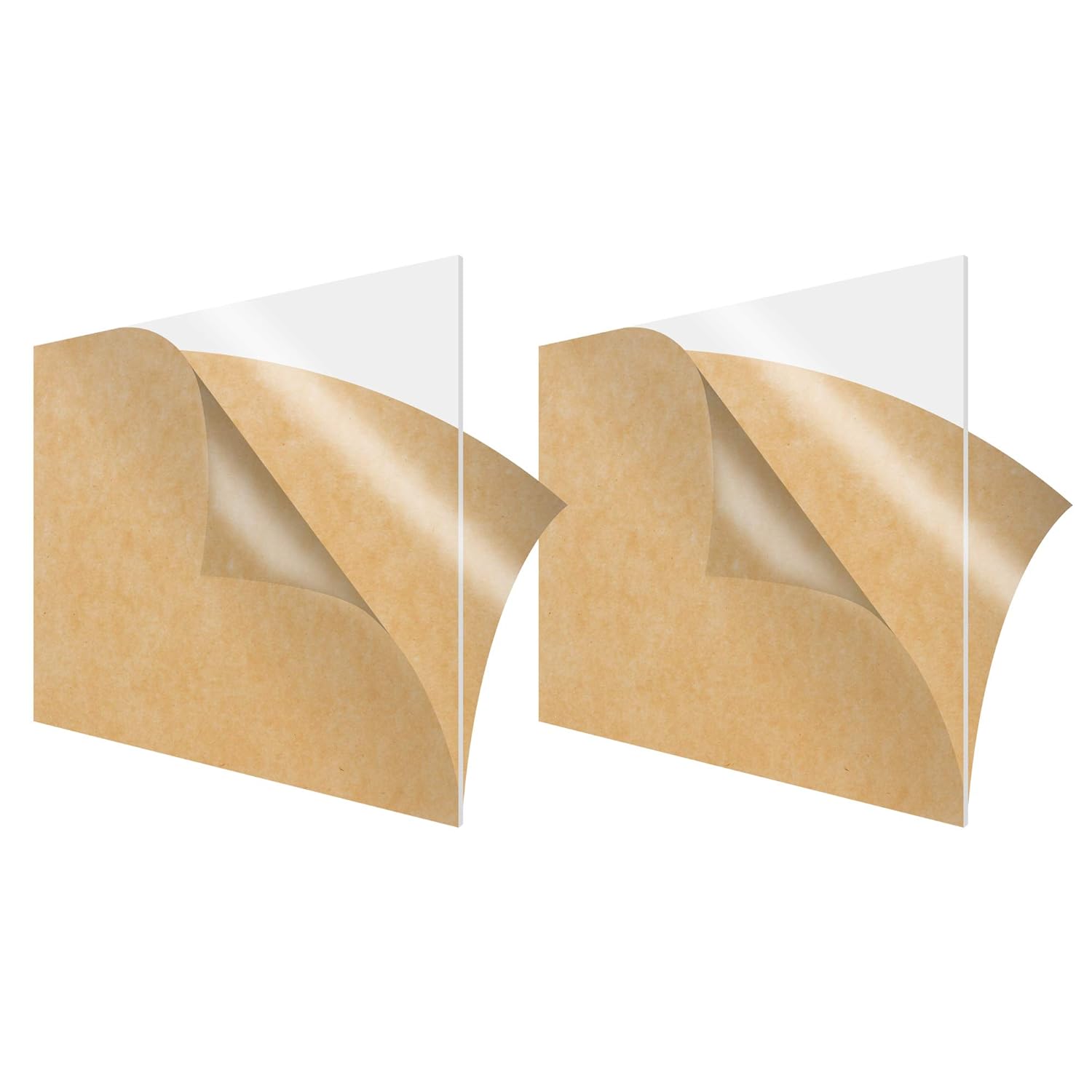
Clear Acrylic Plexiglass Lucite Circle Round Disc Every Thickness and Diameter Available
See current price


Rock Hard Plastics
Rock Hard Plastics - 12" x 12" Red 2157 Acrylic Sheet Lucite Plexiglass 3mm (Actual Size 11.875" x 11.875" - .118" (1/8"), Red)
See current price






Poly-America
POLY AMERICA 03509H 9-Feet X 400-Feet .31 Mil High Density Painters Poly Film
See current price




Popular brands in Plastics
Plastic materials are used across fabrication, manufacturing, prototyping, repair, packaging, displays, and general industrial work. The right choice depends on more than appearance: material behavior, thickness or diameter, operating environment, and the way the plastic will be cut, formed, fastened, or machined all matter.
This category brings together plastic products from brands including Small Parts, Plastics 2000, Robosource, SimbaLux, SOURCEONE.ORG, USAMADE, Poly-America, Zuvas, MEGA FORMAT, uVeans, AZM Displays, and TRM Manufacturing. Compare the listed specifications carefully to find a suitable option for the job.
How to choose a plastic material
Start by defining the application and the conditions the material must withstand. A plastic used as a spacer, guard, sign, prototype component, or structural part may require very different properties.
Consider these factors first:
- Mechanical demands: Determine whether the part needs rigidity, flexibility, impact resistance, abrasion resistance, or low friction.
- Temperature exposure: Check the stated operating or service-temperature information when the plastic will face heat, cold, friction, or nearby equipment.
- Chemical contact: Review compatibility with oils, solvents, cleaners, water, acids, or other substances involved in the application.
- Electrical behavior: Insulating properties, static control, and dielectric performance can matter in equipment and electronic applications.
- Fabrication method: Match the material to cutting, drilling, routing, bending, thermoforming, bonding, or machining requirements.
- Appearance: For visible parts, compare color, transparency, surface finish, and whether the material is intended for display or functional use.
If the required performance is unclear, begin with the environment and loading conditions rather than choosing based only on color or thickness.
Common plastic forms and applications
Plastic products can appear as sheets, plates, rods, tubes, films, strips, blocks, pellets, or finished components. Each form suits a different workflow. Sheet and plate materials are useful for panels, barriers, guards, templates, and fabricated parts. Rods and blocks are often selected for machined components, bushings, spacers, and prototypes. Tubes may suit sleeves, fluid handling, guides, or protective coverings, subject to the product’s specifications.
Flexible films and thin sheets can be useful for liners, covers, packaging, insulation, or visual applications, while molded or ready-to-use parts may reduce fabrication work. Check the product description to confirm whether an item is raw stock, a semi-finished shape, or a completed component.
For adjacent material options, compare Metals & Alloys, Rubber, and Laminates & Composites. Other useful material categories include Mesh & Wire Cloth and Wood.
Specifications worth comparing
Product titles can make similar materials appear interchangeable, so use the specification fields to verify fit. Important details may include:
- Polymer or resin type
- Shape and product form
- Length, width, outside diameter, or inside diameter
- Thickness, wall thickness, or sheet gauge
- Hardness, flexibility, or grade
- Color, finish, opacity, or surface texture
- Tolerance and dimensional accuracy
- Resistance to heat, chemicals, moisture, impact, or wear
- Food-contact, electrical, or other application-specific information, when stated
- Packaging format and whether the item is sold as a single piece, roll, strip, or set
Dimensions deserve particular attention. Confirm the measurement units and distinguish nominal dimensions from tolerances. For replacement work, compare the new material with the original part’s dimensions and attachment method before ordering.
Brands represented in the catalog
The plastics catalog includes products associated with Small Parts, Plastics 2000, Robosource, SimbaLux, SOURCEONE.ORG, USAMADE, Poly-America, Zuvas, MEGA FORMAT, uVeans, AZM Displays, and TRM Manufacturing. Brand presence can help organize a search, but specifications should remain the basis for comparing materials. Products from the same brand may serve different purposes, so review each listing individually.
K-Catalog is part of the broader Raw Materials area. If a project calls for thin precision material rather than a general plastic stock item, Shims & Shim Stock may also be relevant.
Practical selection and handling tips
Measure the available space before comparing products, especially when a sheet, tube, or rod must fit an existing assembly. Allow for cutting losses, fastening holes, bends, and thermal movement where applicable. A material that fits at room temperature may behave differently when exposed to heat, cold, moisture, or sustained load.
Review the manufacturer’s stated limitations before using plastic near heat, chemicals, moving equipment, or electrical systems. Use suitable cutting tools and ventilation for the material and fabrication method, and follow applicable workplace safety procedures. For outdoor or demanding applications, look for explicitly stated weathering, UV, moisture, or impact information rather than assuming that all plastics perform alike.
Frequently asked questions
How do I choose between different plastic materials?
Compare the required strength, flexibility, temperature range, chemical exposure, electrical behavior, fabrication method, and dimensions. The best option is the one whose stated properties match the application.
Are plastic sheets and plates the same thing?
The terms can overlap, but product naming varies. Check the listed thickness, dimensions, material type, and intended use instead of relying on the form name alone.
What should I verify before buying plastic stock?
Confirm the polymer type, dimensions, tolerances, color or finish, quantity format, and any performance requirements such as heat, chemical, wear, or electrical resistance.
Can plastic replace metal in an industrial application?
Sometimes, depending on load, temperature, wear, chemical exposure, and required rigidity. Compare the plastic’s stated capabilities with the metal component and the actual operating conditions.
When should I consider another material category?
Consider Rubber when flexibility or sealing is central, Metals & Alloys when higher rigidity or heat resistance is needed, and Laminates & Composites when layered or reinforced construction is appropriate.