

Safes & Safe Accessories
Compare safes and safe accessories by lock type, capacity, protection features, and installation needs. Explore catalog options from brands including SentrySafe, First Alert, and TIGERKING.
604 products in catalog
604 results
Filters


SentrySafe
Sentry Safe Safe Box, Fireproof Waterproof, File Folder and Document Safe, Ex. 14.3 x 15.5 x 13.5, Black
See current price

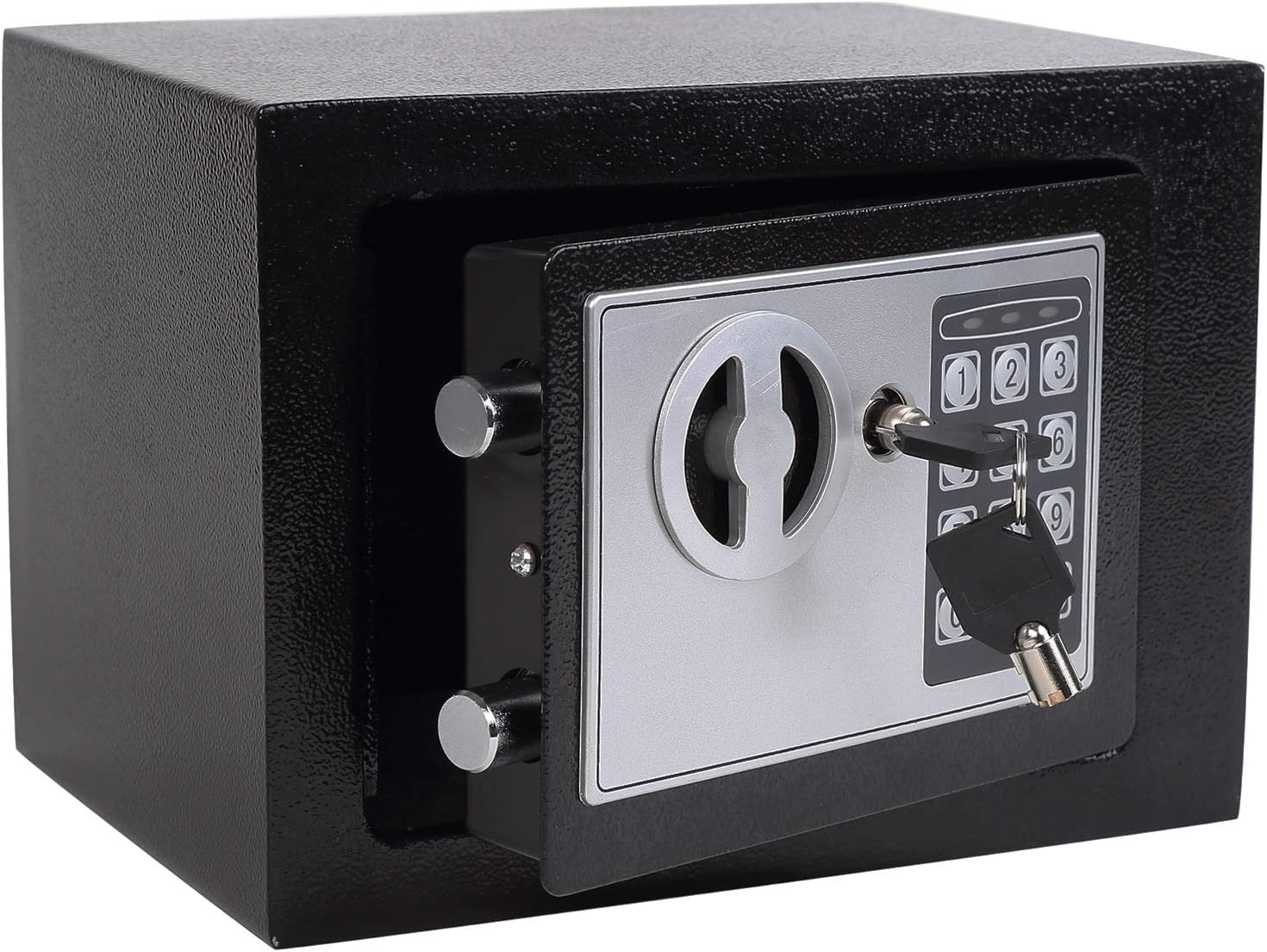



Amazon Basics
Amazon Basics Portable Security Case Lock Box Safe, Combination Lock, Black, XL
See current price


![Fireproof Document Bag Envelope Size: 8" x 5" [2000°F – Grey] Fireproof Cash Bags with Zipper Small Water and Fire Resistant Money Bag for Cash Storage, Fireproof Bags for Cash Fire Proof](https://m.media-amazon.com/images/I/71tvoYN4+AL._AC_SL1500_.jpg)


Popular brands in Safes & Safe Accessories
Choosing a safe starts with identifying what you need to protect and where the safe will be used. Important considerations include the size of the items, how often you need access, the level of concealment or resistance required, and whether the safe will be installed or moved.
This category includes safes and related security accessories for household, office, document, firearm, cash, and personal-item storage. Use the product specifications to compare construction, locking methods, interior layout, mounting options, and any stated fire or water protection.
How to choose a safe
Start with the contents rather than the exterior dimensions. Documents, jewelry, electronics, keys, cash, and other valuables may need different interior arrangements. Measure the items you plan to store and allow room for organization, protective cases, or future additions.
Consider these questions before comparing products:
- What needs protection? Important papers may require different features from small valuables or frequently accessed items.
- Where will it go? Check the available floor, shelf, cabinet, or wall space, along with the surrounding clearance needed to open the door.
- How often will it be opened? A convenient electronic or keypad lock may suit regular access, while a key or combination mechanism may appeal to shoppers who prefer a different access method.
- Will it remain in one place? A heavier safe or one designed for anchoring may be more suitable for permanent installation; a compact model can be easier to relocate.
Types and uses to compare
Safes vary substantially in size, access method, portability, and intended use. Product listings should be checked carefully because similar-looking models can have different interior capacities and installation requirements.
- Home and office safes: Useful for documents, backup drives, keys, and personal valuables. Compare shelf arrangements, door clearance, and the external footprint.
- Compact personal safes: Designed for smaller items and locations where space is limited. Portability, mounting provisions, and quick access may be priorities.
- Fire-resistant or water-resistant safes: When protection from environmental hazards matters, verify the product’s stated ratings, test conditions, and the types of contents covered rather than relying on a general label.
- Gun and firearm safes: Review the stated storage configuration, access controls, anchoring guidance, and applicable legal or household safety requirements before buying.
- Safe accessories: These may include replacement keys, organizers, shelves, locking components, and other items intended to improve access or storage. Confirm compatibility with the specific safe model.
Key features and specifications
The lock is only one part of the comparison. Look at the full specification set, including the body and door construction, hinge design, bolt or locking mechanism, and any tamper-related features described by the manufacturer.
Capacity should be assessed using both external and internal dimensions. Exterior measurements determine whether the safe fits its location, while interior measurements determine what it can actually hold. Removable shelves or compartments can help separate documents and smaller valuables, but they may reduce usable height when installed.
For electronic locks, check the power source, emergency entry method, keypad operation, and any stated low-battery guidance. For key locks, consider how replacement keys are handled and where spare keys will be stored. Combination locks may avoid batteries, but the access procedure and reset options still matter.
If the safe will be installed, review mounting hardware, anchor points, surface requirements, and the manufacturer’s installation instructions. Do not assume that every safe can be secured to every floor, wall, cabinet, or shelf.
Brands represented in the catalog
The catalog includes safes and related products from SentrySafe, First Alert, ENGPOW, TIGERKING, Stack-On, Stalwart, ROLOWAY, Honeywell Safes & Door Locks, Amazon Basics, PACOLO, Quick Dam, and Paragon Lock & Safe. Compare individual specifications within each brand, since product designs, intended uses, lock types, and protection claims can differ across a catalog.
Safety, placement, and maintenance tips
Keep access credentials and spare keys secure, but make sure authorized users can reach them when needed. Avoid placing a safe where moisture, heat, or unstable shelving could create additional risks unless the product is specifically intended for that environment.
For electronic models, follow the manufacturer’s battery guidance and test access after installation. For fire- or water-protection claims, read the full documentation and consider how long the contents need protection. Safes are not a substitute for broader household preparedness, so related equipment such as Fire Safety, Household Sensors & Alarms, or Home Security Systems may address other risks.
A safe can also be part of a wider emergency plan. Compare Emergency Kits & Supplies for preparedness items, or browse Flashlights and Personal Protective Equipment for additional safety needs. For more products in the broader category, visit Safety & Security.
Frequently asked questions
What size safe should I choose?
Measure the items you intend to store and compare those measurements with the listed interior dimensions. Allow extra room if you expect to add documents or valuables later.
Are electronic locks better than key locks?
Neither is universally better. Electronic locks can offer convenient access, while key locks avoid battery management. Compare the access method, backup entry options, and maintenance requirements.
Should a safe be bolted down?
If the manufacturer provides mounting instructions, anchoring may improve stability and help prevent unauthorized removal. Check the safe’s mounting provisions and the material where it will be installed.
Can one safe protect every type of valuable?
Not necessarily. Review the safe’s stated protection features and interior layout for the specific contents you plan to store, especially documents, electronics, firearms, or items sensitive to heat and moisture.
How do I compare safe accessories?
Check the accessory’s dimensions, attachment method, lock or key compatibility, and the specific safe models listed by the manufacturer. Compatibility should be confirmed before purchase.