

Scanners & Testers for Measuring and Detection
Compare scanners and testers for locating hidden objects, checking surfaces, and supporting layout work. Review sensing methods, detection depth, displays, and controls to find a tool suited to the task.
176 products in catalog
176 results
Filters


Brennenstuhl
Brennenstuhl Battery Operated MD Humidity Detector (Auto Shut-Off After 3 Minutes Use) Grey Without Battery
See current price


Craftsman
CRAFTSMAN Stud Finder, 3/4-Inch Depth, Edge Detection, For Drywall or Fabric (CMHT77633)
See current price


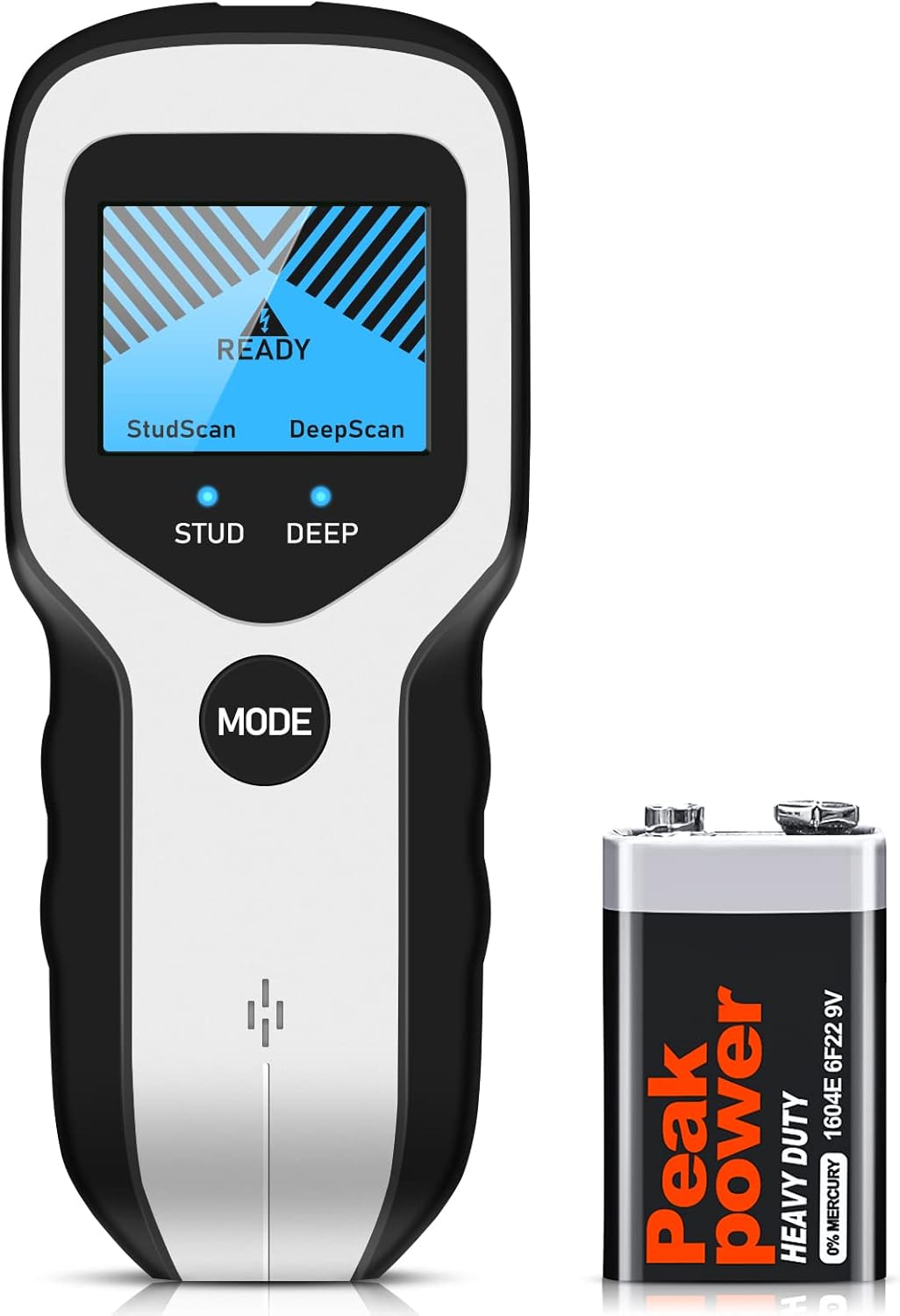

General Tools
General Tools Digital Moisture Meter MMD7NP - Humidity Sensor- Pinless and Non-Invasive
See current price


FRANKLIN SENSORS INC
Franklin Sensors T6 Professional Stud Finder with 6-Sensors for The Highest Accuracy Detects Wood & Metal Studs with Incredible Speed, Yellow
See current price


Popular brands in Scanners & Testers
Scanners and testers help make hidden conditions easier to identify before drilling, cutting, fastening, or completing other measuring tasks. Depending on the design, a tool may help locate studs, detect changes behind a wall surface, identify metal or wiring, or provide a basic test for a specific application.
The right choice depends on what needs to be detected, the material being scanned, and how much information the tool provides. Use this catalog to compare specifications and features across available options, then confirm that the selected device matches the wall, surface, or project requirements.
How to choose a scanner or tester
Start with the job rather than the tool name. A simple detector may be appropriate for occasional locating tasks, while a more advanced scanner can be useful when several materials may be present behind a surface. Consider these questions:
- What are you trying to find? Studs, metal, wiring, pipes, moisture, and other hidden conditions may require different sensing methods.
- What surface will you scan? Drywall, wood, masonry, tile, and other materials can affect detection performance and compatibility.
- How precise does the result need to be? Look for guidance on detection depth, locating accuracy, edge-finding, or center-finding functions when those details matter.
- How often will it be used? Occasional household projects may favor straightforward controls, while regular trade work may benefit from a clearer display and more adjustment options.
If the task involves precise layout after detection, related Measuring & Layout Tools can help complete the work.
Common types and intended uses
Although this category does not have separate catalog subcategories, scanners and testers can be compared by their intended function.
Stud finders and wall scanners are designed to help identify structural members or other objects behind a wall. Some focus on a single material, while others offer multiple detection modes. Read the listed operating modes carefully instead of assuming every scanner detects the same objects.
Metal and wire detectors are intended for finding conductive or metallic items concealed in a surface. These tools can be useful before fastening, but the product specifications should clarify what materials they are designed to detect and whether they provide depth guidance.
Surface and condition testers may be intended for checking a particular property or material condition. Compare the stated application, measurement range, display style, and any required calibration or setup steps.
For follow-up layout work, browse Linear Measurement, Levels, or Laser Levels & Accessories.
Features and specifications to compare
Small differences in controls and feedback can affect how easy a scanner or tester is to use. Pay attention to:
- Detection modes: Multiple modes can help adapt the tool to different materials or scanning tasks, but more modes may require additional setup.
- Detection depth: Compare the stated depth with the surface and object you need to locate. Maximum depth is not necessarily the same in every material.
- Display and alerts: Screens, indicator lights, audio signals, and visual guides provide different types of feedback. A display may be useful when the tool communicates several readings or modes.
- Calibration: Automatic calibration can simplify setup, while manual calibration may offer more control in changing conditions.
- Scanning guidance: Center-finding, edge detection, directional arrows, and marking guides can make it easier to transfer the result to the work surface.
- Power and portability: Check the power source, battery access, operating controls, and overall form factor if the tool will be carried between jobs.
- Included accessories: Review the listing for cases, batteries, mounting items, or other accessories rather than assuming they are included.
Using a scanner more reliably
Prepare the surface before scanning by removing loose objects, reducing clutter, and following the manufacturer’s startup or calibration procedure. Move the tool at the recommended speed and keep its contact with the surface consistent. When a location matters, scan from more than one direction and mark the result lightly before drilling or cutting.
Treat a detector as an aid rather than a guarantee. Building materials, surface coverings, moisture, electrical conditions, and nearby objects can influence readings. If the result is unclear, stop and investigate with an appropriate method instead of relying on a single indication. Follow all safety instructions, especially when concealed wiring, plumbing, or structural components may be involved.
Brands represented in the catalog
The catalog includes scanners and testers from brands such as Zircon, Dr.meter, FOLAI, StudPoP, Tavool, General Tools, Proster, Vayyar Imaging, VIVREAL, The StudBuddy, BLACK+DECKER, and PERLESMITH. Compare each listing by its stated detection method, intended surface, controls, and included features rather than choosing by brand name alone.
For layout tasks that follow detection, Carpentry Squares, Marking Tools, and Protractors may also be useful.
Frequently asked questions
What is the difference between a scanner and a tester?
A scanner generally searches for hidden objects or changes behind or within a surface. A tester usually checks a specific condition or property. The exact function depends on the individual product listing.
How deep can a wall scanner detect objects?
Detection depth varies by tool, material, object type, and operating mode. Compare the listed depth specifications and confirm that they apply to the surface you plan to scan.
Can one tool detect studs, metal, and wiring?
Some products provide multiple detection modes, while others are designed for a narrower purpose. Check the listed modes and limitations before selecting a multi-purpose scanner.
Should a scanner be calibrated before use?
Follow the product’s instructions. Some tools calibrate automatically, while others require a deliberate setup step before scanning.
Is a detector result enough to begin drilling?
No. Use the result as guidance, scan the area carefully, and consider possible wiring, plumbing, and structural hazards. Follow safe work practices and the manufacturer’s instructions before making an opening.