

Speed & Agility Training Equipment
Compare speed and agility training equipment for faster footwork, sharper changes of direction, and more structured drills. Review the features that matter for your space, training style, and experience level.
153 products in catalog
153 results
Filters




Smile&Satisfaction
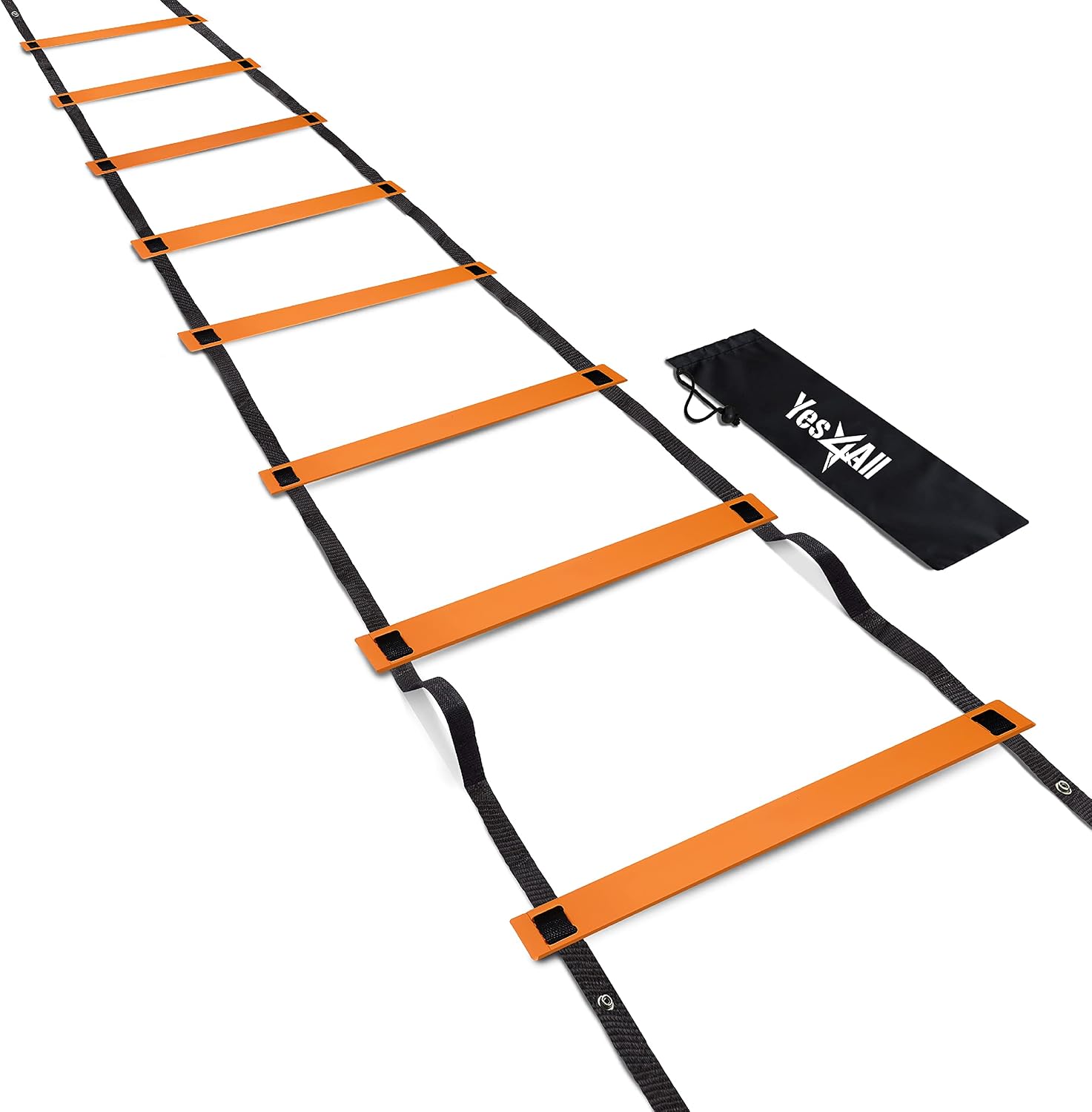
GHB Pro Agility Ladder Agility Training Ladder Speed 12 Rung 20ft with Carrying Bag
See current price


Popular brands in Speed & Agility Training
Speed and agility equipment helps organize drills that challenge acceleration, coordination, balance, reaction time, and lateral movement. The right setup can make practice more consistent, whether training indoors, outdoors, alone, or with a team.
K-Catalog brings together options to compare by construction, portability, adjustability, and intended use. Before choosing, consider the movements you want to practice and how much room you have available.
How to choose speed and agility equipment
Start with your training goals. Someone working on basic footwork may need a simple setup that supports repeatable patterns, while an athlete practicing sport-specific movement may prefer equipment that allows more variation.
Consider these questions before comparing products:
- Where will you train? Check the available floor space, surface type, and whether equipment needs to work indoors, outdoors, or in both settings.
- How will you store it? Lightweight, collapsible, or stackable designs are useful when equipment must be transported or stored between sessions.
- Who will use it? Individual athletes, families, coaches, and teams may have different requirements for adjustability and durability.
- What drills do you plan to perform? Straight-line acceleration, lateral movement, quick steps, and reaction drills can call for different equipment layouts.
A practical setup should be easy to place, move, and reset. Equipment that is difficult to adjust or organize may be used less often, even if it offers many possible drills.
Common types of speed and agility equipment
There are several familiar equipment styles to compare, each suited to a different training emphasis.
- Agility ladders: Useful for foot-speed patterns, coordination exercises, and controlled movement sequences. Compare rung spacing, strap layout, overall length, and how easily the ladder packs away.
- Training cones: Helpful for marking lanes, turning points, boundaries, and custom drill patterns. Look at visibility, stability, size, and whether the cones are easy to carry.
- Hurdles and adjustable barriers: These can add a step-over or jump component to footwork drills. Adjustable height may provide more flexibility as skill and exercise difficulty change.
- Markers and field-training sets: Sets with multiple pieces can help create varied circuits or stations. Review what is included and whether the components are suitable for the intended surface.
- Resistance and reaction tools: Some training products add resistance or require a response to a visual or movement cue. Check the setup method and whether the design fits solo or coached sessions.
The catalog does not use separate subcategory pages for these equipment types, so comparing the product details on the category page is especially useful when narrowing options.
Key specifications and features to compare
Construction affects how equipment handles repeated use and transportation. Look for materials described as flexible, rigid, weather-resistant, or impact-resistant when those qualities match your training environment. For outdoor use, consider how the equipment may perform on grass, turf, pavement, or another surface.
Pay attention to dimensions and adjustment ranges. Ladder length, hurdle height, cone size, and marker spacing can affect both the drills you can perform and the amount of room required. If more than one person will train, a larger set may make it easier to run multiple stations, but it can also require more storage space.
Portability is another important comparison point. Handles, carry bags, compact folding designs, and organized storage can make equipment easier to take to a field or gym. Also check whether the product requires assembly and whether any parts can be replaced or adjusted.
Brands represented in the catalog
The Speed & Agility Training catalog includes products from SKLZ, Yes4All, REEHUT, AGPTEK, StillCool, TEKXYZ, ZAKSKI, Unlimited Potential, VIKINGSTRENGTH, Scandinavian Sports, Quick Play Sport, and Pro Performance Sports. Brand selection can help organize your comparison, but specifications should guide the final choice. Review the listed dimensions, materials, included components, and intended use for each product.
For equipment used as part of a broader workout plan, explore Strength Training Equipment, Cardio Training, or Fitness Technology. General workout gear and related items are also grouped under Exercise & Fitness Accessories.
Setup, use, and care tips
Choose a clear training area free from obstacles, loose objects, and surfaces that could cause slipping. Lay out ladders, cones, and barriers so the pattern is visible and leaves enough space to slow down safely. Start with controlled movement before increasing speed or adding jumps, resistance, or rapid direction changes.
Inspect equipment periodically for cracks, stretched straps, loose connections, sharp edges, or other damage. Clean dirt from outdoor equipment before storage and allow damp items to dry when the material requires it. Keep pieces together in a bag or container so the next session is easier to set up.
If training for a specific sport, adapt the drill layout to its movement demands, but avoid treating agility equipment as a substitute for proper instruction or medical guidance after an injury.
Frequently asked questions
What is speed and agility training equipment used for?
It is used to structure drills involving quick steps, acceleration, deceleration, balance, coordination, and changes of direction.
Which equipment is easiest for beginners?
Cones and simple markers are generally straightforward to set up. Agility ladders can also support beginner drills when used at a controlled pace.
How much space is needed?
The required space depends on the equipment dimensions and drill pattern. Check the listed length, width, and height, then leave additional room for movement and stopping.
Can this equipment be used indoors?
Some products may work indoors, but suitability depends on the surface, dimensions, noise, and the manufacturer’s intended use. Check the product specifications before setting up.
What should I compare when buying a training set?
Compare the included pieces, dimensions, materials, adjustability, portability, storage method, and suitability for your training surface.
Is more equipment always better?
Not necessarily. A smaller setup that matches your goals and available space may be more useful than a larger set with components you will rarely use.