

Calendars, Planners & Personal Organizers
Compare calendars, planners, and personal organizers by format, layout, portability, and useful planning features. Find options for home, work, school, appointments, and everyday task management.
6,789 products in catalog
6,789 results
Filters


Inc. Peter Pauper Press (Author), Peter Pauper Press (Editor)
The Personal Internet Address & Password Logbook (removable cover band for security)
See current price


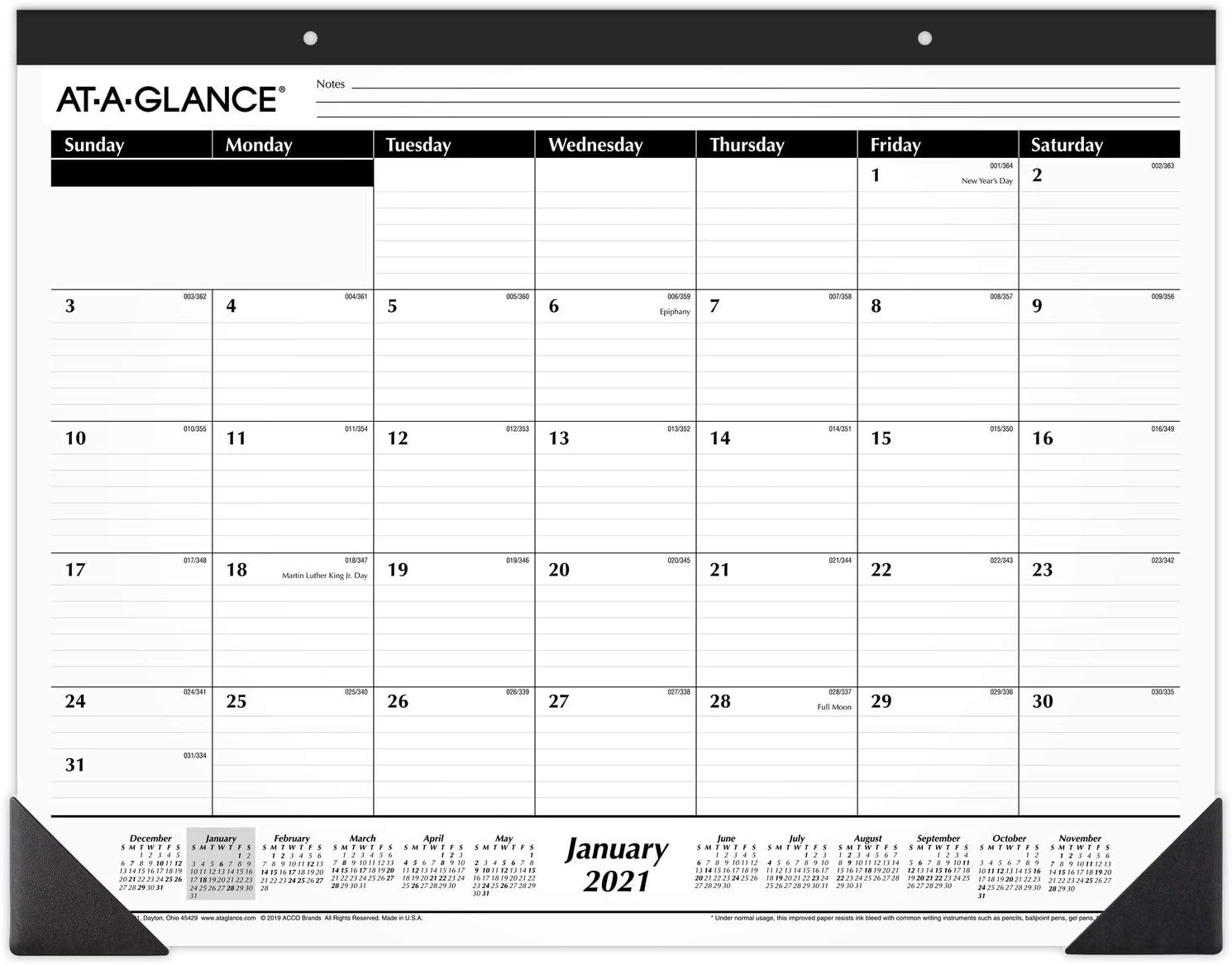
AT-A-GLANCE
2021 Desk Calendar by AT-A-GLANCE, Monthly Desk Pad, 21-3/4" x 17", Standard, Ruled Blocks (SK240021)
See current price
Popular brands in Calendars, Planners & Personal Organizers
Calendars, planners, and personal organizers can make schedules, appointments, deadlines, and personal goals easier to see and manage. The right choice depends on how much detail you record, where you use it, and whether you prefer a fixed calendar view or a more flexible planning system.
This category sits within Office & School Supplies, with options suited to desks, walls, bags, classrooms, home offices, and shared workspaces. Use the catalog to compare specifications and features before checking the current price and availability on Amazon.
How to choose a calendar or planner
Start with the way you plan. If you mainly need a quick overview of appointments and dates, a wall or desk calendar may be enough. If you track tasks, notes, habits, meetings, or long-term goals, a planner or personal organizer may offer a more useful structure.
Consider these questions:
- Where will it be used? A wall calendar works well in a visible shared space, while a compact planner is easier to carry between work, school, and home.
- How much do you write? Look for a layout with enough room for appointments, reminders, and notes without making each entry feel cramped.
- Do you plan by date or by task? Dated layouts support scheduling, while task-focused sections can help organize projects and priorities.
- Do you need flexibility? A refillable or adjustable organizer may suit changing needs, while a bound planner offers a ready-to-use format.
- What will make you use it consistently? A clear layout, readable print, and convenient size are often more important than extra features you will not use.
Common types and layouts
The category includes several formats, each suited to a different planning style. Comparing the page design and intended use can help narrow the selection.
Wall calendars
Wall calendars keep dates visible at a glance and can work well for households, offices, classrooms, and shared work areas. Consider the writing space, hanging method, page-turning design, and how easily the calendar can be viewed from a distance. A visual theme may matter as well when the calendar will be displayed in a living or work space.
Desk calendars
Desk calendars are designed for a workspace, reception area, study area, or home office. Compare the footprint, stand or base design, page format, and whether the layout emphasizes a broad date overview or daily notes. A desk calendar should be easy to read without taking over the useful surface of the desk.
Weekly and monthly planners
Monthly layouts are useful for seeing appointments, deadlines, travel, and events together. Weekly layouts generally provide more room for daily tasks and notes. Some planners combine broader calendar pages with detailed planning pages, which can suit people who want both a long-range overview and space for everyday organization.
Personal organizers
Personal organizers may combine calendars with address information, notes, task lists, and other planning sections. Compare the interior arrangement, cover design, closure, portability, and page-management features. If the organizer will be carried frequently, check its dimensions and weight as well as how securely pages and accessories are held.
Features and specifications to compare
Product listings can vary substantially even when two items have a similar appearance. Pay attention to the details that affect everyday use.
- Page layout: Check whether pages are organized by month, week, day, task, or a combination of formats.
- Writing space: Look for usable area for the type of entries you make, including appointments, lists, and notes.
- Size and portability: Larger formats can be easier to read and write in, while smaller formats may fit better in a bag or drawer.
- Binding and construction: Spiral, stitched, glued, and ring-style formats can differ in how they open, lay flat, and accommodate page changes.
- Cover and durability: Compare the cover material and overall construction with the environment where the item will be used.
- Paper characteristics: Consider paper color, finish, thickness, and compatibility with the pens or markers you normally use.
- Extra sections: Some products may include note pages, dividers, pockets, tabs, stickers, or task-planning areas. Choose additions that support your routine rather than add clutter.
- Date coverage: Check the stated date range and whether the format matches your planning cycle, especially when shopping for a seasonal or academic schedule.
If you also need writing tools, browse Writing & Correction Supplies for pens, pencils, erasers, and related desk essentials. Paper can be useful for supplementary notes, lists, or printed planning materials.
Brands represented in the catalog
The catalog includes products from AT-A-GLANCE, Global Printed Products, bloom daily planners, MaaIbok, Blue Sky, Lang, Artfan, Tullofa, Bright Day Calendars, Frasukis, Coboll, and BooQool. Brand selection can be a useful starting point, but compare the actual format, dimensions, materials, and included features for each product rather than relying on the brand name alone.
For a coordinated workspace, Desk Accessories & Workspace Organizers includes related ways to arrange supplies and keep frequently used items within reach. Labels, Indexes & Stamps may also help with marking pages, organizing documents, or identifying sections.
Planning and organization tips
A planner is most useful when it fits naturally into an existing routine. Keep it where decisions and reminders are usually recorded, such as beside a computer, near a family entryway, or in a frequently used bag. Use a consistent method for appointments, deadlines, tasks, and follow-up notes so information is easy to scan later.
Before choosing a format, review the product images and specifications for page orientation, binding placement, hanging or standing hardware, and closure details. If the planner is intended as a gift, a neutral layout or broad-purpose format may be more adaptable than one designed around a specific planning method.
For home offices or classrooms, consider whether several people need to read or write in it. A shared calendar should have a clear layout and a convenient display position. For personal use, portability, privacy, and the amount of writing space may matter more.
Frequently asked questions
What is the difference between a calendar and a planner?
A calendar primarily organizes dates and events, while a planner usually adds space for tasks, notes, priorities, or other planning details. Some products combine both functions.
Should I choose a wall calendar or a desk calendar?
Choose a wall calendar when visibility for one or more people is important. A desk calendar is better suited to an individual workspace where it can remain close to your computer, documents, or writing supplies.
Is a weekly or monthly layout better?
A monthly layout provides a broad overview of events and deadlines. A weekly layout generally offers more room for daily tasks and notes. Choose based on how much detail you record.
What should I check before buying a personal organizer?
Compare its dimensions, page layout, binding, cover construction, writing space, closure, and any included dividers or pockets. Also confirm that its date coverage suits your planning needs.
Are calendars and planners suitable for shared use?
Yes. A clearly designed wall or desk format can help households, teams, and classrooms coordinate dates. Check that the display is readable and that there is enough space for multiple entries.