

Geographic Globes for Learning and Exploration
Compare geographic globes by map detail, construction, size, and educational features. Explore options for children, students, classrooms, offices, and curious travelers.
108 products in catalog
108 results
Filters


Learning Resources
Learning Resources Puzzle Globe - 14 Pieces, Ages 3+ Preschool Learning Toys for Boys and Girls, Earth Globe for Kids
See current price

Advantus
Advantus 12 Inch Desktop World Globe with Blue Oceans (30502),13 W x 12 D x 15 H in
See current price


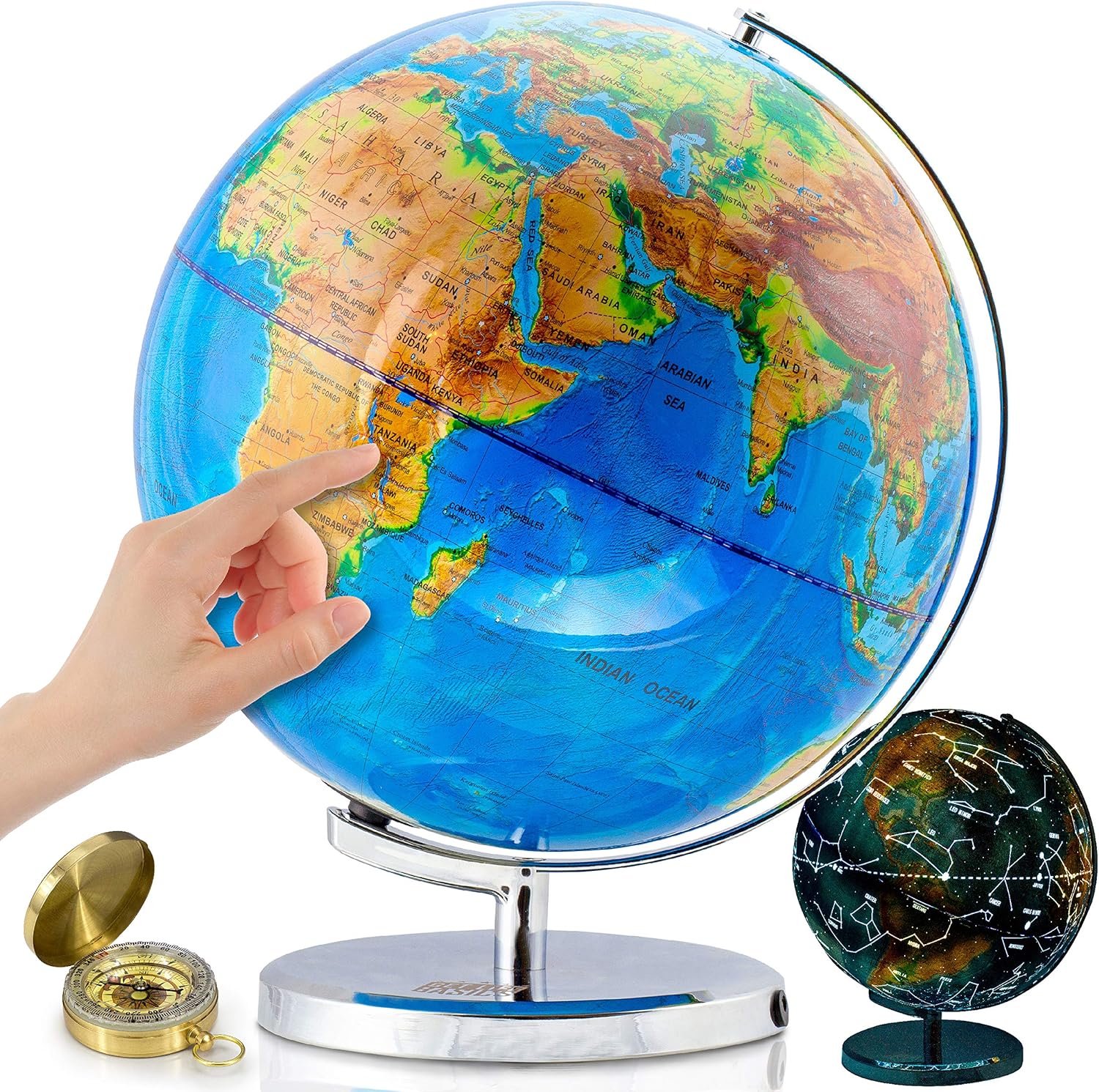


Little Experimenter
Little Experimenter Globe for Kids: 3-in-1 World Globe with Stand - Illuminated Star Map and Built-in Projector, 8”
See current price


Learning Resources
Learning Resources Inflatable 12 inch Globe - Ages 6+ Earth Globe, Geography for Kids
See current price


Oregon Scientific
Oregon Scientific Smart Globe Discovery Educational World Geography Kids - Learning Toy
See current price
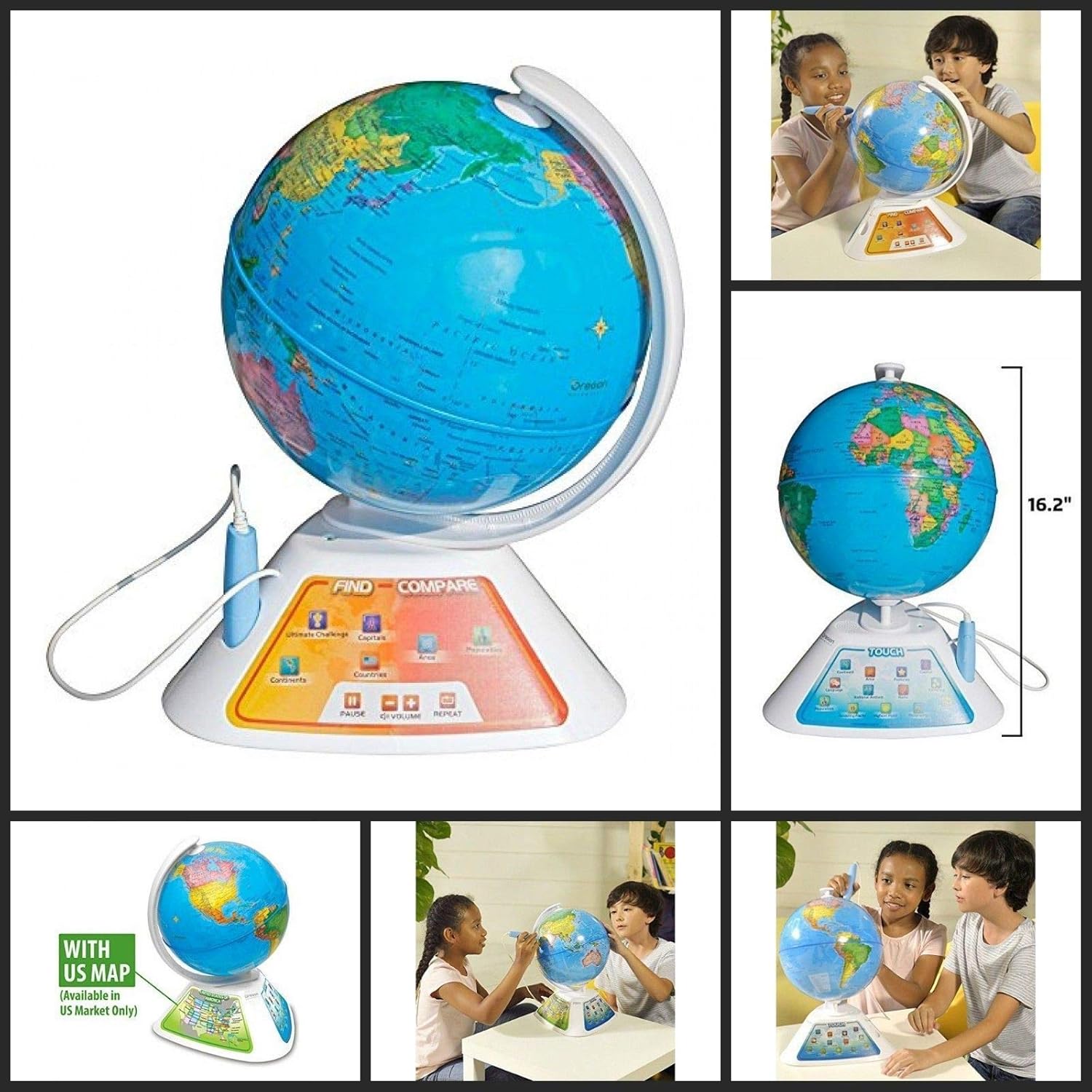
Oregon Scientific
Oregon Scientific Smart Globe Discovery Educational World Geography Kids - Learning Toy
See current price


Popular brands in Geographic Globes
A geographic globe can make geography easier to understand by showing countries, oceans, borders, and the shape of the world in a visual format. Compared with a flat map, a globe offers a useful perspective on relative location and the arrangement of continents.
K-Catalog helps shoppers compare specifications and features across geographic globes listed for sale on Amazon. Use the details on each product page to find a style that suits the learner, available space, and intended use.
How to choose a geographic globe
Start by considering who will use the globe and where it will be displayed. A durable, easy-to-read design may suit a child’s room or study area, while a more detailed globe can be useful for older students, homeschooling, or general reference.
Key decisions include:
- Map content: Check whether the globe focuses on political boundaries, physical geography, or a combination of both. Look for clearly labeled countries, capitals, oceans, and other features that match the learner’s needs.
- Size and readability: A larger globe may make small labels easier to read, but it also needs more shelf, desk, or table space. Compact designs are easier to move and store.
- Construction: Compare the globe’s surface, base, meridian, and overall build. Materials and assembly details can matter when the globe will be handled frequently.
- Purpose: Decide whether the globe is mainly for decoration, casual exploration, schoolwork, or repeated study. A display-oriented model may emphasize appearance, while a learning-focused option may prioritize labeling and reference detail.
Globe styles and educational uses
Geographic globes come in different designs, so the most suitable choice depends on how the product will be used. Political globes emphasize countries, borders, and place names. Physical globes highlight landforms, elevation, oceans, and other natural features. Some combine both approaches for broad, general-purpose learning.
A globe can support lessons about continents, hemispheres, latitude, longitude, time zones, and distances between places. It can also encourage children to ask questions about languages, cultures, climate, and travel. For younger learners, large lettering and a sturdy base may be more useful than dense map detail. Older students may prefer a globe with more comprehensive labeling.
For complementary learning materials, browse Science Kits & Toys for hands-on exploration, or explore Electronic Learning Toys when interactive features are a priority.
Features and specifications to compare
Product listings can vary considerably in the information they provide, so compare the specifications carefully rather than relying on appearance alone.
- Map clarity: Look for sharp printing, readable labels, and colors that distinguish countries, bodies of water, and geographic regions.
- Rotation: A rotating globe can make it easier to view different areas and demonstrate how the Earth is organized. Check how the globe is mounted and whether movement appears intended for regular handling.
- Illumination: Some globes are designed to light up. If this feature matters, check how the map changes when illuminated and whether the product requires a particular power source.
- Base and meridian: A stable base helps prevent tipping, while the meridian can provide a frame for viewing and reference. Compare the construction with the intended location and level of use.
- Label language: Confirm that place names and instructions are presented in a language suitable for the learner.
- Care and setup: Check assembly requirements, included components, cleaning guidance, and any age or safety information supplied by the manufacturer.
Brands represented in the catalog
The Geographic Globes catalog includes products from Exerz, Replogle, Oregon Scientific, Gresus, Learning Resources, MOVA, Waypoint Geographic, Jet Creations, Senders, Little Experimenter, TTKTK, and Juvale. These brands are well represented in the catalog, but features can differ by product, so compare the individual specifications and images for each option.
Brand familiarity should not replace checking practical details. Pay particular attention to map style, dimensions, construction, illumination, and the intended age or learning level.
Placement, care, and learning tips
Choose a location where the globe can be viewed from several angles without being crowded by books, toys, or other objects. Keep it away from excessive moisture, direct heat, and rough handling. Dust the surface according to the manufacturer’s guidance, especially around the base and meridian.
Make the globe more useful by pairing observation with questions: Where is a country relative to the equator? Which oceans surround a continent? How far apart are two cities? For reading and writing activities, Reading & Writing can complement geography practice, while Flash Cards may help reinforce place names and facts.
Frequently asked questions
What is the difference between a political and physical globe?
A political globe emphasizes borders, countries, and place names. A physical globe focuses more on natural features such as landforms, elevation, and bodies of water. Some products combine both types of information.
What globe size is easiest to read?
Larger globes generally provide more room for labels, but the best choice depends on available space and viewing distance. Compare the listed dimensions with the location where the globe will be used.
Are geographic globes suitable for children?
Many are designed for learning, but suitability depends on construction, labeling, and the manufacturer’s age guidance. Check the product details for safety information and recommended use.
Is an illuminated globe useful?
Illumination can make a globe more versatile and may reveal a different map presentation. Check the lighting operation, power requirements, and whether the illuminated view supports the type of learning intended.
Can a globe replace a map or atlas?
A globe offers a useful three-dimensional view of the Earth, while maps and atlases can provide more detailed regional information. Using both can support a broader understanding of geography.
What other learning categories pair well with a globe?
Science kits, electronic learning toys, reading and writing materials, and flash cards can extend geography activities. Optics may also complement lessons involving observation and visual exploration.