

Optoelectronic Products for Industrial Applications
Compare optoelectronic components for sensing, signaling, switching, illumination, and isolation. Review specifications and features to narrow options for your industrial project.
77 products in catalog
77 results
Filters


Bowerful
50pcs Pre-soldered Micro Litz Wired Leads Golden Yellow SMD Led 0603 + Muti-Resistor New
See current price


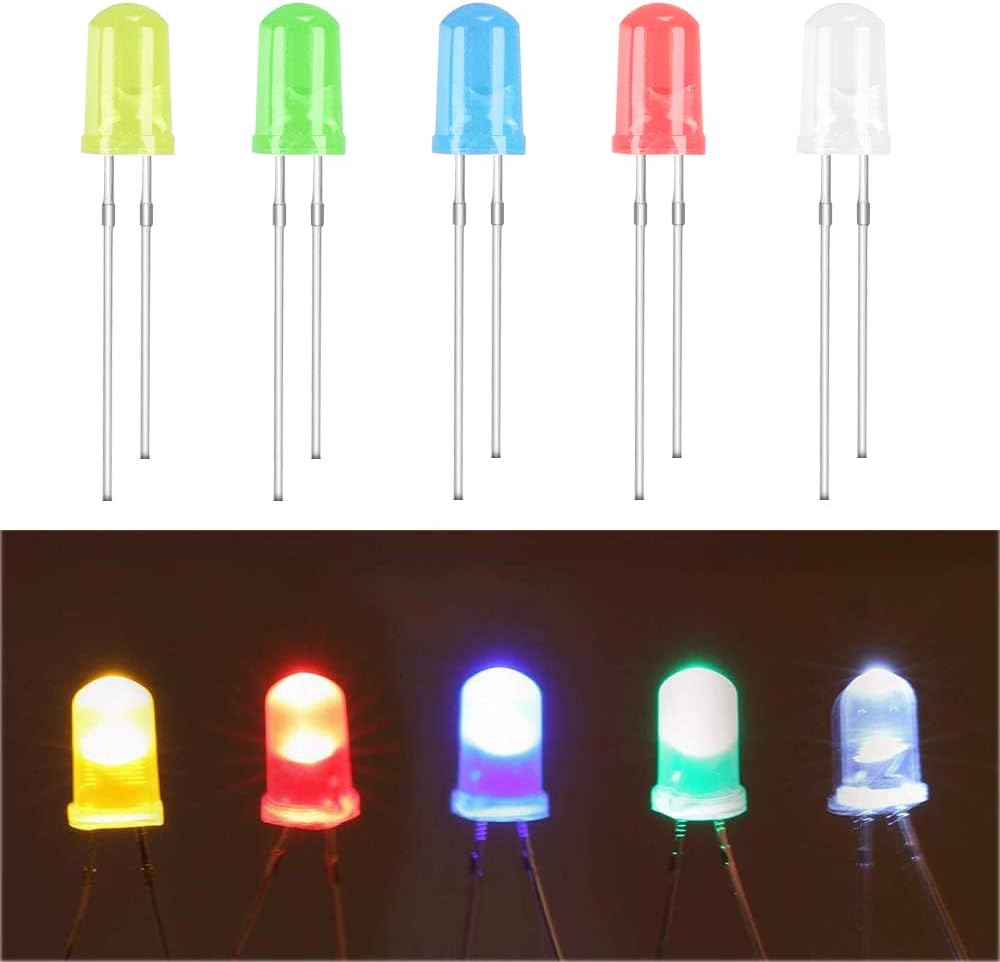


![Novelty Place 100 Pcs 5mm Red LED Diode Lights - [Ultra Bright] Clear Transparent DC 2V 20mA Emitting Diodes LEDs Bulb - DIY Science Project Electronics Components Lighting Kit](https://m.media-amazon.com/images/I/61x6D4XA3wL._AC_SL1500_.jpg)


Meridian Electric
Meridian Electric 11141 11073000865 LED night light, Round, White, 4
See current price

Bowerful
Bowerful 100pcs 12V 5mm Green LED 9V - 12V Gauge Cluster Instrument Light Emitting diode
See current price


Microtivity
microtivity IL188 5mm Assorted Clear LED w/Resistors (8 Colors, Pack of 80)
See current price

Minecraft
Minecraft Diamond Ore Block LED Lamp w/ 3D Diamond Sword Puller | 14-Inch Lamp
See current price
Popular brands in Optoelectronic Products
Optoelectronic products use light to transmit, detect, control, or convert electrical signals. They appear in industrial controls, indicator panels, communication equipment, automation systems, and electronic assemblies.
K-Catalog helps shoppers compare listed products by specifications and features before visiting Amazon to check availability and current purchase details. The right choice depends on the type of light interaction required, electrical compatibility, physical format, and the conditions in which the component will operate.
How to choose optoelectronic products
Start with the function the component must perform:
- Emit light: LEDs and other light sources are used for indicators, displays, illumination, and signal transmission.
- Detect light: Photodiodes, phototransistors, and light-sensitive modules convert received light into an electrical response.
- Isolate or switch signals: Optocouplers and optoisolators transfer a signal optically while helping separate circuits electrically.
- Transmit or receive focused light: Laser and optical modules may suit applications that require a concentrated beam or more directed optical communication.
Next, check how the part will connect to the rest of the system. Confirm the supply voltage, forward voltage or input requirements, output behavior, current limits, pin arrangement, and whether the component is intended for direct board mounting or use with an additional module or driver.
Types and related product categories
This category does not have separate catalog subcategories, so comparing the component’s optical role and package style is especially important. A basic LED may be appropriate for a visual status indicator, while an optocoupler is intended for signal isolation rather than general illumination. A detector may also require a compatible light source, amplifier, controller, or interface circuit.
For adjacent components, browse Controls & Indicators for interface and status-display equipment, or compare Sensors when the project requires detection beyond light-based components. Semiconductor Products can also help when choosing related active electronic devices.
Key specifications to compare
The most useful specifications vary by component type, but shoppers should pay close attention to:
- Optical characteristics: Light color, wavelength range, viewing angle, sensitivity, radiant intensity, or detection range can affect performance.
- Electrical requirements: Compare operating voltage, current, power dissipation, switching behavior, and input or output thresholds.
- Package and mounting: Check through-hole or surface-mount construction, lead configuration, package dimensions, and orientation markings.
- Response performance: Detectors and switching components may differ in response time, rise and fall behavior, or frequency suitability.
- Isolation requirements: For optocouplers, review isolation rating, transfer characteristics, and the input-output relationship required by the circuit.
- Environmental suitability: Consider operating temperature, exposure to dust or moisture, vibration, ambient light, and the need for protective housing.
Do not compare optical output or sensitivity separately from the circuit around the part. A component that looks suitable on paper may still require a resistor, driver, pull-up circuit, amplifier, filter, or controller for reliable operation.
Brands represented in the catalog
The catalog includes optoelectronic listings from CHANZON, EDGELEC, DiCUNO, CO-RODE, Gikfun, HiLetgo, Bowerful, Plusivo, BOJACK, HIKARI WINGS, Leviton, and Walfront. Brand selection should be considered alongside the individual part’s datasheet details, package, electrical limits, and intended use rather than as a substitute for specification matching.
When comparing similar listings, check whether the product is a single component, a matched set, or a module with supporting circuitry. Also verify the exact color, polarity, terminal arrangement, and included accessories before selecting an option.
Compatibility and installation tips
Confirm pinout and polarity before connecting an emitter, detector, LED, or optocoupler. LEDs commonly need current limiting, while light sensors may need a defined load or signal-conditioning circuit. Modules can simplify integration, but their connector layout and logic-level requirements still need to match the controller.
Keep optical paths clear and consider how ambient light could affect a detector. For enclosed equipment, allow for heat dissipation and make sure the component’s operating limits suit the surrounding environment. If the assembly includes connectors, terminals, or cable interfaces, Wiring & Connecting may provide useful related options. Circuit Protection Products can help with broader protection planning, while Passive Components covers supporting resistors, capacitors, and similar parts.
Frequently asked questions
What are optoelectronic products used for?
They are used to emit or detect light, transmit signals optically, provide circuit isolation, switch signals, and create visual indicators or illumination.
What is the difference between an LED and a photodetector?
An LED converts electrical energy into light. A photodetector performs the reverse function by responding to received light and producing an electrical signal.
Do optoelectronic components need additional parts?
Often they do. Depending on the design, an LED may need current limiting, while a detector or optocoupler may need resistors, a driver, an amplifier, or a controller.
How can compatibility be checked?
Compare the product’s voltage, current, pinout, package, optical characteristics, switching behavior, and temperature limits with the requirements of the target circuit.
What should be checked before installation?
Verify polarity, terminal or pin arrangement, mounting method, required supporting components, optical alignment, and protection from unsuitable heat, moisture, vibration, or ambient light.