

Pulleys & Sheaves for Power Transmission
Compare pulleys and sheaves for belt-driven equipment by groove profile, bore, material, dimensions, and installation requirements. Use the listed specifications to narrow compatible options.
18 products in catalog
18 results
Filters

WINSINN Technology Ltd
WINSINN GT2 Pulley 16 Teeth 4mm bore 6mm Width 16T Timing Belt Pulley Wheel Aluminum for 3D Printer (Pack of 5Pcs)
See current price


National Hardware
National Hardware N233-247 3219BC Wall/Ceiling Mount Single Pulleys in Zinc, 1-1/2 in.
See current price
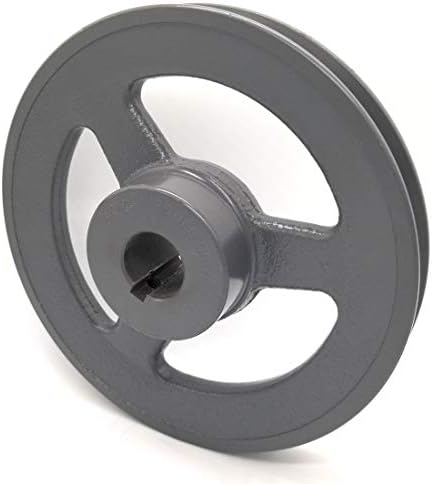


Baomain
Baomain Plastic Black Locking Hole Plugs Panel Hole Diameter 1/2" (12.6mm) HP-13 Pack of 100
See current price


Popular brands in Pulleys & Sheaves
Pulleys and sheaves transfer rotary motion through a belt, helping equipment move power between shafts while maintaining the required speed and direction. The right component must match the belt, shaft, mounting method, and operating environment.
This K-Catalog category is part of Power Transmission Products, with options from brands including Stens, Chicago Die Casting, National Hardware, Phoenix, Zeberoxyz, Houkr, WINSINN Technology Ltd, UEETEK, Baomain, Yale, AUSPA, and Befenybay. Compare the specifications for each listing before checking the current product details on Amazon.
How to choose a pulley or sheave
Start with the existing drive system rather than choosing by appearance alone. A pulley or sheave may be intended for a particular belt construction, groove shape, shaft size, or mounting arrangement. Confirm the equipment requirements and compare them with the product specification page.
Important selection questions include:
- What belt does it use? The groove must suit the belt’s profile and width. An unsuitable match can affect tracking, grip, and wear.
- What shaft does it fit? Check the bore, shaft interface, and any keyway or attachment method required by the equipment.
- What space is available? Overall diameter, width, and clearance around the drive affect whether the part can be installed safely.
- What operating conditions apply? Dust, moisture, temperature, chemicals, and continuous operation may influence material and maintenance requirements.
- Is the drive aligned? Even a correctly sized pulley can perform poorly if the shafts or belt are misaligned.
Common pulley and sheave applications
Pulleys and sheaves appear in machinery, workshop equipment, conveyors, agricultural equipment, replacement drives, and other belt-powered systems. Some products are intended for general mechanical use, while others may be suited to a particular replacement or repair application.
The terms “pulley” and “sheave” are often used interchangeably, but product listings may use either term to describe a grooved wheel used with a belt. Read the listing carefully for the intended belt type, mounting design, and dimensional details. If the drive also needs a replacement belt, browse the related Belts category and verify that both components are compatible.
Specifications worth comparing
The most useful details are the ones that determine fit and power transfer:
- Groove profile: The groove shape and dimensions must correspond to the belt. A multi-groove design may require a matching multi-rib or multi-belt arrangement.
- Pitch or working diameter: These measurements help determine belt path, speed relationship, and available clearance. Use the manufacturer’s stated dimension rather than estimating from a photo.
- Bore and shaft interface: Compare the bore size with the shaft and check whether a key, set screw, hub, or other mounting feature is included.
- Material: Metal and polymer components can differ in weight, rigidity, corrosion resistance, and suitability for a specific environment. Select according to the application rather than material name alone.
- Width and outside dimensions: These affect belt seating, alignment, guarding, and available installation space.
- Balance and runout information: For rotating equipment, dimensional accuracy and smooth rotation can matter, particularly at higher operating speeds.
- Load and operating limits: When provided, check the stated capacity, speed range, and intended duty before installation.
Related components may also affect the result. Bearings, Balls & Bushings can be relevant where a pulley rotates on a supported shaft, while Couplings, Collars & Universal Joiners may apply to shaft connections elsewhere in the drive.
Installation and maintenance considerations
Before replacing a part, document the original pulley orientation, belt routing, shaft position, and mounting hardware. Remove power from the equipment and follow the machine manufacturer’s service instructions. The pulley should sit securely on the shaft, and the belt should run centrally without excessive slack or tension.
Inspect for worn grooves, cracking, deformation, corrosion, loose fasteners, and belt dust. Check shaft alignment and belt tracking after installation. Do not force a belt over a pulley or use tools that could damage the belt or groove. In systems exposed to vibration, nearby Shock & Vibration Control components may also be relevant to the broader installation.
Brands represented in the catalog
The catalog includes pulleys and sheaves from Stens, Chicago Die Casting, National Hardware, Phoenix, Zeberoxyz, Houkr, WINSINN Technology Ltd, UEETEK, Baomain, Yale, AUSPA, and Befenybay. Brand availability does not replace compatibility checking, so compare each listing’s dimensions, mounting details, materials, and stated application.
For systems that use tensioning or return components, Springs may be useful as a related category to review. For automated or guided equipment, Linear Motion Products covers another type of motion hardware with different selection criteria.
Frequently asked questions
What is the difference between a pulley and a sheave?
The terms commonly describe a grooved wheel that works with a belt. The exact naming depends on the product listing and application, so the groove and mounting specifications matter more than the label alone.
How do I know whether a pulley fits my belt?
Compare the belt profile, width, and groove design with the pulley’s specifications. The belt must seat correctly in the groove without excessive looseness or binding.
Why does the bore size matter?
The bore must match the shaft interface and mounting method. Also check for a keyway, set screw, hub, or other feature required to secure the pulley.
Can I replace a pulley with one of a different diameter?
A different diameter can change the belt path, clearance, and speed relationship between shafts. Use the equipment requirements and drive calculations to confirm whether a change is appropriate.
What should I check after installation?
Check secure mounting, shaft alignment, belt tracking, tension, clearance, and smooth rotation. Inspect the assembly again after the equipment has been operated according to its service instructions.