
PAC Strapping Products
PAC Strapping S-60A Plastic Strapping Open Seal, for 3/4" Width Strap (Pack of 1,000)
See current price

Compare strapping supplies for bundling, securing, and stabilizing packages during handling and shipment. Review material, dimensions, strength, and tool compatibility to find a suitable option.
8 products in catalog
8 results
PAC Strapping Products
See current price


Lifeisbetter
See current price


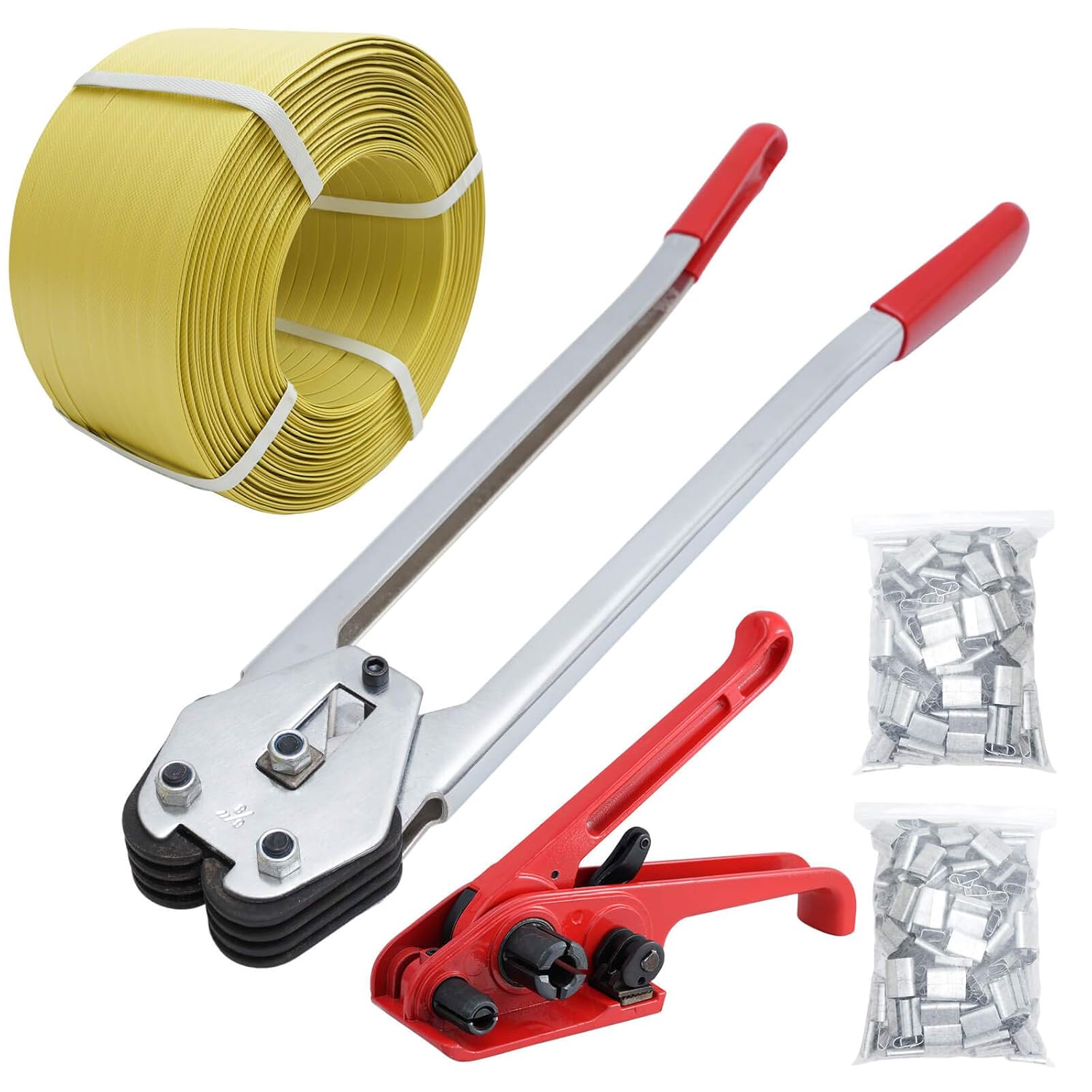
Inksilvereye
See current price
Strapping helps hold cartons, bundles, pallets, and other loads together during storage, handling, and shipping. The right product depends on the load, the tension required, how the strap will be applied, and whether the package needs extra protection from movement or abrasion.
Use this catalog to compare listed specifications and features across strapping products. K-Catalog does not sell products or show prices; shoppers can follow through to Amazon to check current availability and pricing.
Start with the package or load rather than the strap alone. Consider the weight, shape, surface, and how tightly the items need to be secured. A strap for light bundling may not suit a heavy pallet, while an overly rigid or strong strap can be unnecessary for smaller packages.
Important questions include:
Strapping is commonly selected by material and application. Plastic strapping is often considered for general packaging and bundling because it is lightweight and easy to handle. Within plastic options, the balance of flexibility, stretch, stiffness, and resistance to environmental conditions can vary.
Steel strapping is generally chosen when a load requires high tension and strong restraint. It may be suitable for demanding industrial applications, but users should consider edge protection and safe handling because rigid metal can damage packaging or create sharp edges.
Textile or composite strapping can be useful when flexibility and easier handling are priorities. The closure system and application tools are especially important for this type, so compatibility should be checked before purchase.
For adjacent packaging needs, compare Corrugated Boxes for outer cartons, Dunnage & Protectors for cushioning and load separation, and Industrial Shrink Wrap Supplies for wrapping and unitizing.
Product listings can differ substantially even when they use similar material descriptions. Focus on the specifications that affect fit, performance, and workflow:
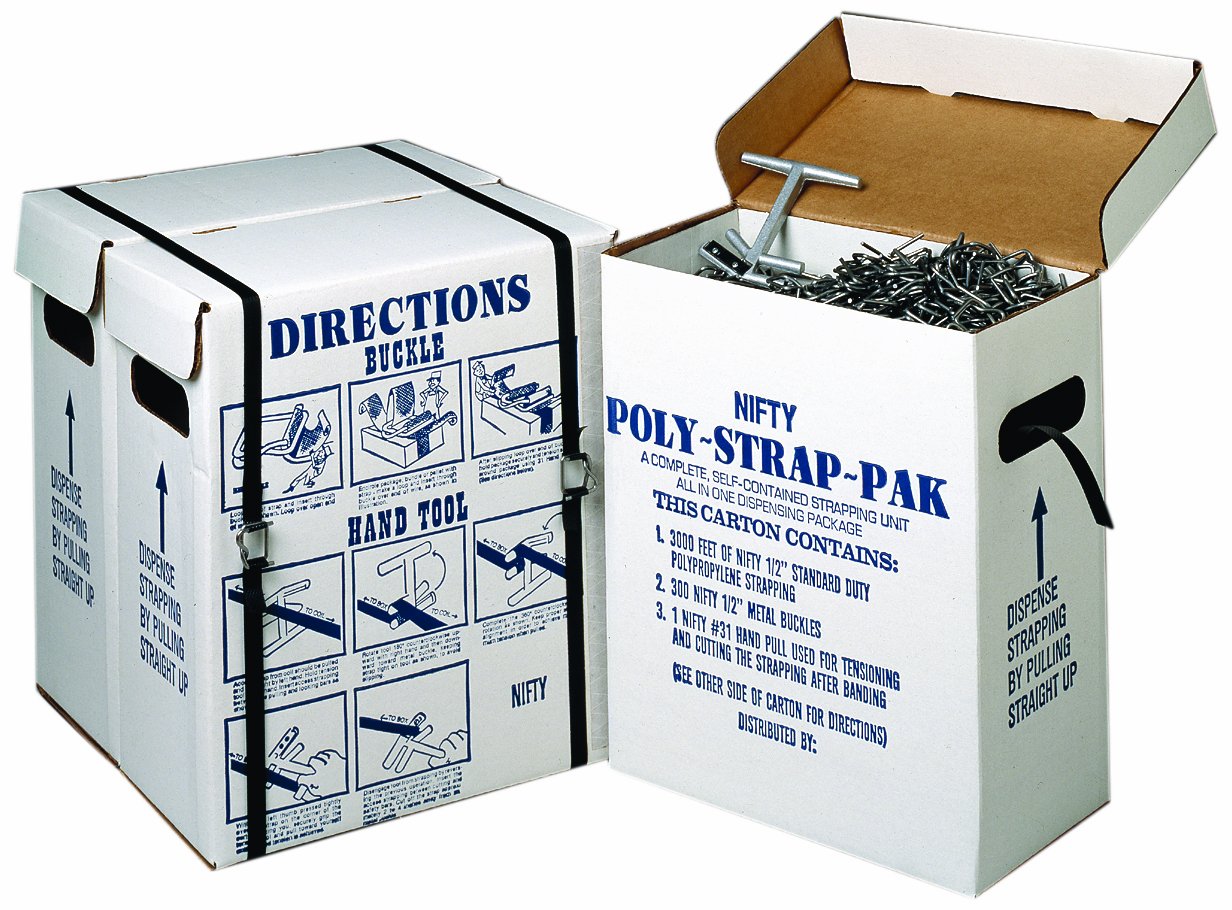
The catalog includes strapping products from Gresdent, IDL Packaging, Inksilvereye, Lifeisbetter, MYFAMIREA, NIFTY, Dr. Shrink, and PAC Strapping Products. Brand names can help narrow a comparison, but the material, dimensions, closure requirements, and stated application should guide the final choice.
When comparing products from different brands, read the full specification details rather than relying only on the product title. Packaging format, tool requirements, and intended use can differ between otherwise similar listings.
Before ordering, measure the available space around the package and confirm that the strap can pass around the load without interfering with labels, handles, or fragile surfaces. Use corner or edge protection when tension could crush cartons or damage contents.
Keep rolls and coils dry, clean, and protected from conditions that may affect the material. Store them so they cannot unwind unexpectedly, and follow the manufacturer’s instructions for tensioning and cutting. Workers should use suitable hand protection and take care around tensioned strap, sealed edges, and cut ends.
If the shipment also needs moisture protection or identification, compare Poly & Plastic Packaging Bags and Packaging Labels & Tags. For broader labeling equipment, see Labels & Labeling Equipment.
Strapping is used to bundle items, secure cartons, stabilize palletized loads, and reduce shifting during handling or shipment.
Match the material to the load, required tension, handling environment, and application method. Also verify whether the strap needs flexibility, stiffness, moisture resistance, or added durability.
That depends on the strap and closure method. Some applications use buckles or manual fastening, while others require a tensioner, sealer, dispenser, or powered equipment.
Corner protection is useful when tension may crush carton edges, mark surfaces, or concentrate pressure on a fragile load. Check the package shape and strap tension before deciding.
Strapping and shrink wrap serve different purposes. Strapping provides bundling or restraint, while shrink wrap can help unitize items and protect them from dust or handling exposure. They may be used separately or together depending on the shipment.