
Battenfeld Technologies
Wheeler Professional Digital Trigger Pull Gauge with 1 Oz Increments and Digital Display for Accurate Readings from 0-12 lbs
See current price

Compare instruments for measuring motion, rotational speed and force. Use specifications such as range, accuracy, display type and compatibility to narrow the options for your application.
16 products in catalog
16 results
Battenfeld Technologies
See current price



DIGITEN
See current price




Motion, speed and force instruments help quantify movement and mechanical performance in equipment, assemblies and test setups. The right tool depends on what you need to measure, how the measurement will be taken and the level of precision your work requires.
This K-Catalog category brings together options for comparing specifications and features before visiting Amazon for current product details. Consider the measurement method and operating environment first, then compare the technical specifications that affect usability and results.
Start by identifying the physical quantity involved. Motion measurement may concern position, travel, displacement or vibration, while speed measurement commonly concerns rotational or linear movement. Force measurement can involve tension, compression, pull, push or another controlled load.
Next, consider the test conditions:
Answering these questions helps eliminate tools that have a suitable measurement label but the wrong operating method for the job.
Speed measurement is often selected for rotating equipment, motors, fans, shafts and other moving components. Compare whether the instrument is intended for contact or non-contact use, and check how it is aimed, attached or positioned during a reading.
Force measurement is useful when checking pull, push, tension or compression. A force gauge or related instrument should be matched to the direction of load, the expected force range and the way the load will be applied. A fixture or adapter may also be important if repeatable testing is required.
Motion and displacement measurement can be used to monitor travel, movement or changes in position. Pay attention to sensing distance, mounting requirements and whether the instrument is intended for direct measurement or monitoring over time.
These approaches can overlap in machinery testing, quality control and maintenance. If the task also involves physical dimensions, compare the options in Dimensional Measurement for tools focused on size, distance and geometry.
The most useful specification is the one that matches the test rather than simply having the largest stated capability. Compare the following details carefully:
Do not overlook the difference between an instrument’s maximum capacity and its useful working range. A tool should suit both the expected measurement and the way the test will be performed.
Check the equipment interface before choosing a tool. Shaft access, mounting space, surface condition, attachment points and clearance around moving parts can determine whether a measurement is practical. For force testing, make sure the load direction and attachment method will not introduce twisting or an unintended side load.
Follow the instrument’s operating instructions and the safety procedures for the equipment being measured. Keep hands, cables and accessories clear of moving components. For rotating machinery, non-contact methods may reduce the need to approach the moving part, but the work area still requires appropriate guarding and care.
If your application also requires electrical readings, Electrical Testing may be relevant. Work involving pressure or vacuum can be compared with Pressure & Vacuum, while environmental readings may fit Temperature & Humidity.
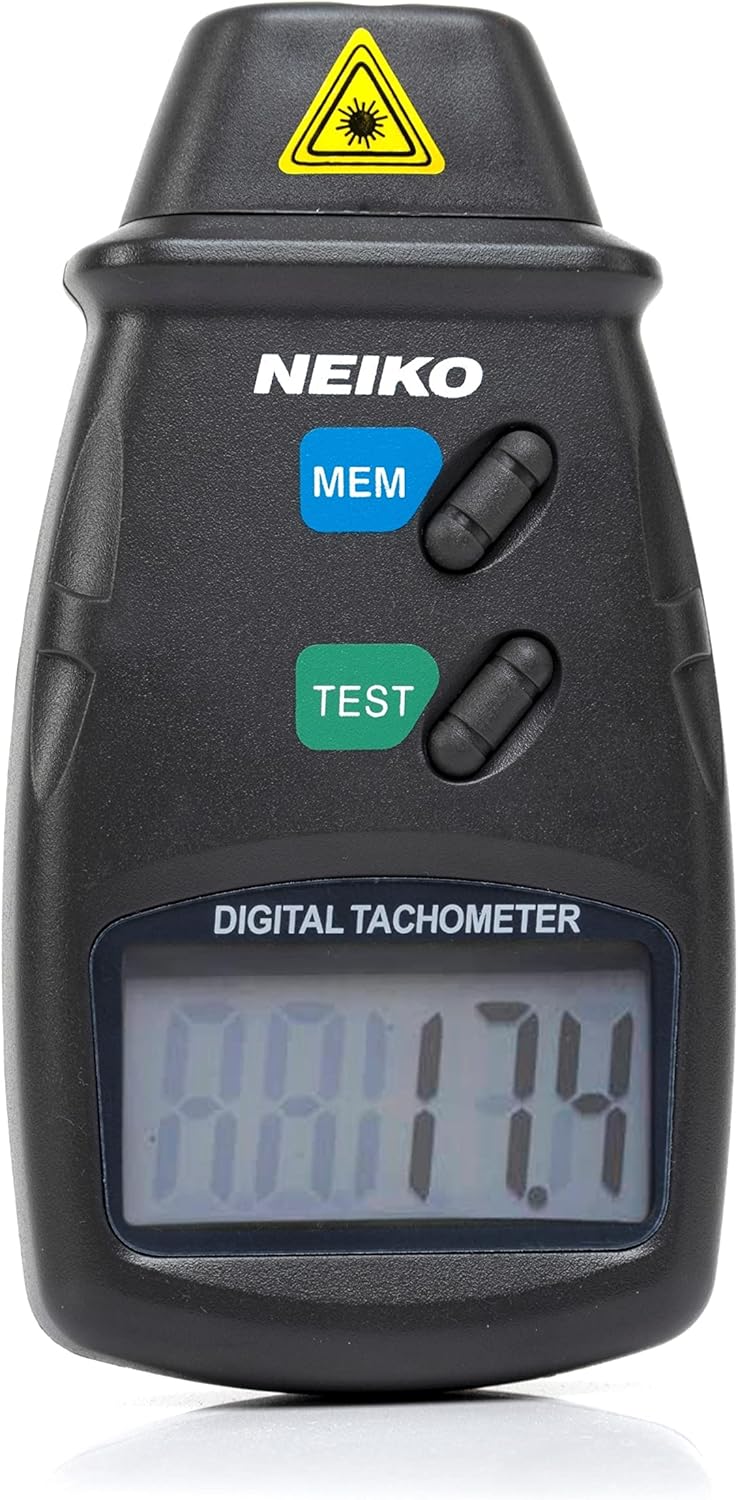
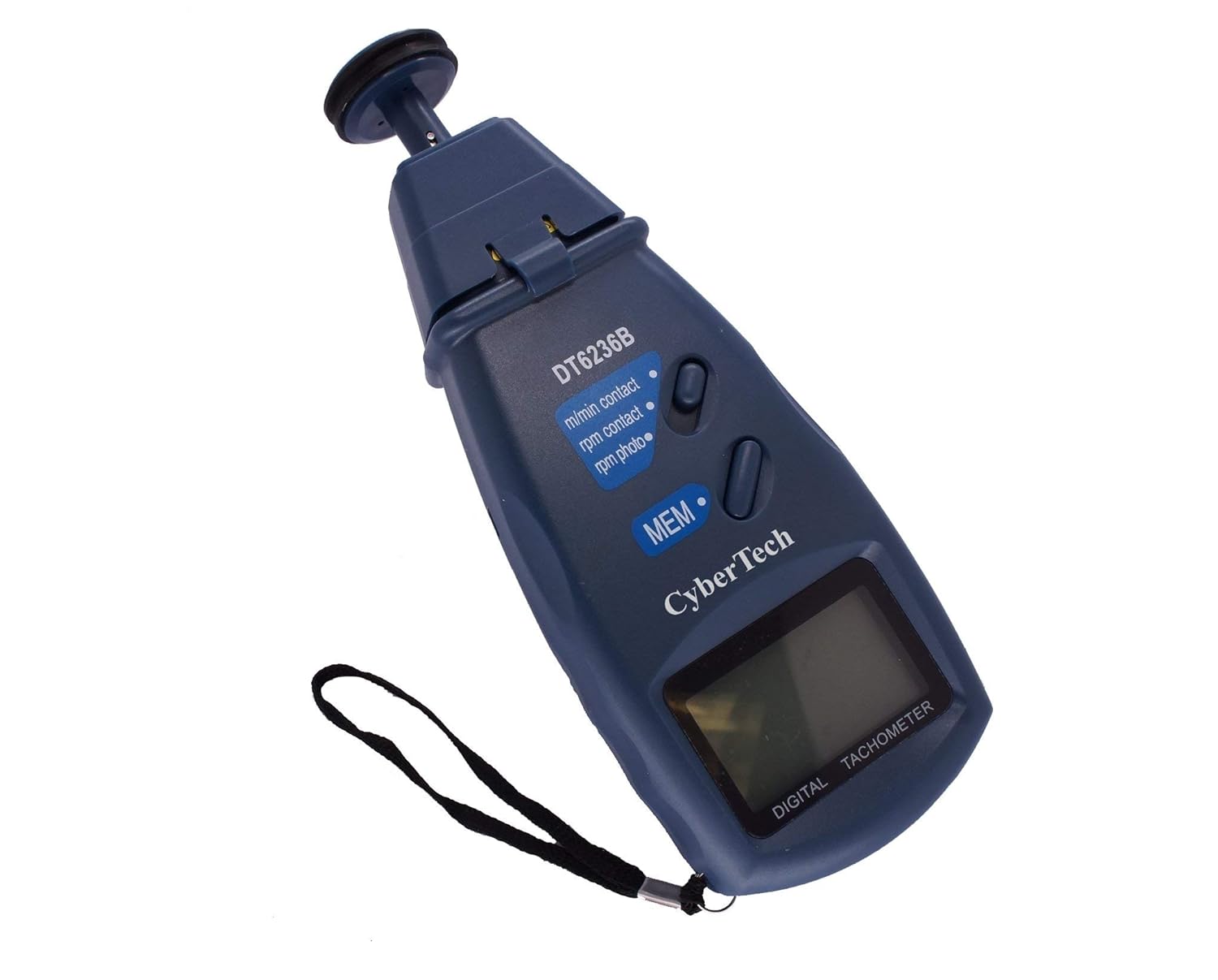
The catalog includes products from DIGITEN, CyberTech, Battenfeld Technologies, Loos & Co, AGPTEK, Neiko, PROTMEX, Handexer, HDE, FITNATE, TEKCOPLUS and Durofix. These brands provide options to compare across form factors, measurement functions and feature sets. Treat brand presence as a starting point, then verify the specifications, included accessories and compatibility for the particular application.
For broader inspection workflows, Inspection & Analysis may help you find related equipment. If the work involves identifying or evaluating materials, Substance Analysis Instrumentation is another nearby category to consider.
Define the physical quantity required by the test. Choosing the measurement type first prevents a tool designed for speed or displacement from being used where a force reading is needed.
Not necessarily. The range should cover the expected value while retaining suitable accuracy and resolution for the task. A very broad range may not provide the most useful detail at lower values.
Contact measurement physically engages with the moving component. Non-contact measurement reads movement from a distance, which can be useful where access, clearance or safety makes contact unsuitable.
Attachments help transfer the load into the instrument in the intended direction. The correct attachment can improve repeatability and reduce errors caused by slipping, twisting or uneven contact.
Look for features such as memory, data output or connectivity if records are required. Otherwise, confirm that the display is easy to read and that readings can be recorded consistently in the chosen units.