

T-Nuts for Woodworking and Industrial Projects
Compare T-nuts by thread compatibility, material, flange design, and installation method. This catalog helps you evaluate fasteners for woodworking, furniture, fixtures, and other projects.
30 products in catalog
30 results
Filters


Sutemribor
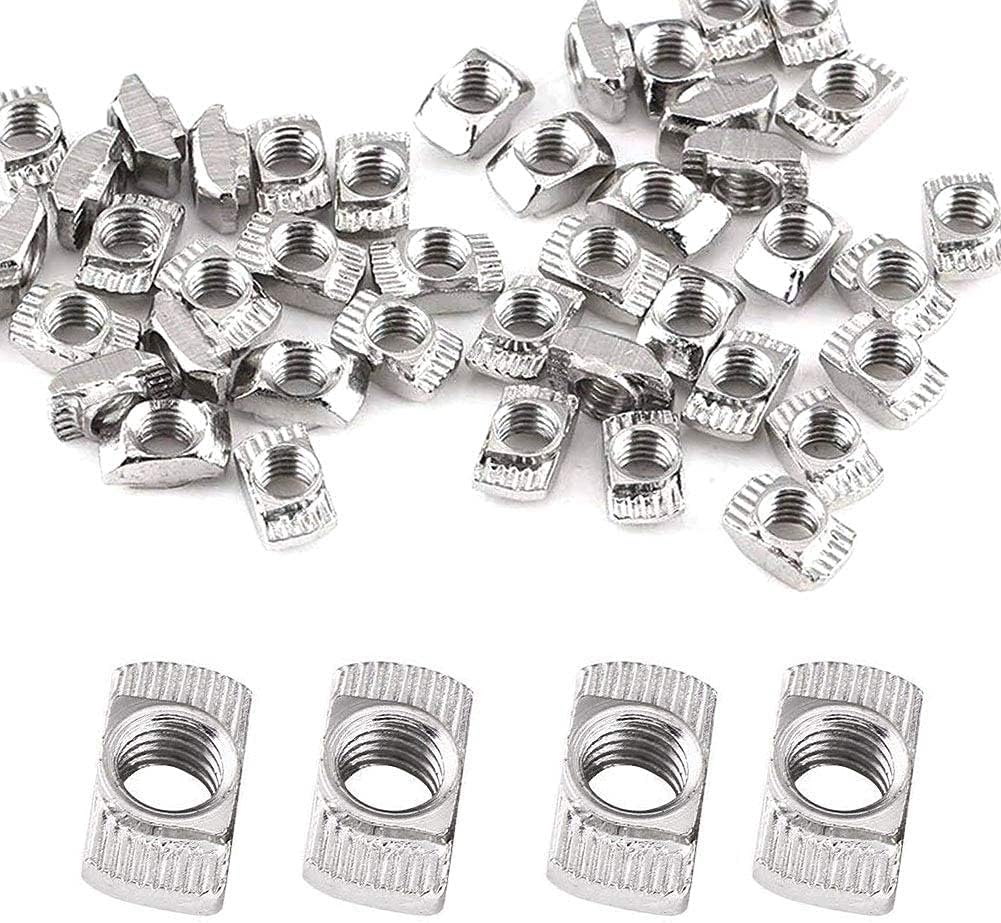
Sutemribor 160 Pieces 2020 Series T Nuts, M3 M4 M5 T Slot Nut Hammer Head Fastener Nut for Aluminum Profile
See current price




Popular brands in T-Nuts
T-nuts are threaded inserts designed to create a reusable fastening point in wood, composites, and some other materials. A typical T-nut has an internally threaded barrel and a flange that helps distribute load, while prongs, teeth, or another retention feature hold the insert in place.
The right choice depends on the material, the way the insert will be installed, and the screw or bolt that will be used with it. Compare the specifications carefully before choosing a set, especially when replacing hardware or matching an existing assembly.
How to choose T-nuts
Start by identifying the thread standard and size required by the mating fastener. A T-nut is useful only when its internal thread matches the screw or bolt, so check whether the project uses metric or inch-based hardware and verify the thread pitch where applicable.
Next, consider the base material and installation direction. Some T-nuts are driven into a pre-drilled hole from the underside, while other designs are intended to be installed from the visible side. The available clearance behind the panel can determine which style is practical.
Also compare the following factors:
- Material: Steel is common for general fastening, while plated or coated finishes may provide additional resistance to corrosion. Stainless steel can be useful where moisture exposure is a concern.
- Flange shape: A broad flange can spread clamping force across the surface and may help prevent the insert from pulling through softer material.
- Retention design: Prongs, teeth, or a knurled exterior provide different ways to resist rotation and movement. Match the design to the material and expected load.
- Barrel length: The threaded portion should suit the thickness of the workpiece without interfering with the fastener or the opposite side of the assembly.
- Pack contents: Sets may include a single thread specification or a selection of sizes. Confirm what is included before ordering.
For more general hardware options, browse the broader Fasteners category.
Common T-nut applications
T-nuts are frequently used where a removable, threaded connection is preferable to driving a screw directly into the material. Woodworking projects may use them for adjustable fixtures, workholding jigs, furniture components, speaker enclosures, and equipment mounting points. They can also be useful for panels, shop-built tools, and repair work when repeated assembly and disassembly is expected.
For projects where access to the rear of the panel is limited, consider whether a front-installed insert or another threaded insert style would be more suitable. T-nuts that rely on prongs generally need a properly prepared hole and sufficient material around the opening for secure seating.
Key specifications to compare
Thread compatibility
Match the internal thread to the hardware already selected. The thread diameter alone may not be enough; pitch and thread standard also affect fit. Avoid forcing a screw or bolt into an apparently similar thread, since mismatches can damage both components.
Installation method
Review whether the T-nut is hammer-in, press-in, or intended for another installation approach. A hammer-in model may be convenient for woodworking, but the hole must be the correct size and the insert must be driven evenly. Excessive force can deform the flange, split the material, or distort the threads.
Strength and surface protection
Consider the expected clamping force, vibration, and environment. Plating or coating can help protect steel hardware, but the finish should still be compatible with the surrounding material and conditions. For damp locations, compare corrosion-resistant material options rather than relying only on appearance.
T-nuts work with related hardware such as Screws, Bolts, and Washers. A washer may help distribute pressure when the mating fastener bears against a surface, provided the assembly has enough clearance.
Brands in this catalog
The T-nut selection includes products from Socell, Powertec, Bolt Dropper, Eowpower, Hilitchi, PFCC, Omama, Hotop, Rockler, Powlankou, POLISI3D, and Boao. These brands may offer different combinations of thread standards, materials, flange styles, and pack configurations, so compare the individual specifications rather than choosing by brand name alone.
If the project calls for a different style of threaded hardware, the Nuts category provides additional options. Anchors may be more appropriate when fastening into masonry, drywall, or another substrate where a T-nut is not designed to seat.
Installation and project tips
Pre-drill carefully and verify the hole size against the product specifications. A hole that is too small may split wood or prevent the flange from sitting flat, while an oversized hole can reduce holding power. Keep the insert aligned with the mating fastener and protect the visible surface when striking the T-nut into place.
When tightening the final assembly, apply steady force and avoid over-tightening. The best result comes from a secure, evenly seated insert and a fastener that engages the available thread without bottoming out. For moving assemblies or high-vibration applications, consider whether an appropriate locking method is needed.
Frequently asked questions
What are T-nuts used for?
T-nuts add an internal thread to a panel or other material, creating a reusable mounting point for a screw or bolt. They are common in woodworking, furniture, fixtures, and shop-built equipment.
Can T-nuts be used in metal?
They are most commonly selected for wood and sheet materials, but suitability depends on the specific design, hole preparation, and load. Check the product specifications before using one in metal or another hard substrate.
How do I select the correct T-nut size?
Match the internal thread to the mating screw or bolt, then confirm the barrel length, flange dimensions, and required hole size against the workpiece.
Do all T-nuts require rear access?
No. Installation requirements vary by design. Some are installed from the underside, while other styles can be fitted from the front or use a different retention method.
Should I use a washer with a T-nut?
A washer may help distribute clamping pressure on the surface where the screw or bolt bears. Confirm that it fits the fastener and does not interfere with the assembly.